Youth Camp Weather Safety Laws Are Changing. Here's What Camp Operators Need to Know.
In July 2025, catastrophic flooding at Camp Mystic in the Texas Hill Country claimed the lives of 27 children and counselors. The tragedy started a national conversation about how prepared youth camps actually are for severe weather, and lawmakers in multiple states responded quickly.
Texas enacted the Heaven's 27 Camp Safety Act. Oklahoma followed in May 2026 with HB 1675. More states are actively considering similar bills.
If you operate a youth camp, the compliance window is already open.
What Oklahoma HB 1675 Requires
Signed by Governor Kevin Stitt on May 11, 2026, Oklahoma HB 1675 establishes the state's first enforceable framework for youth camp weather preparedness. It applies to all youth camps, day camps, overnight camps, sports camps, wilderness programs, and outdoor programs serving anyone under 18.
Camps have until January 1, 2027 to complete and file six requirements with their county emergency management director.
1. Site-specific hazard assessment Camps must identify every applicable severe weather hazard at their exact location, including flooding, flash flooding, tornadoes, high winds, hail, lightning, extreme heat, and wildfire. Regional forecasts don't qualify. The assessment must document structural vulnerabilities, exposure zones, and evacuation routes.
2. Written Emergency Action Plan A documented EAP with separate protocols for each applicable hazard, chain of command, shelter-in-place and evacuation criteria, accountability procedures, and post-event reunification plans. This must be filed with the county EM director and updated every three years.
3. Two independent alert methods At least two independent systems for receiving severe weather alerts are required, and at least one must function without cellular service. Redundancy is the requirement, not a best practice.
4. Internal communication system A system capable of alerting all staff and campers promptly, with procedures for notifying parents and guardians during emergencies.
5. Annual staff training and drills All staff must complete annual emergency procedure and hazard recognition training before each season. Drills must be conducted and records must be available for county inspection.
6. Written hazard disclosure Before participation begins, camps must provide a written disclosure of material weather hazards and emergency procedures to every participant or their parent or guardian, and collect a signed acknowledgment.
Enforcement: County emergency management directors receive filings, conduct inspections, and can impose corrective action plans, civil penalties, or camp closure for non-compliance.
| REQUIREMENT | STATUTE | DEADLINE |
|---|---|---|
| Site-specific hazard assessment | § 683.24E | January 1, 2027 |
| Written Emergency Action Plan | § 683.24F | January 1, 2027 |
| Two independent alert systems | § 683.24G | At time of inspection |
| Shelter standards | § 683.24H | At time of inspection |
| Annual staff training and drills | § 683.24I | Before each season |
| Written hazard disclosure | § 683.24J | Before first day of participation |
How Texas Got There First
Oklahoma's law follows the Texas Heaven's 27 Act, which passed in the immediate aftermath of Camp Mystic. Texas requires similar elements: EAPs, redundant alert systems, annual training, and family disclosure. Texas also added floodplain cabin restrictions enforced at the state licensing level.
Both laws share the same core principle: generic regional weather data is not sufficient. Camps need site-specific monitoring, documented plans, and the ability to act before conditions become dangerous.
What's Coming in Other States
The legislative momentum is real. Camp Mystic accelerated a national conversation that was already building, and states with significant outdoor recreation sectors are watching Oklahoma and Texas closely.
Camp operators in any state should treat this as a signal, not a wait-and-see situation. Liability exposure exists regardless of whether your state has enacted specific legislation. Documented weather monitoring, redundant alerting, and written EAPs represent standard duty of care for any facility hosting minors outdoors.
How Weatherstem Supports Compliance
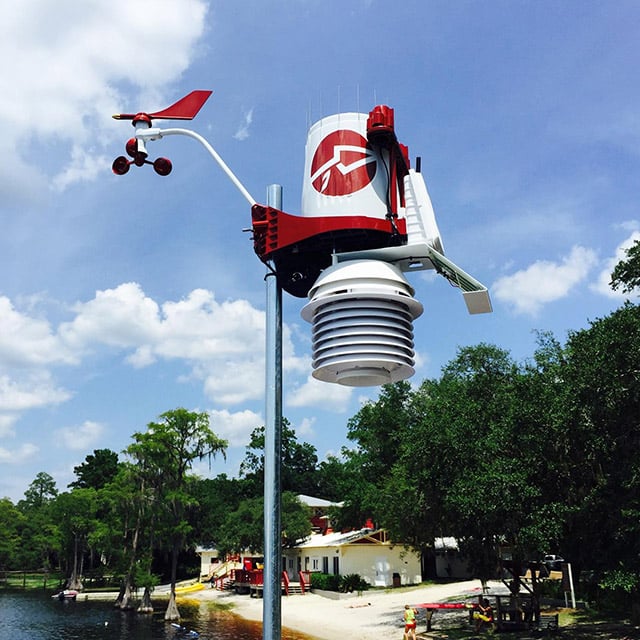
Weatherstem's on-site weather stations, automated alerting, and timestamped documentation are built around exactly the requirements these laws put into statute.
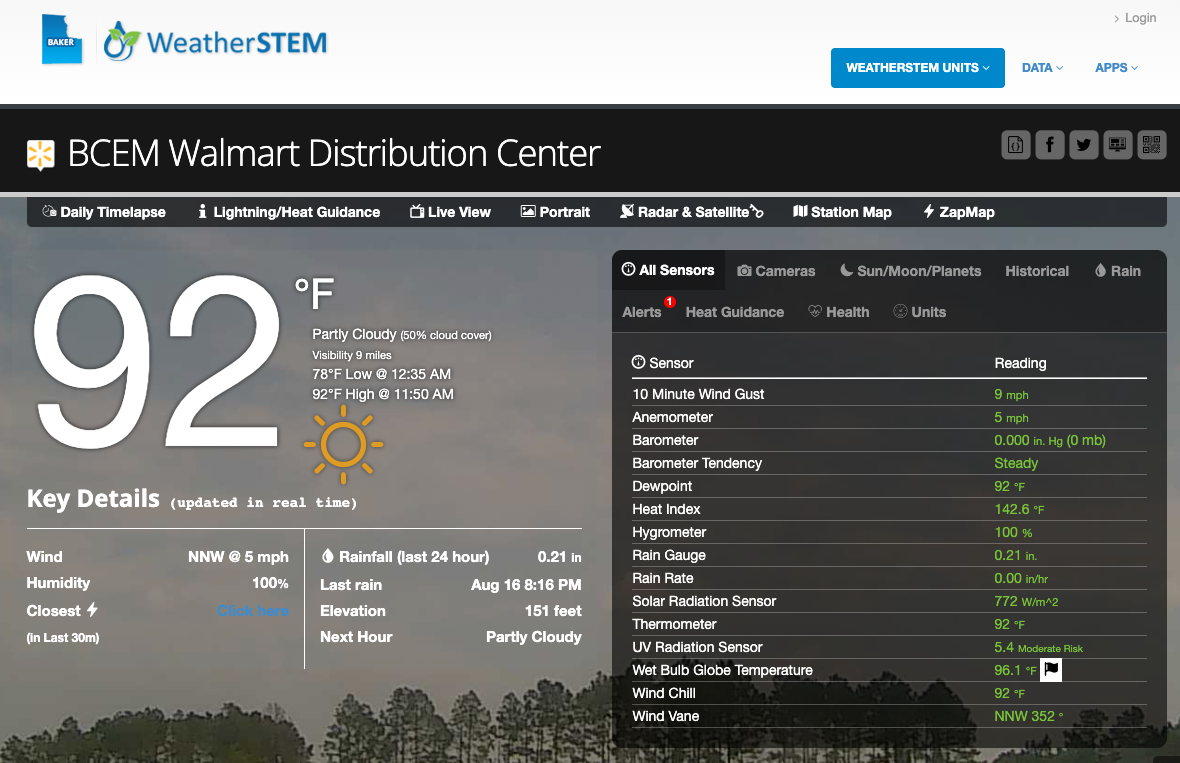
On-site, hyperlocal data supports site-specific hazard assessments with readings from your exact location every 0.8 seconds, not from a distant airport or regional model.
Redundant NWS-integrated alerting delivers warnings to your dashboard, mobile app, and PA or siren system simultaneously. At least one delivery path functions without cellular service, satisfying the non-cellular backup requirement directly.
Dual lightning detection uses NLDN as the primary network with AccuWeather as a live backup. If one network goes down, your alerts never stop. This is redundancy at the detection level, not just the notification layer.
Permanent compliance logs capture every alert, all-clear, drill, and weather event automatically. Exportable for any date range when your county EM director asks for documentation.
A team that responds. When conditions are developing and you need a real answer fast, you can reach us. Weatherstem has built its reputation on being a company that picks up the phone.
See how Weatherstem helps camps meet every requirement on one platform.
The County EM Relationship Matters
One of the most important things HB 1675 establishes is the county emergency management director as the enforcement point. Camp operators file with them, get inspected by them, and in worst-case scenarios, face penalties from them.
That relationship is also a resource. County EMs want camps to be prepared. If you're already operating with documented, site-specific weather monitoring, you're showing up to that relationship from a position of strength.
Weatherstem has worked directly with emergency managers across the country for years. The Florida Division of Emergency Management operates more than 240 Weatherstem stations statewide. New Orleans OHSEP runs 26 stations across Orleans Parish. That experience informs how we build tools for every sector we serve.
Free Download
Oklahoma HB 1675 Emergency Action Plan Template
Fillable PDF. Every section maps to a specific statute requirement. File directly with your county EM director.
What to Do Now
If you operate a youth camp in Oklahoma, the January 1, 2027 deadline is months away. That's not a lot of time if you're starting from scratch on a hazard assessment and EAP.
Start with your county emergency management director. Introduce yourself, ask about their process for receiving filings, and find out if they have a preferred format for hazard assessments. Most county EMs would rather help a camp get compliant than issue penalties.
Then make sure your alerting infrastructure is actually redundant. If your only warning system depends on your counselors checking a weather app, you don't meet the standard.
If you want to see how Weatherstem works for your specific camp location, we're happy to show you real data from your area in a free 15-minute demo.
Operating a Texas camp? Read about the Heaven's 27 Camp Safety Act and what it requires.
Frequently Asked Questions (FAQs)
Does HB 1675 apply to day camps?
Yes. HB 1675 applies to all youth camps, day camps, overnight camps, sports camps, wilderness programs, and outdoor programs serving anyone under 18, as defined in § 683.24C. Single-day programs with no oversight component are excluded under § 683.24D.
What happens if a camp doesn't comply by January 1, 2027?
County emergency management directors can impose corrective action plans, civil penalties, or camp closure for non-compliance. The county EM director is the enforcement authority under HB 1675.
Does a weather app satisfy the two independent alert requirement?
No. At least one of the two required alert systems must function without cellular service under § 683.24G(1). A weather app relies entirely on cellular connectivity and cannot serve as the non-cellular method.
What counts as a non-cellular alert system under HB 1675?
Acceptable methods under § 683.24G(1) include a NOAA Weather Radio with the county SAME code programmed, or an on-site weather station whose alerting hardware operates independently of the cellular network. Weatherstem's Blast outdoor warning siren operates independently of cellular infrastructure and satisfies this requirement directly.
Who do Oklahoma camps file their hazard assessment and EAP with?
Both the hazard assessment and the Emergency Action Plan must be filed with the county emergency management director by January 1, 2027, under § 683.24E(C) and § 683.24F(D). The county EM director also conducts inspections and has authority to enforce compliance.
Can Weatherstem help with the Emergency Action Plan documentation requirement?
Yes. Every Weatherstem station automatically timestamps and logs every alert, all-clear, drill, and weather event. These logs are exportable for any date range and are ready for county EM inspection. Download our free HB 1675 EAP template to get started on your documentation.

Weatherstem provides real-time weather monitoring, lightning detection, and automated alerting systems for emergency management, government agencies, athletics programs, and commercial operations. 900+ stations deployed nationwide.
Weatherstem
Real-time weather monitoring built for compliance and life-safety decisions.
Professional hardware, dual lightning detection, automated alerts, and permanent data logging — installed and managed for you. Used by emergency management agencies, athletic programs, and government operations nationwide.
Book a Free Demo