It's the last day of the Atlantic Hurricane Season and what an odd season it was. By the numbers, there were 13 named storms, five of which became hurricanes. Four of those hurricanes reached major status, meaning Category 3 or more and 3 reached Category 5 status.

For the first time since 2015, there wasn't a hurricane landfall in the United States. Tropical Storm Chantal was the only system that made a direct landfall, doing so on July 6th:

Chantal brought gusty winds and heavy rain to the Myrtle Beach area from July 5 - 6, putting a damper on the holiday weekend. Winds gusted to nearly 60 mph:
While Chantal was the only direct landfall, the US did get impacts from a couple other tropical systems this year. Hurricane Erin was the first hurricane of the season and also rapidly developed into a Category 5 Hurricane. It came close enough to the U.S. and British Virgin Islands to cause a 57 mph wind gust at our station in Tortola
As Erin passed between Bermuda and the US, its large size and strength kicked up waves and increased rip current risk up and down the Eastern US. The below image is from August 21:

After Erin and Fernand, the Atlantic basin shut down and there wasn't a single storm between then and the middle of September when Gabrielle formed. In fact, the basin went an unprecedented 20 days without a named system:

Gabrielle ended that dry streak but luckily didn't threaten any land masses. Following Gabrielle, perhaps the most interesting period of the season occurred when Humberto and Imelda interacted with each other:
If it weren't for the existence of both storms at the same time, individually they would have likely hit the United States with a direct landfall. But Humberto's circulation caused Imelda to make a hard right turn:

Our station in the Bahamas on Blue Lagoon Island did feel direct impacts from Imelda, with heavy rain and gusty winds:
Even without a direct landfall, impacts were felt up and down the Eastern Seaboard as the combination of both Imelda and Huberto lead to elevated surf, rip currents, and coastal flooding. This can be seen in the video from our Jacksonville Beach pier camera where winds gusted over 30 mph:
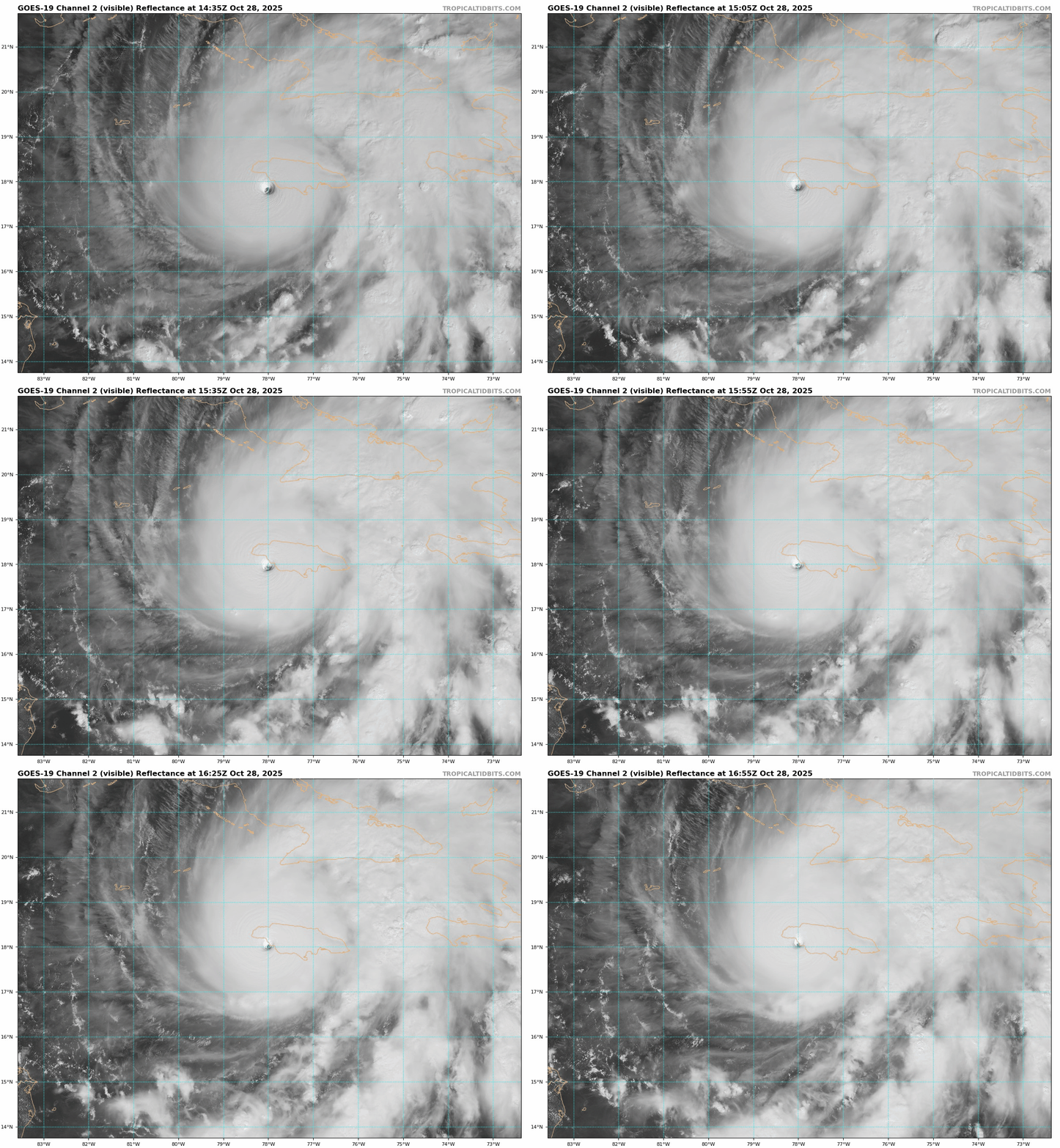
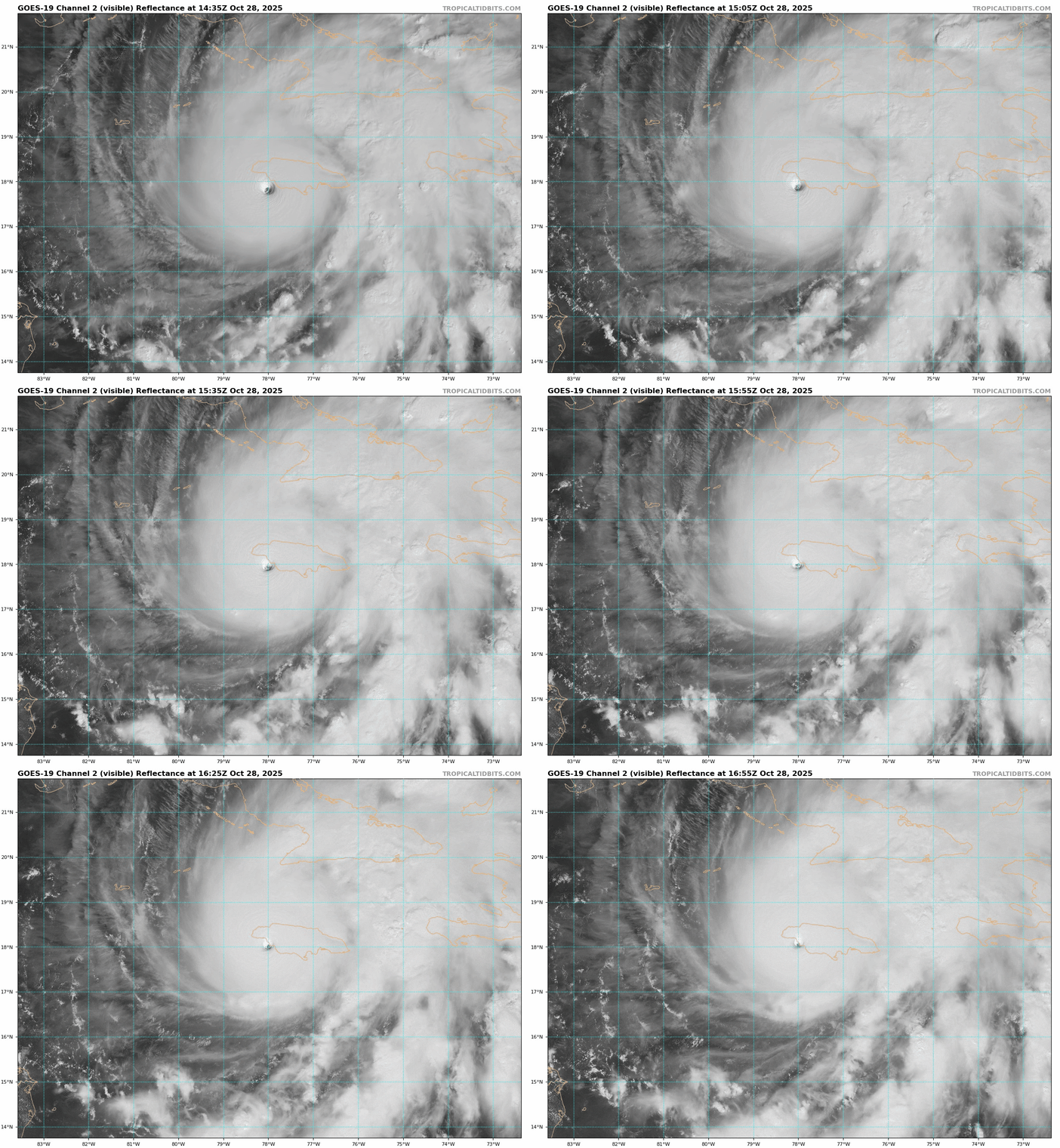
Finally, the strongest, most damaging, and deadliest storm of the season waited until late October to form with Melissa becoming a tropical storm on October 19th, and a hurricane on Saturday October 25th at 2 pm with 75 mph winds. Rapid intensification began at that time and by 2 pm on October 26th, Melissa was a major hurricane with 140 mph winds. It continued to strengthen right up until landfall on October 28th near New Hope, Jamaica with winds of 185 mph and a minimum pressure of 892 mb. This tied Dorian (2019) and the Labor Day Hurricane of 1935 as the strongest Atlantic Basin landfall:
Melissa was the last named storm of the season and as it ends, it is never too early to prepare for the next season. The next 6 months are the perfect time to solidify your hurricane preparedness plans, including perhaps equipping your community with state of the art weather monitoring. Reach out to Weatherstem to let us help you prepare!
Weatherstem
Real-time weather monitoring for the organizations that can't afford to guess.
Professional hardware, live HD camera, automated alerts, and software — installed and managed for you. 900+ stations deployed nationwide across emergency management, athletics, and commercial operations.
Book a Free Demo