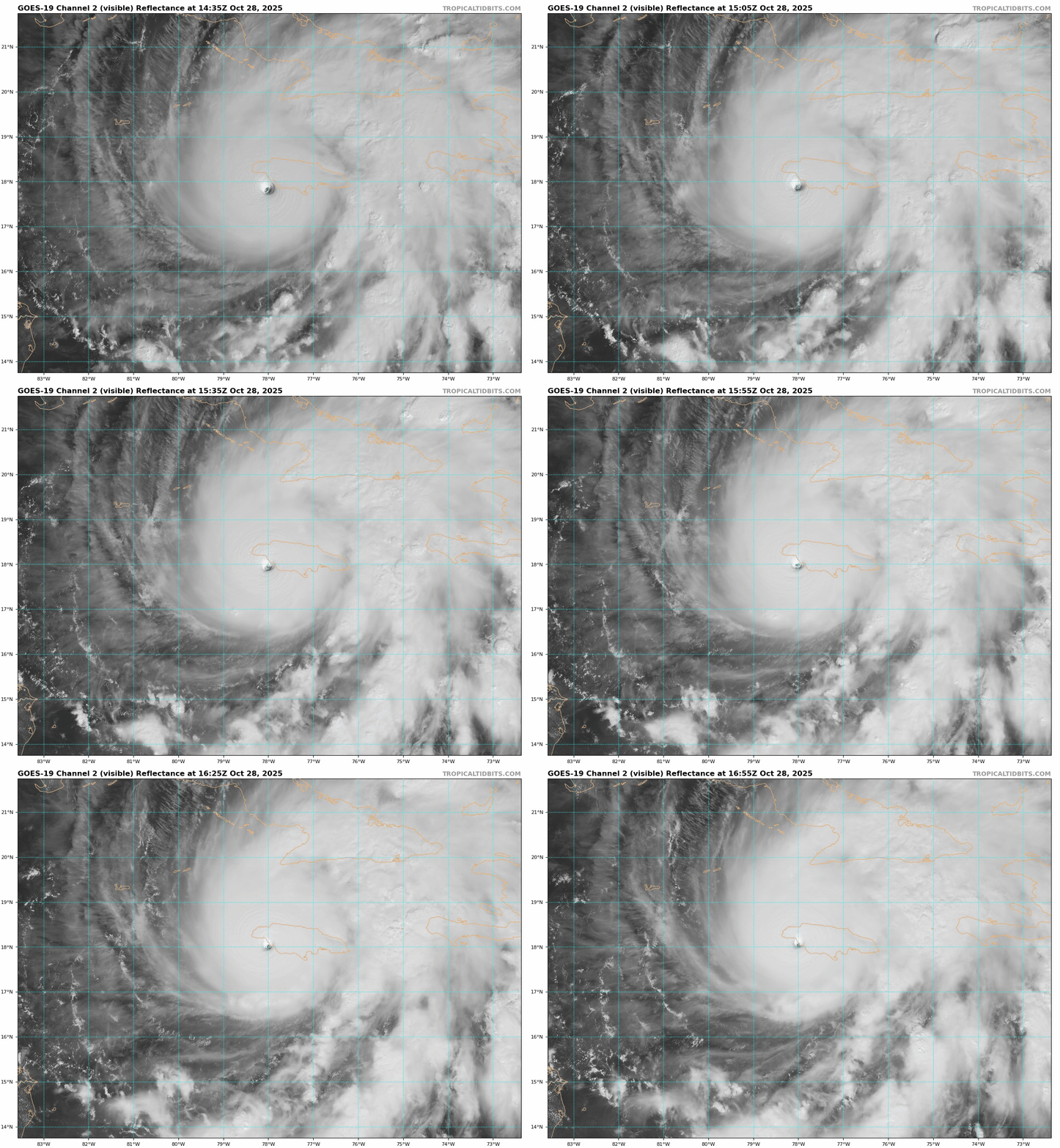
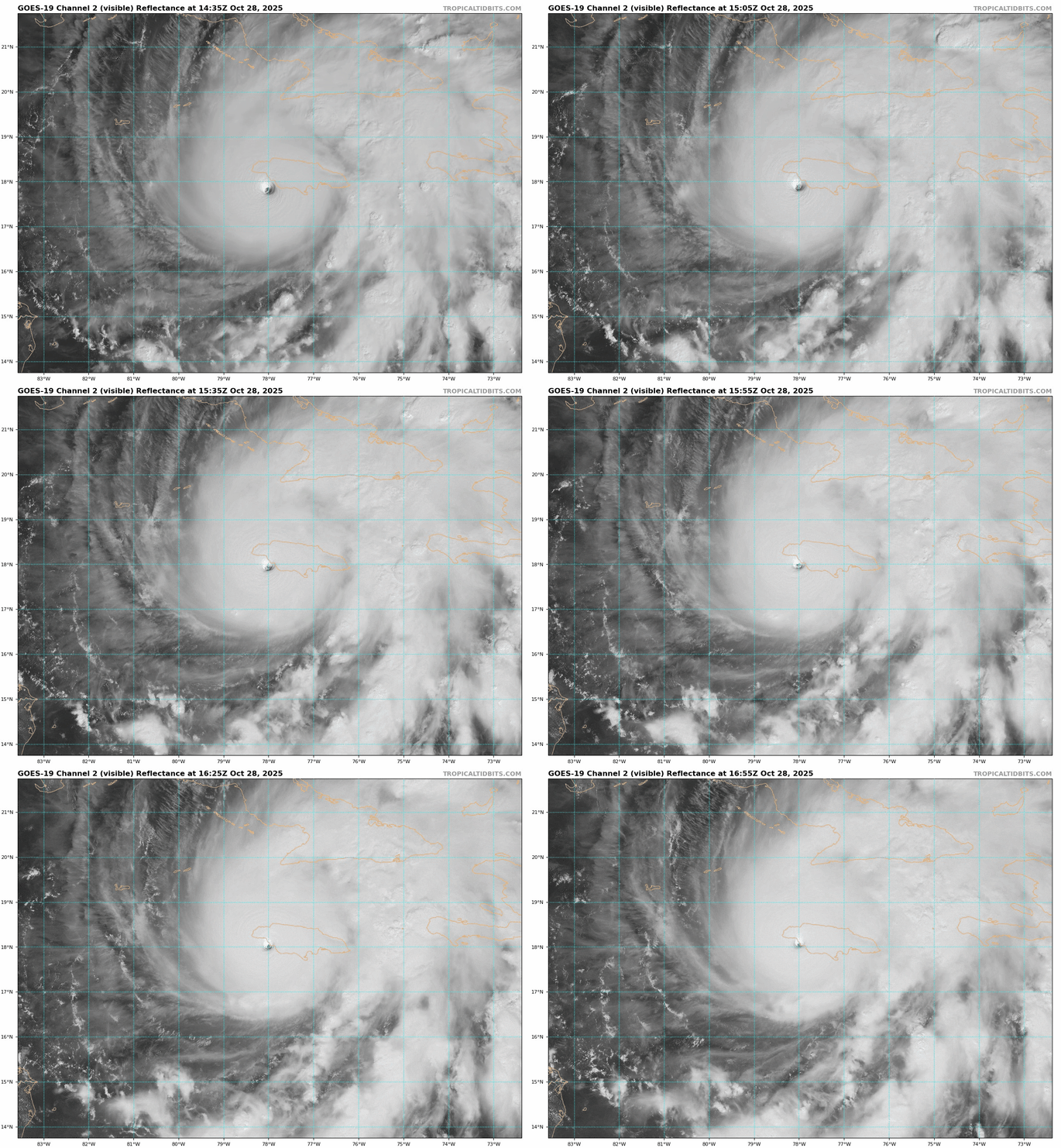
In case you missed it, Hurricane Melissa made landfall earlier today near New Hope, Jamaica with 185 mph winds and a minimum central pressure of 892 mb, the 3rd strongest on record in the Atlantic:
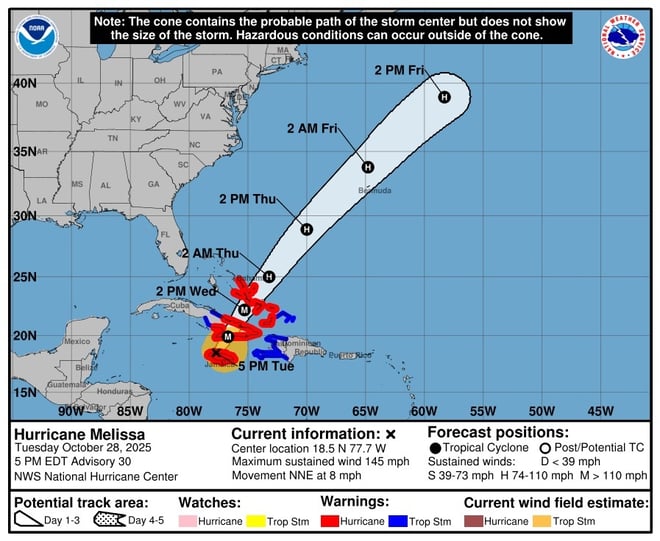
While damage reports are still trickling in from the island nation, you can imagine that Jamaica will need a long time to rebuild from such an historic storm. Next up in Melissa's path are Eastern Cuba, the Turks & Caicos, and even Bermuda:
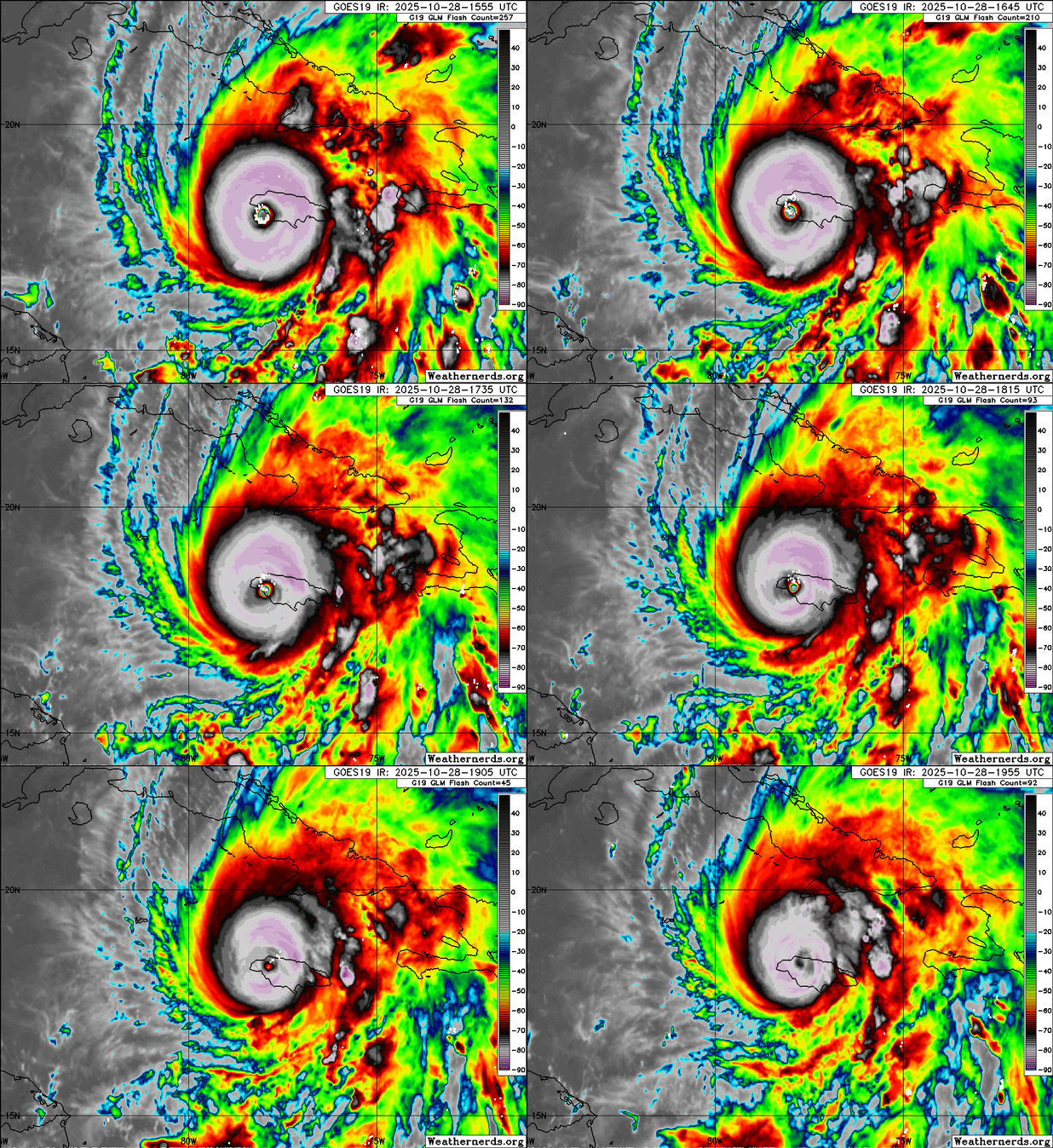
 Luckily for places downstream of Jamaica, the mountainous terrain of the island really disrupted the core as you can see on this satellite loop:
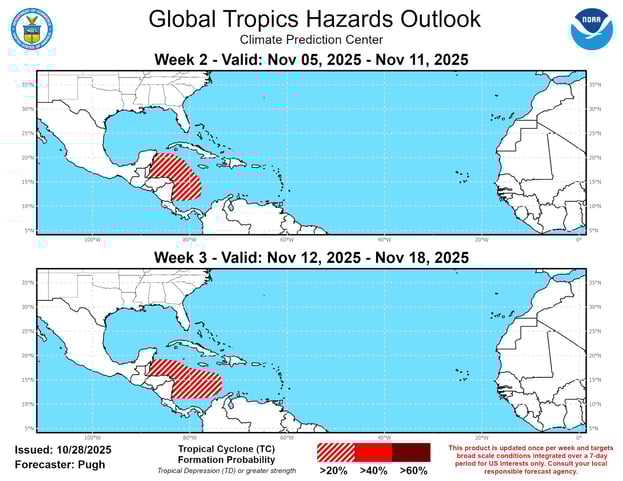
 Behind Melissa, we are not currently watching for any additional development in the tropics for now but the Climate Prediction Center has highlighted the Western Caribbean for a low chance of formation as we head into November:
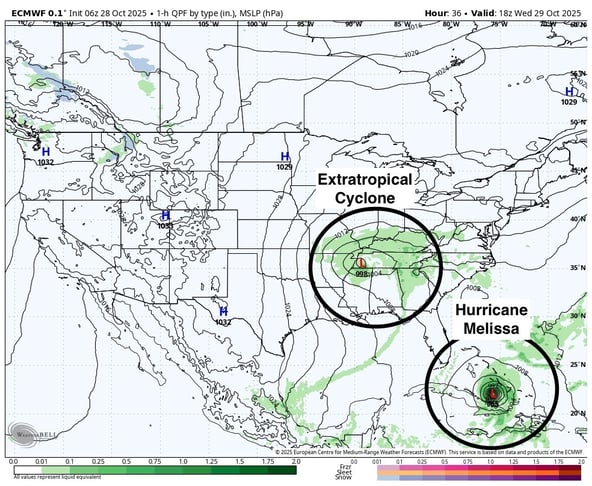
Back across the US, we will be tracking an extratropical cyclone as it moves across the center of the US and into the Northeast by later this week. With both a strong hurricane and extratropical cyclone close to each other, I thought it would be a good time to discuss what makes them different. Here are the two systems in question:
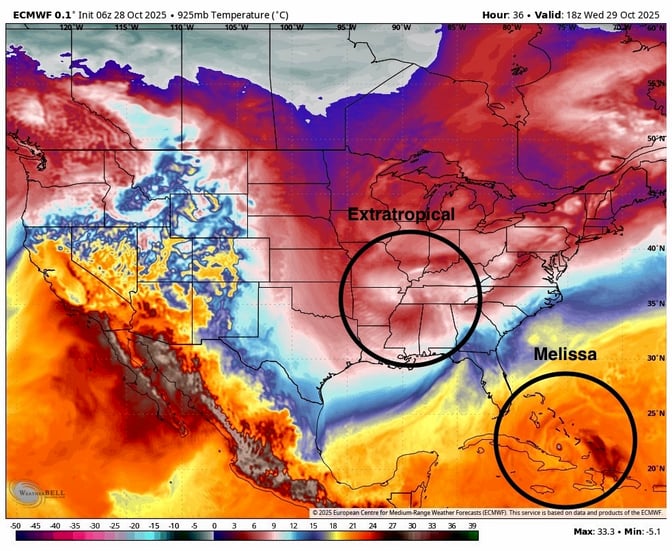
 First of all, a tropical cyclone is considered warm core and gets its energy from warm ocean waters while an extratropical cyclone is cold core and derives its energy from a temperature contrast between warm and cold air masses. This is demonstrated nicely in the below forecast image of temperatures at 925 mb or about 2500 ft above the surface. Notice the warm center of Melissa with mostly constant temperatures around it while there is a nice gradient around our extratropical cyclone:
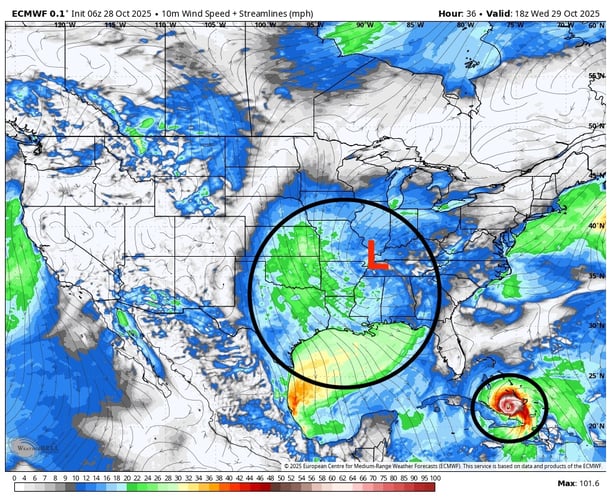
 Another big character difference is the winds associated with each cyclone. In the extratropical storm, they are much further away from the center and spread out while in the tropical system, they are strongest at the center of the storm and quite compact:
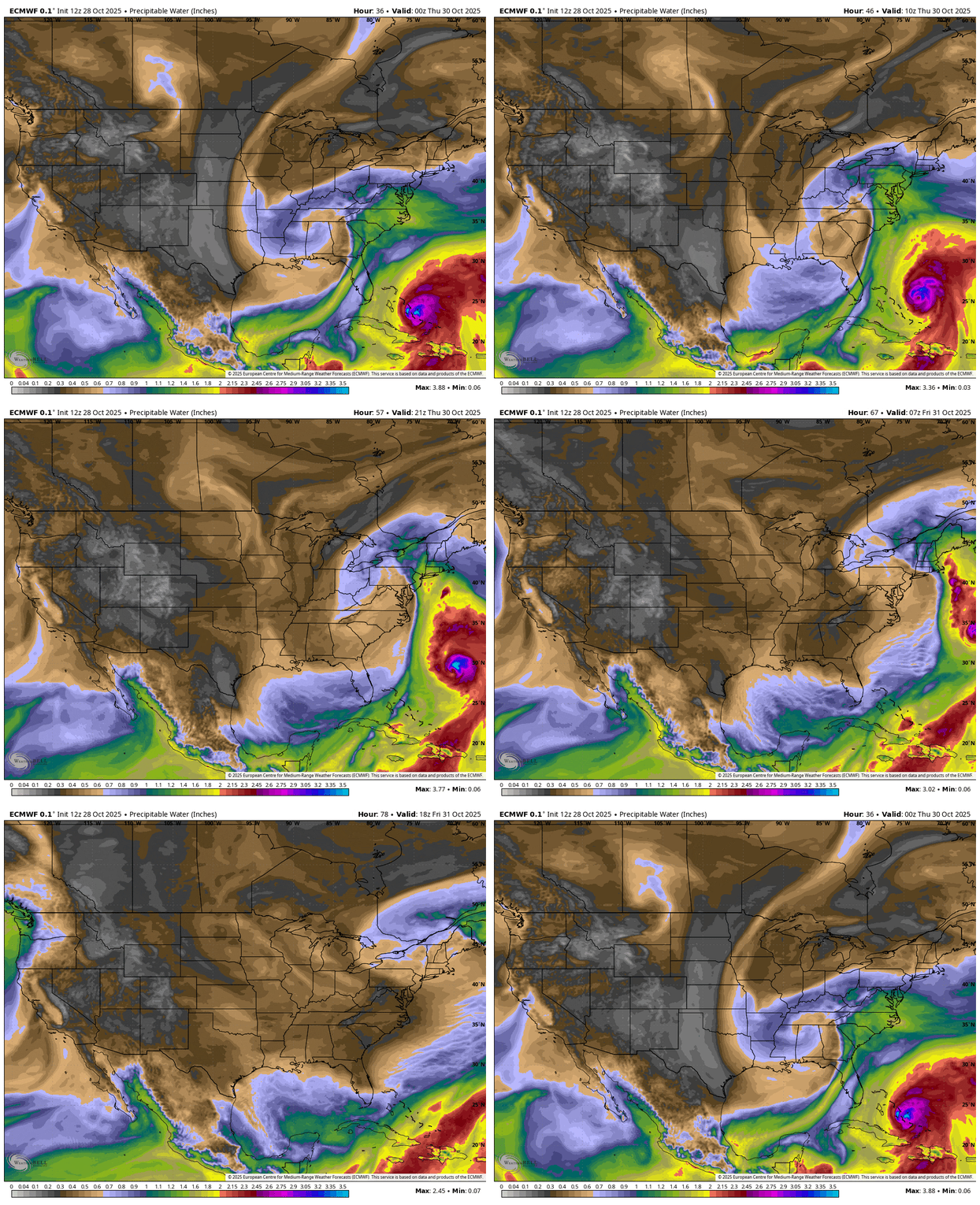
Now, what impacts can we expect from both the extratropical system and Melissa here in the US? While Melissa will stay far away from landfall, the extratropical system will pull in some of its moisture which is depicted nicely in the precipitable water animation:
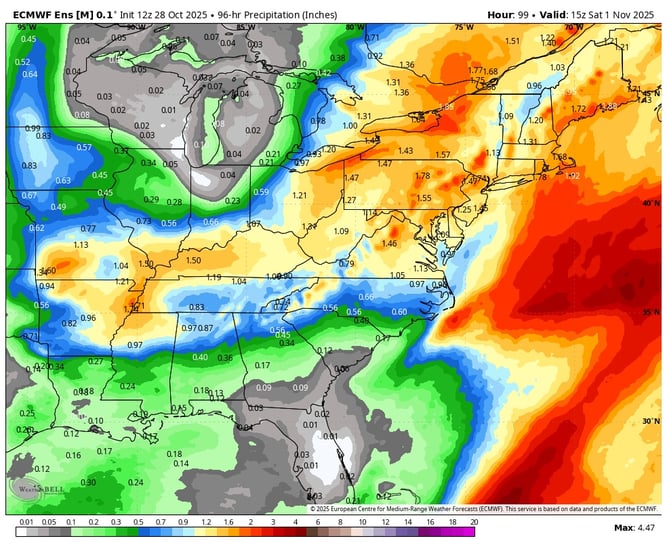
This will cause the highest rain amounts to be across New England from our extratropical storm:
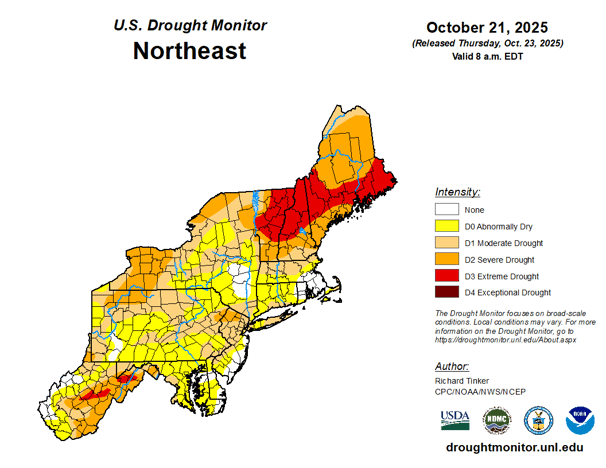
 This rain will be most welcome though as much of the region is in a drought:
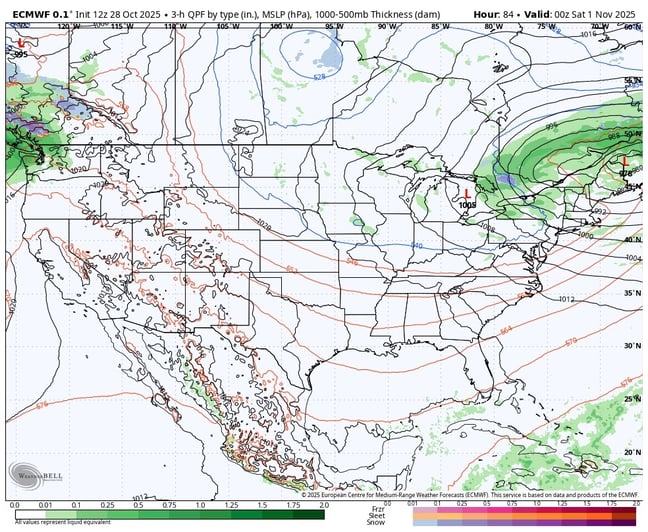
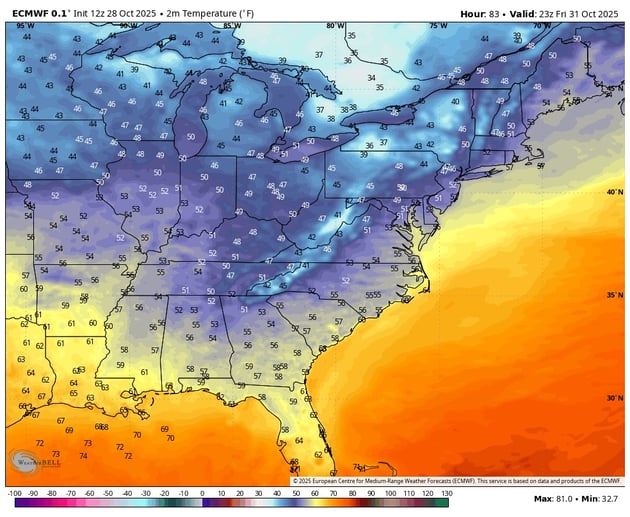
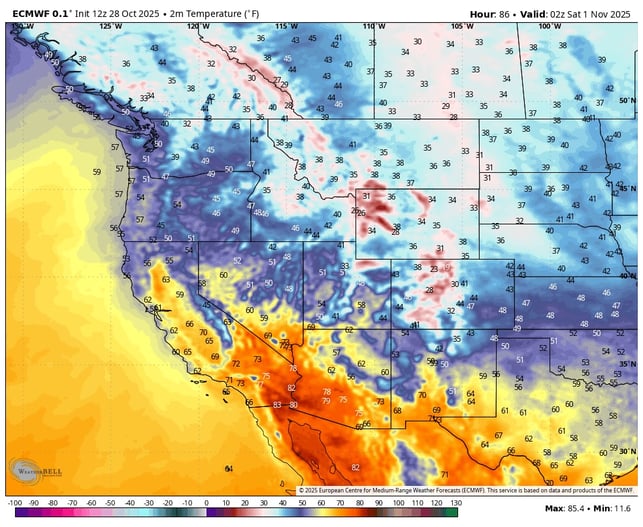
Now the question everyone wants to know is what will the weather be like for Halloween festivities? Outside of a few lingering showers across the Northeast and some rain in the Pacific Northwest, much of the country will be dry:
 Temperatures will be comfortable for most and even cool enough to wear those fluffy costumes as far south as Northern Florida. Below are the forecast temperatures for 7 pm Eastern on Friday night:
 And for the West, here are the forecast temperatures for 7 pm Pacific:
As we approach the end of the Atlantic Hurricane season and the transition from fall to winter, we want to remind you of our meteorology consulting services. Hurricane season still has over a month left and winter storms will soon be upon us. Let Weatherstem help prepare you no matter what the season is:
https://company.weatherstem.com/meteorology-services/
Weatherstem
Real-time weather monitoring for the organizations that can't afford to guess.
Professional hardware, live HD camera, automated alerts, and software — installed and managed for you. 900+ stations deployed nationwide across emergency management, athletics, and commercial operations.
Book a Free Demo