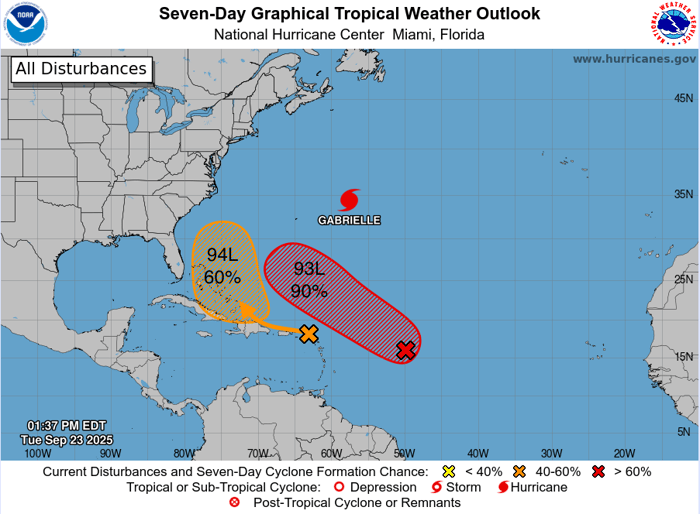
As promised, we have an update for you on the two invests in the Atlantic Ocean. The NHC has kept development odds the same as they were this morning, with 94L the western most system, given a 60% chance to develop over the next 7 days while the eastern system, 93L, has a 90% chance to develop:
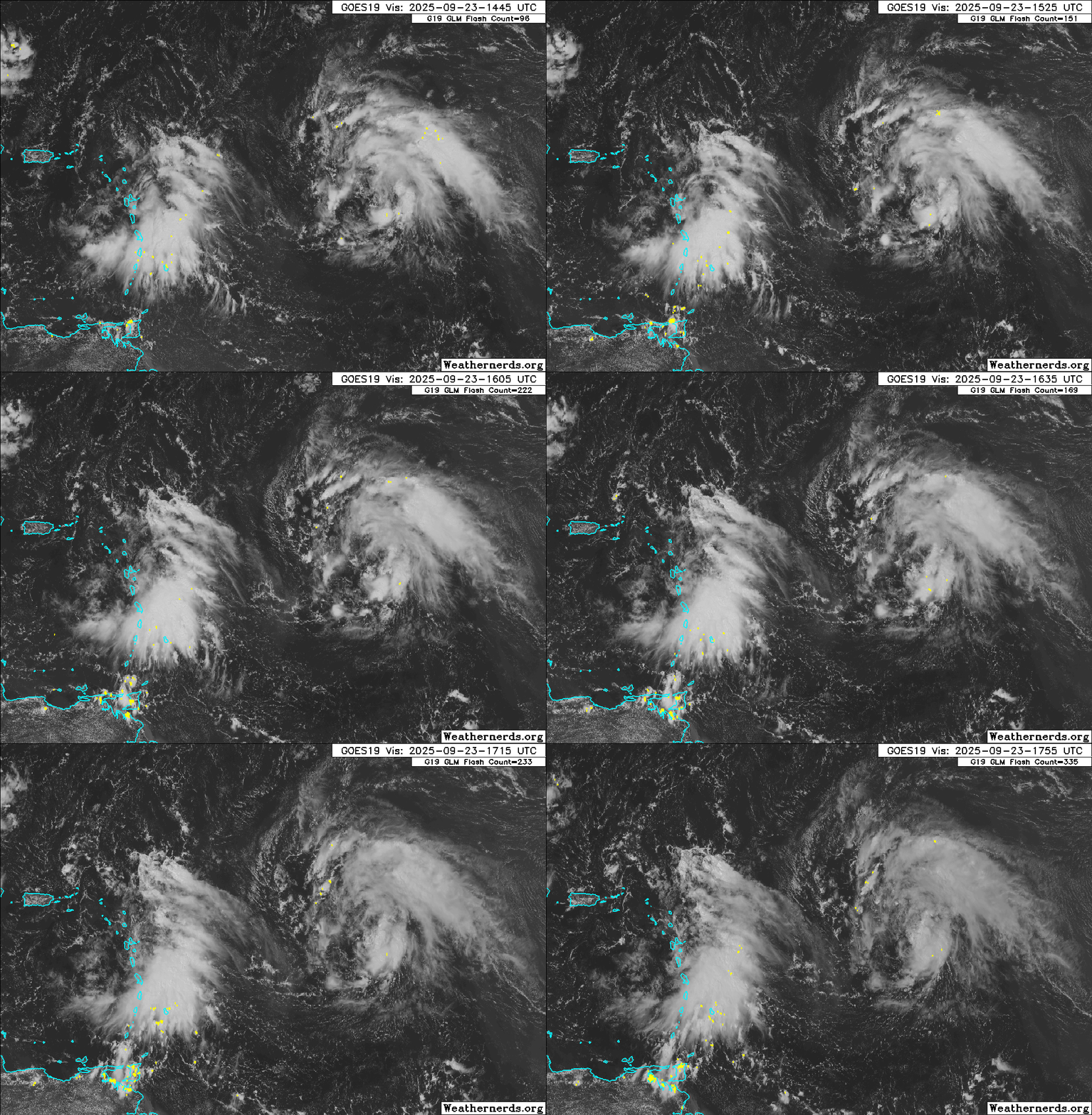
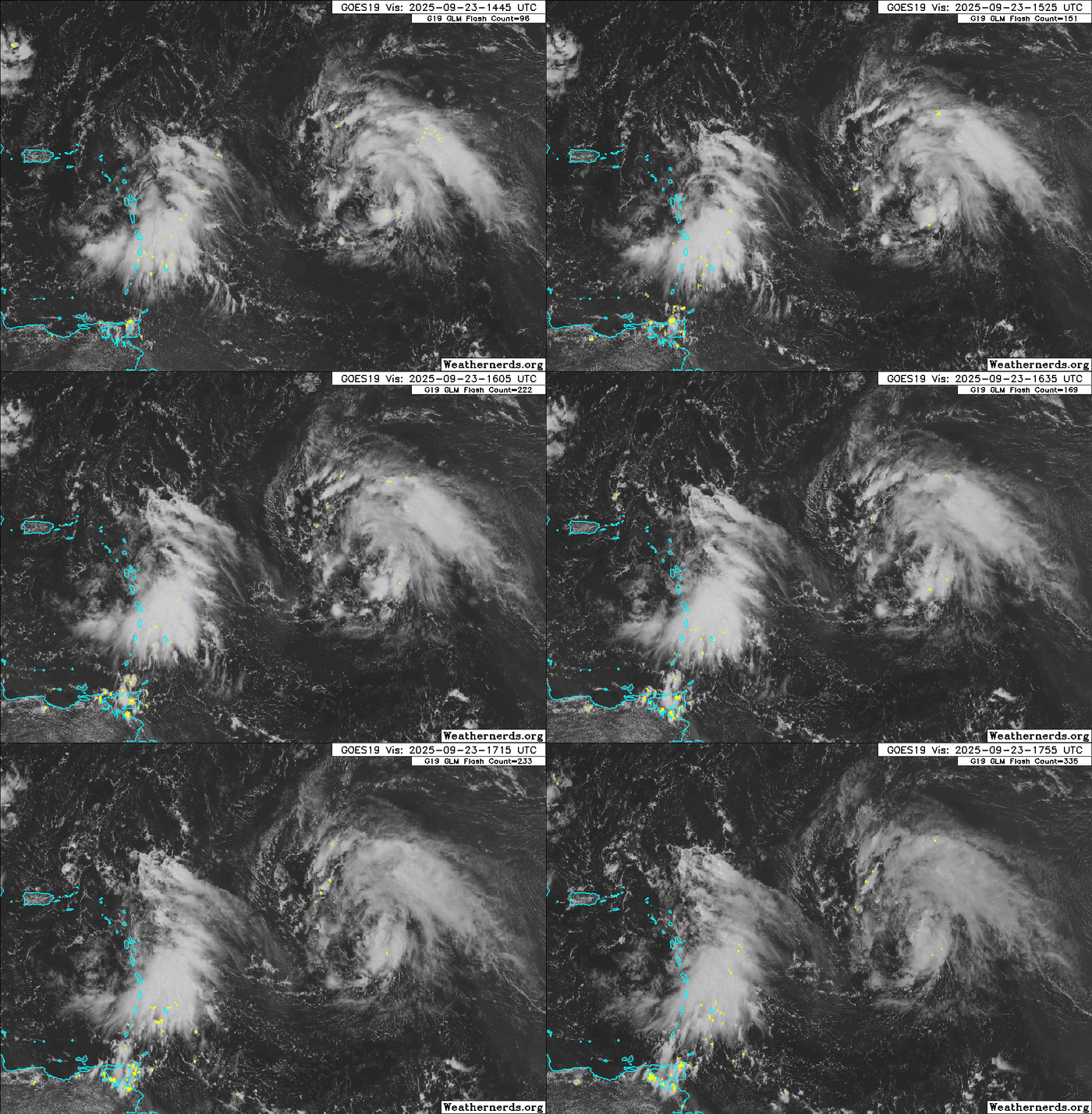
 As you can see on the below visible satellite imagery, both invests have decent storm activity and 94L will bring some squally weather to the islands:
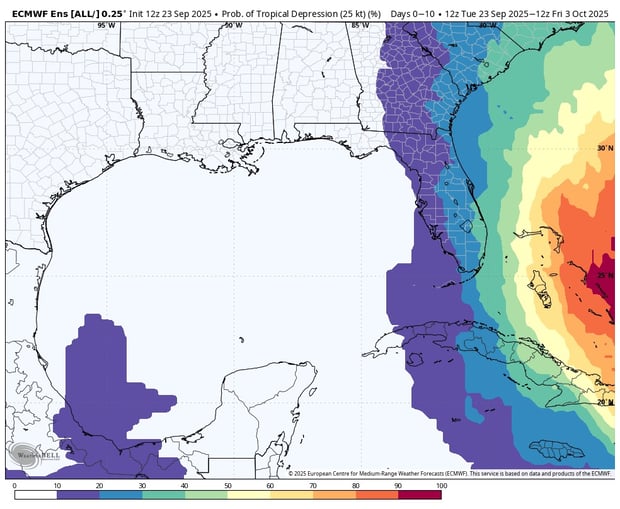
 The unfortunate news is that we really don't have any clearer of an idea of how this will play out than we did this morning with a few different scenarios still on the table. One thing we can eliminate as a scenario is for the Gulf to get one of the systems as there's a very low chance (near zero) of that happening. Below is the EURO probs of a tropical depression for the next 10 days:
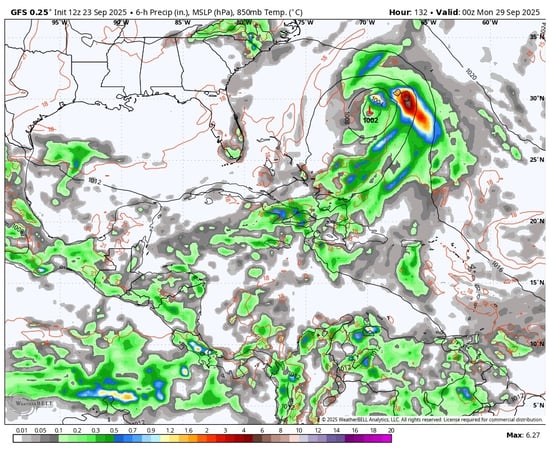
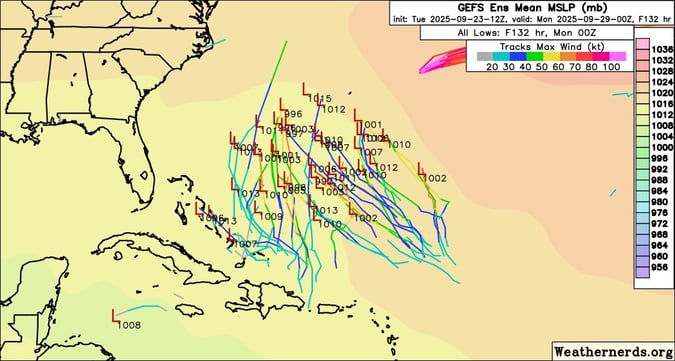
  After last year's onslaught of Gulf storms (Debby, Francine, Helene, and Milton), the last thing Gulf Coast residents want to see is another storm. If anyone in the US is to get impacts from either of these two systems, it will likely be somewhere along the southeast coast, from the east coast of Florida to the Carolinas and even as far north as the Midatlantic. Let's break down the morning models runs. First up, the GFS stuck to its overnight runs and has one system off of the Southeast coast. Even its ensemble output is showing that solution now (both images below valid for Sunday, Sep 28th at 8 pm ET):
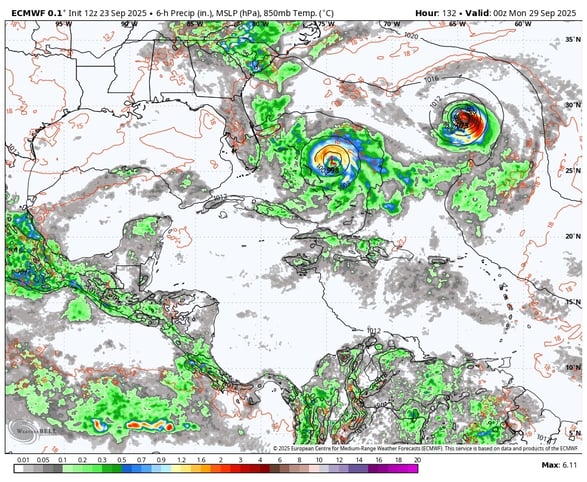
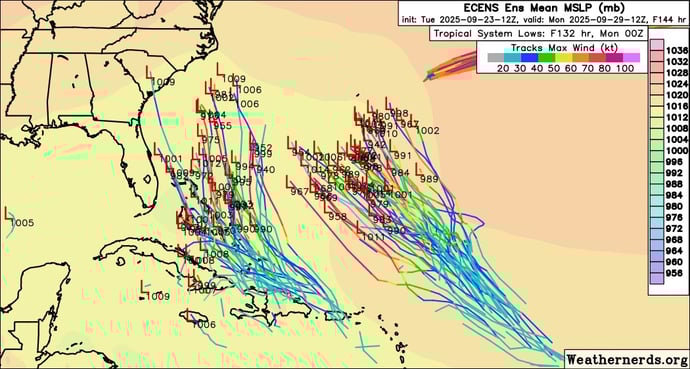
Similarly, the EURO stuck to its overnight output, depicting two rather strong systems off of the southeast coast at that same time while its ensembles are depicting the same thing (both images below valid for Sunday, Sep 28th, at 8 pm ET):
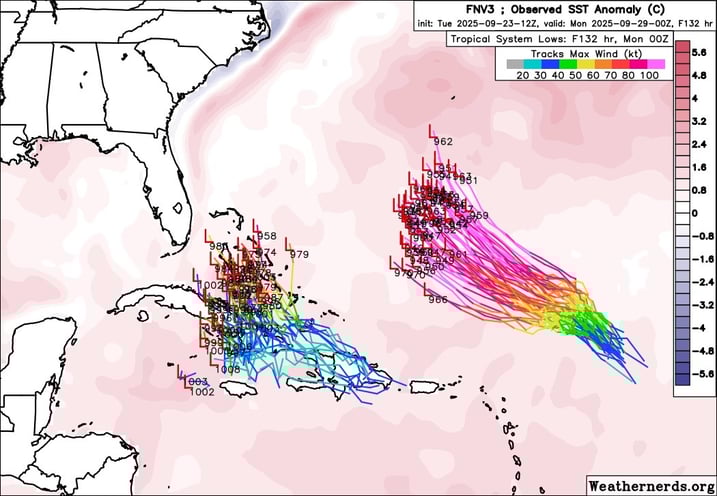
And the Google AI model that has done so well this year also has two separate systems by Sunday night:
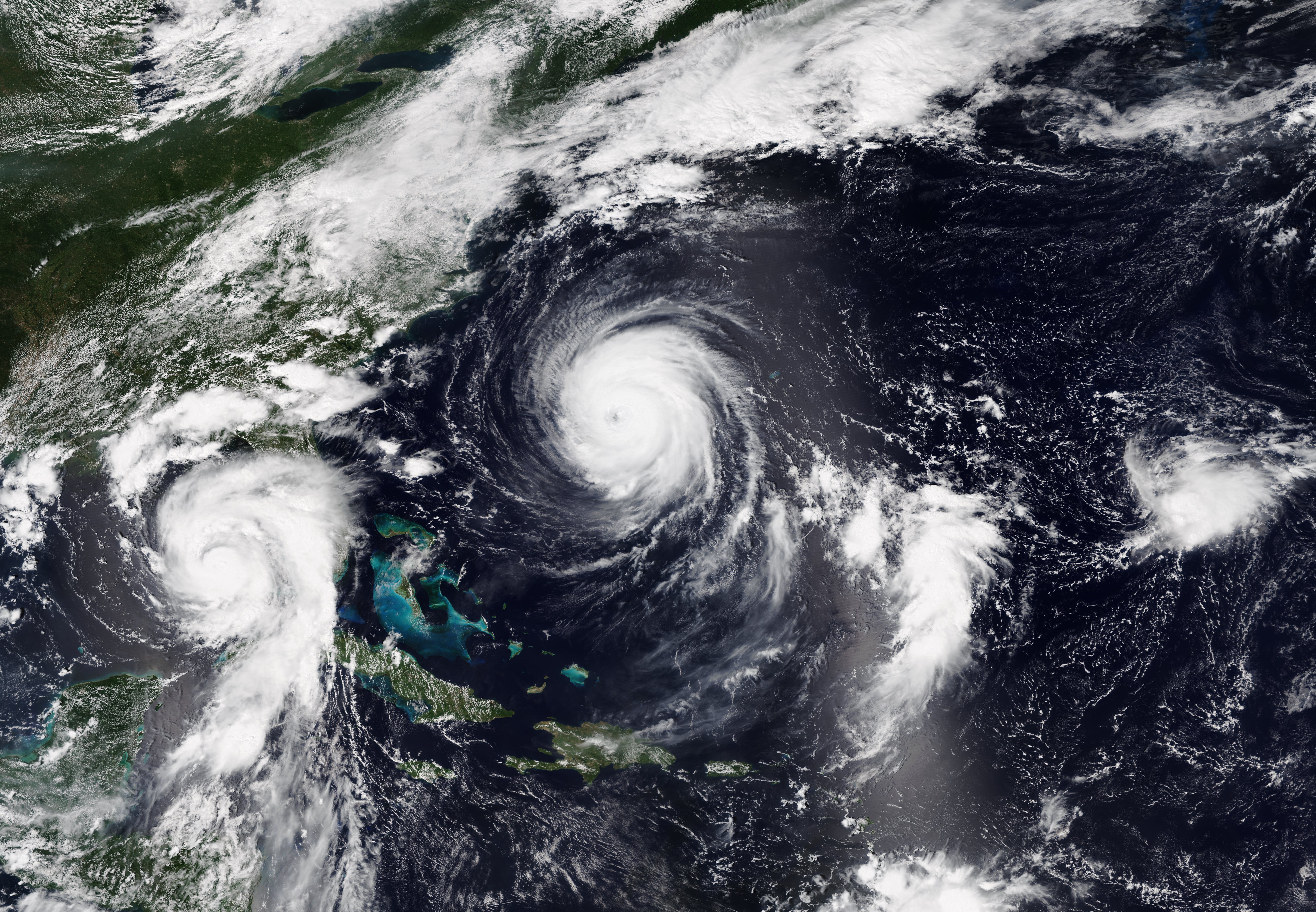
 Is it even possible to get two storms so close to one another? It is possible but the storms have to be far enough apart so that they don't interact. In 2023 for example, while Idalia was approaching the northern Gulf Coast, Franklin was further east off of the Southeast Coast:
Once we get past Sunday, there's even more uncertainty so we still won't be discussing exact impacts for the US yet. In the meantime, if you live on the Southeast coast of the US, you should continue to monitor the situation and check on your hurricane preparedness plans. After all, regardless of whether or not 93L or 94L impact the US, there are still over 2 months left in the Atlantic Hurricane Season and October has had some notorious storms make landfall.
Weatherstem
Real-time weather monitoring for the organizations that can't afford to guess.
Professional hardware, live HD camera, automated alerts, and software — installed and managed for you. 900+ stations deployed nationwide across emergency management, athletics, and commercial operations.
Book a Free Demo