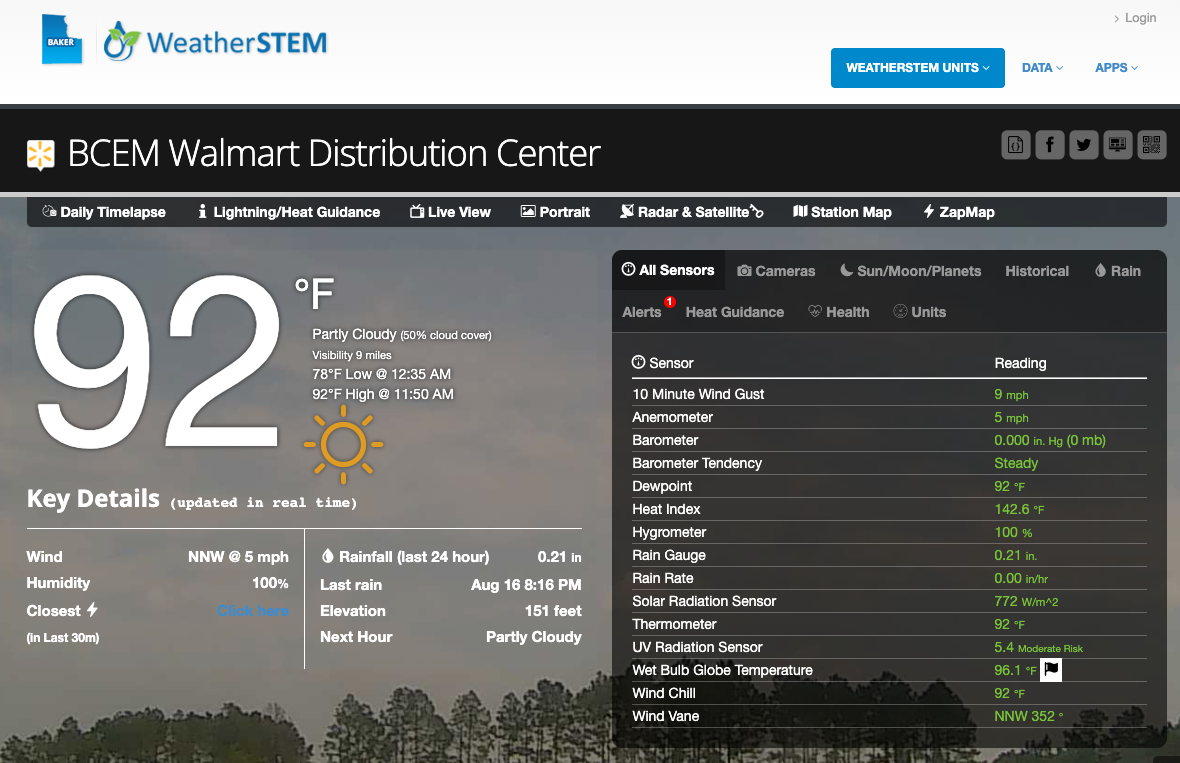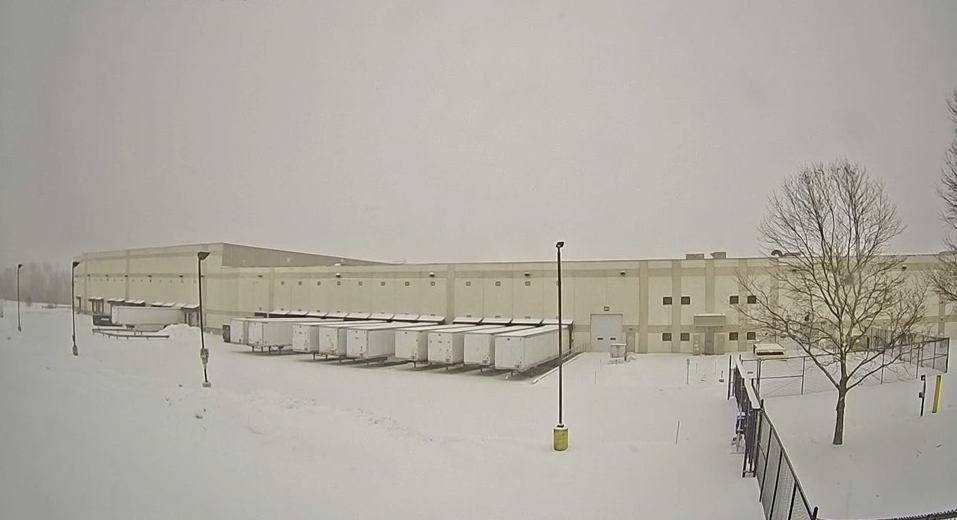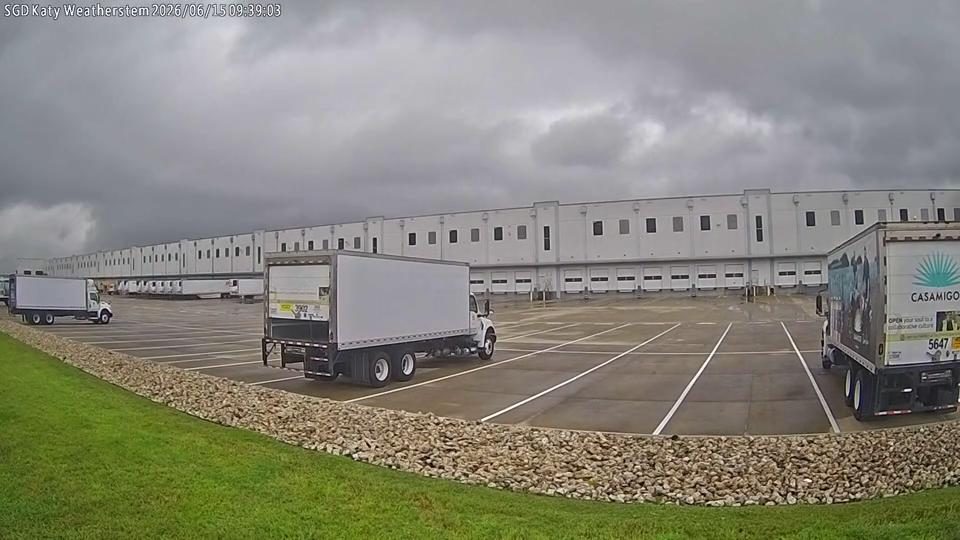
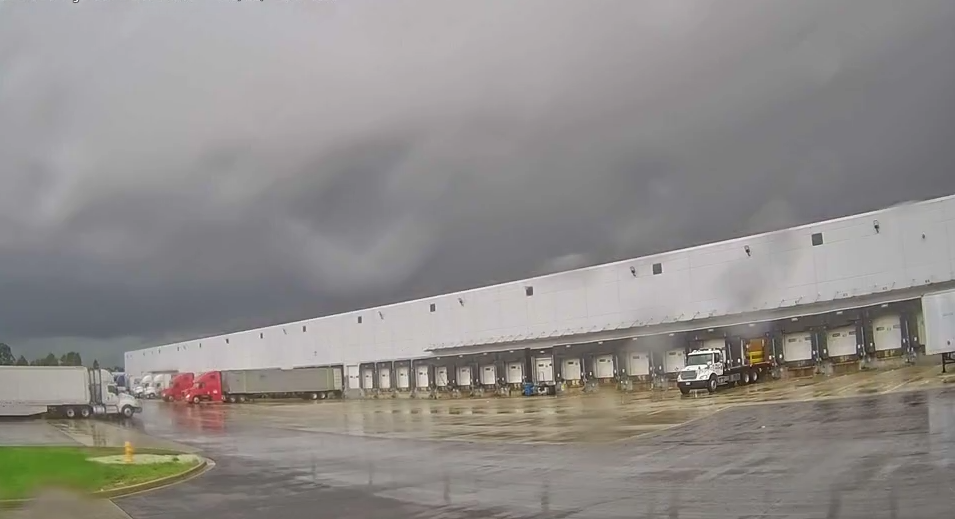
Most people picture lightning safety as a problem for construction crews, golf courses, or outdoor event venues. Distribution centers don't usually make that list, and that's exactly the gap worth closing.
Even at a facility built almost entirely indoors, employees and drivers regularly step outside to:
- Load and unload trucks
- Work in the truck yard
- Move between buildings and vehicles
- Handle activity at the loading docks
- Manage trailers
- Direct vehicle traffic
- Perform maintenance or security work outdoors
A distribution center doesn't need to be an outdoor workplace for lightning to become a real disruption. It's also a real worker-safety concern. The moment someone steps onto the dock, into the yard, or between a trailer and the building, they're exposed.
That raises two questions every facility needs to be able to answer with confidence:
How does a facility know when lightning is close enough to stop outdoor operations? And how does it know when it's safe to start them again?
The rest of this article walks through both.
Why Are Distribution Centers Vulnerable to Lightning?
It's easy to assume that because most employees work indoors, lightning risk is minimal. In practice, the risk shows up in several specific, recurring parts of daily operations.
Loading Docks
Employees spend a surprising amount of time moving between the building, the dock doors, and the trailers backed up against them, often in short, frequent trips that don't feel like "being outside," but are.
Truck Yards
Truck yards are large, open, and largely unshielded. Workers in the yard may be:
- Moving trailers
- Inspecting vehicles
- Directing traffic
- Connecting or disconnecting equipment
- Performing general yard operations
That combination of open space, metal equipment, and sustained time outdoors is exactly the kind of exposure lightning safety plans are designed to address.
Drivers and Visitors
A lightning policy that only covers employees is incomplete. Drivers, vendors, and visitors are frequently outside exactly when a storm is approaching, often without the same training or awareness that in-house staff receive.
Outdoor Maintenance and Security
Maintenance, facilities, and security personnel often have a different pattern of outdoor exposure than warehouse staff. They may be patrolling perimeters, servicing rooftop or exterior equipment, or monitoring the yard during off-hours.
The bottom line: "most employees work indoors" is not the same as "lightning exposure is insignificant." A distribution center can have dozens of people moving in and out of exposure throughout a single shift.
When Should Distribution Centers Stop Outdoor Operations for Lightning?
This is the question every lightning safety plan needs to answer clearly, and it's where a lot of informal policies fall apart.
There isn't one universally mandated distance that applies to every facility. What matters is that:
- Different organizations can and do establish different action thresholds
- A facility should decide on its threshold before a storm arrives, not during one
- That threshold should be tied to a reliable, real-time lightning detection system
- Employees and supervisors need to know exactly what happens the moment the threshold is reached
In practice, this often takes the form of a defined radius. For example, a distribution center might adopt a policy that suspends outdoor operations whenever lightning is detected within a predetermined distance of the facility.
The specific threshold should be established in advance based on recognized lightning-safety guidance and the facility's operations. The National Weather Service recommends moving inside immediately at the first sound of thunder and staying sheltered until 30 minutes after the last sound of thunder. Other organizations use defined detection-radius policies. For example, the NCAA uses a 30-minute weather delay and evacuation of outdoor athletic sites when lightning is detected within 6 to 8 miles of the venue. For a distribution center, the important operational principle is that the threshold is measurable, consistently applied, and understood by everyone who needs to act on it, from the dock supervisor to the driver waiting at the gate.
How Can Distribution Centers Detect Lightning in Real Time?
Once a threshold exists, a facility needs a reliable way to know when it's been crossed. There are several ways facilities may monitor lightning risk, but they don't provide the same level of real-time, facility-specific information.
Watching the Sky
This approach is simple but also the least reliable. Lightning can strike before there are obvious visual warning signs. It can also strike well away from the heaviest part of a storm, which means the sky overhead can look calm even when danger is close. Visibility isn't always good, and different employees may read the same conditions differently, which turns a safety decision into a matter of individual judgment.
Monitoring a Weather Forecast
A forecast is useful for planning, but it can't answer the question that actually matters in the moment: is lightning occurring close enough to our facility right now to stop outdoor operations? Forecasts tell you what's possible over a period of time. They don't tell you what's happening outside the building right now.
Real-Time Lightning Detection
A dedicated lightning detection system closes that gap. It can provide:
- Real-time lightning information as it happens
- Distance- or radius-based alerts tied to the facility's specific threshold
- Automated notifications, removing the need for someone to keep watching a screen
- Consistent triggers, so the decision isn't left to individual interpretation
- Ongoing situational awareness for operations and safety teams
This is the difference between reacting to a storm you can already see and receiving a data-driven alert when lightning crosses your facility's defined threshold.
How Should a Distribution Center Respond to a Lightning Alert?
A detection system is only as useful as the response it triggers. That response needs to be planned well before the first alert ever goes out.
Before Lightning Arrives
- Establish the lightning threshold
- Identify exactly who receives alerts
- Train employees and supervisors on what the alert means and what to do
- Identify safe shelter locations in advance
- Establish procedures for drivers and visitors, not just employees
- Determine how outdoor operations will actually be suspended: who gives the word, and how it's communicated
When Lightning Reaches the Threshold
- Stop loading and unloading activity
- Move employees and other exposed personnel into appropriate safe shelter
- Suspend yard operations
- Bring exposed personnel indoors
- Communicate the lightning warning to drivers and supervisors
- Keep people away from exposed outdoor areas until conditions clear
The principle underneath all of this: an alert is only useful if it triggers a predefined action. A notification that reaches someone's phone but doesn't lead to a clear, practiced response hasn't actually made anyone safer.
When Is It Safe to Resume Outdoor Operations?
This question deserves its own section, because it's just as important as knowing when to stop, and it's an important part of a lightning safety plan that can be overlooked.
A facility shouldn't resume outdoor operations just because:
- The rain has stopped
- The sky looks brighter
- Thunder isn't immediately audible
- The storm appears to be moving away
None of those are reliable indicators that the lightning threat has actually passed. Instead, the organization should establish a specific return-to-work threshold as part of its lightning safety policy, the same way it established a stop-work threshold, and rely on an automated all-clear notification to confirm when conditions actually meet that standard.
This matters because the goal isn't simply "stop work." The real goal is: stop work when necessary, then resume as soon as conditions meet the facility's safety criteria, no sooner and no later than necessary. That second half is what connects lightning safety directly to minimizing unnecessary downtime, which matters just as much to distribution-center operations as the safety piece itself.
What Is a Safe Shelter During a Lightning Storm?
A substantial enclosed building is generally the preferred shelter, but an enclosed, hard-topped vehicle is an acceptable alternative when a substantial building isn't available.
Open-sided structures, tents, covered loading areas and similar spaces should not be treated as adequate lightning shelter.
How Can Lightning Alerts Reduce Disruption to Distribution Center Operations?
Lightning safety isn't only a safety issue. It's an operational continuity issue.
Without a defined system in place, facilities tend to run into the same problems repeatedly:
- Delaying operations longer than necessary because there is no clear return-to-work criterion
- Keeping workers outside too long because no one gave a clear stop signal
- Relying on inconsistent, person-by-person judgment calls
- Struggling to determine when conditions are actually safe again
- Creating communication gaps between warehouse staff and yard operations
A measurable alert system replaces all of that guesswork with a consistent, repeatable sequence:
Lightning detected, outdoor operations suspended, lightning threat passes, all-clear issued, operations resume.
That's a clean operational story, one that protects people without leaving productivity to chance.
How to Build a Lightning Safety Plan for a Distribution Center
Bringing it all together, here's a practical checklist for building (or auditing) a lightning safety plan:
- Identify all outdoor activities and areas exposed to lightning.
- Establish a lightning detection threshold.
- Identify safe shelter locations.
- Determine who receives lightning alerts.
- Define procedures for employees, drivers, vendors, and visitors.
- Establish procedures for stopping outdoor operations.
- Establish an all-clear / return-to-work threshold.
- Train employees and supervisors on the plan.
- Test the notification process before you need it.
- Review the plan after significant storms or operational disruptions.
A distribution center will never eliminate the risk that comes with loading docks, truck yards, and outdoor work. What it can control is how quickly it recognizes danger, how clearly that information reaches the people who need it, and how confidently it can bring operations back online once the threat has passed. That's the real value of real-time lightning detection: helping facilities stop outdoor operations when their defined safety threshold is reached and resume them when conditions meet their established return-to-work criteria.
Want to see how real-time lightning detection can help your distribution center establish measurable stop-work and return-to-work thresholds? Talk with Weatherstem.
When should a distribution center stop outdoor operations for lightning?
Distribution centers should establish a lightning detection threshold in advance as part of their lightning safety plan. When lightning reaches that defined threshold, outdoor operations should be suspended and exposed personnel moved to appropriate shelter. The specific threshold should be based on recognized lightning-safety guidance and the facility's operations.
How far away does lightning have to be to stop work?
There is not one universally mandated lightning distance for every workplace. Organizations should establish a measurable lightning detection threshold based on recognized safety guidance and their specific operations. The National Weather Service recommends seeking shelter at the first sound of thunder and remaining sheltered until 30 minutes after the last sound of thunder.
When is it safe for distribution center workers to return outside after lightning?
Workers should return to outdoor operations according to the facility's established return-to-work criteria rather than simply waiting for rain to stop or the sky to brighten. An automated all-clear notification tied to the facility's lightning safety policy can provide a consistent signal for when conditions meet those criteria.

Weatherstem provides real-time weather monitoring, lightning detection, and automated alerting systems for emergency management, government agencies, athletics programs, and commercial operations. 900+ stations deployed nationwide.
Weatherstem
Real-time weather monitoring built for compliance and life-safety decisions.
Professional hardware, dual lightning detection, automated alerts, and permanent data logging — installed and managed for you. Used by emergency management agencies, athletic programs, and government operations nationwide.
Book a Free Demo