Texas Heaven's 27 Camp Safety Act: What Youth Camps Must Have in Place
In July 2025, catastrophic flooding at Camp Mystic in the Texas Hill Country claimed the lives of 27 children and counselors. The tragedy exposed a critical gap: Texas youth camps had no enforceable, standardized requirement for severe weather preparedness.
That changed on September 5, 2025.
Texas enacted Senate Bill 1, known as the Heaven's 27 Camp Safety Act, and House Bill 1, the Youth CAMPER Act, in a unanimous special session. Together they represent the most significant overhaul of Texas youth camp safety law in the state's history.
If you operate a youth camp in Texas, this is not optional and the compliance deadlines have already passed for several requirements. Here is exactly what the law requires.
What Is the Heaven's 27 Camp Safety Act?
The Heaven's 27 Camp Safety Act amends Chapter 141 of the Texas Health and Safety Code and creates Chapter 762. It applies to all licensed youth camps in Texas, including day camps, overnight camps, sports camps, wilderness programs, and specialty camps serving anyone under 18.
The name honors the 27 lives lost at Camp Mystic. The law was authored by Sen. Charles Perry and passed with full bipartisan support.
Key Compliance Deadlines
|
Deadline |
Requirement |
|
September 5, 2025 |
Law takes effect |
|
January 1, 2026 |
DSHS publishes licensing and safety rules |
|
April 1, 2026 |
Camps submit Emergency Action Plans to DSHS |
|
Start of each session |
Camper safety orientation required |
|
Annually |
Staff training and EAP update required |
What the Law Requires
1. Emergency Action Plan filed with DSHS
Under Section 141.0091, every licensed Texas youth camp must develop a comprehensive Emergency Action Plan covering floods, severe thunderstorms, lost campers, injuries, aquatic emergencies, and unauthorized persons on property. The EAP must include evacuation protocols, shelter-in-place procedures, camper tracking methods, and communication plans with emergency services and parents.
Camps must submit their EAP to the Texas Department of State Health Services annually. If DSHS finds the plan deficient, camps have 45 days to revise and resubmit.
2. Floodplain cabin restrictions
Under Section 141.0052, DSHS cannot issue or renew a youth camp license for any camp operating sleeping cabins within a FEMA-designated floodplain. The restriction applies unless:
- The cabin is located near a still body of water not connected to a river or stream, or one that is dammed
- The cabin is at least 1,000 feet from a floodway
Camps within 1,000 feet of a floodway that fall under an exception must also install emergency roof access ladders on those cabins and have a specific flood evacuation plan in place.
Camps must notify parents in writing if any part of the property is within a floodplain and collect signed acknowledgment forms before the session begins.
3. Real-time weather alerting and redundant systems
Under Section 141.0091(c), camps must maintain:
- An operable NOAA radio capable of receiving National Weather Service alerts in real time
- A camp-wide public address system that functions without the internet
- Two independent internet connections, with a primary fiber-optic connection and a broadband backup using cellular, microwave, or satellite technology
- Continuous monitoring of NWS alerts, local river authority warnings, and official emergency channels
When a flash flood, flood, or tornado warning is issued by the NWS, camps must immediately begin evacuation or shelter-in-place. This is not discretionary. The law requires action on the alert, not on personal judgment about current conditions.
4. Annual staff training and camper orientation
All camp staff must complete annual training in emergency response and weather procedures. Evacuation drills must be conducted at the start of each session. Every camper must receive a safety orientation within 48 hours of arrival covering the camp's physical boundaries, site hazards, and what to do in an emergency.
Training records must be maintained and available for inspection.
5. Designated safe assembly points
Camps must designate specific muster zones where campers and staff gather during any evacuation. A system must be in place to track the location and status of every camper during an emergency.
6. Public registry
Texas now maintains a public online registry of all licensed youth camps under Section 141.0056.
How Weatherstem Supports Compliance
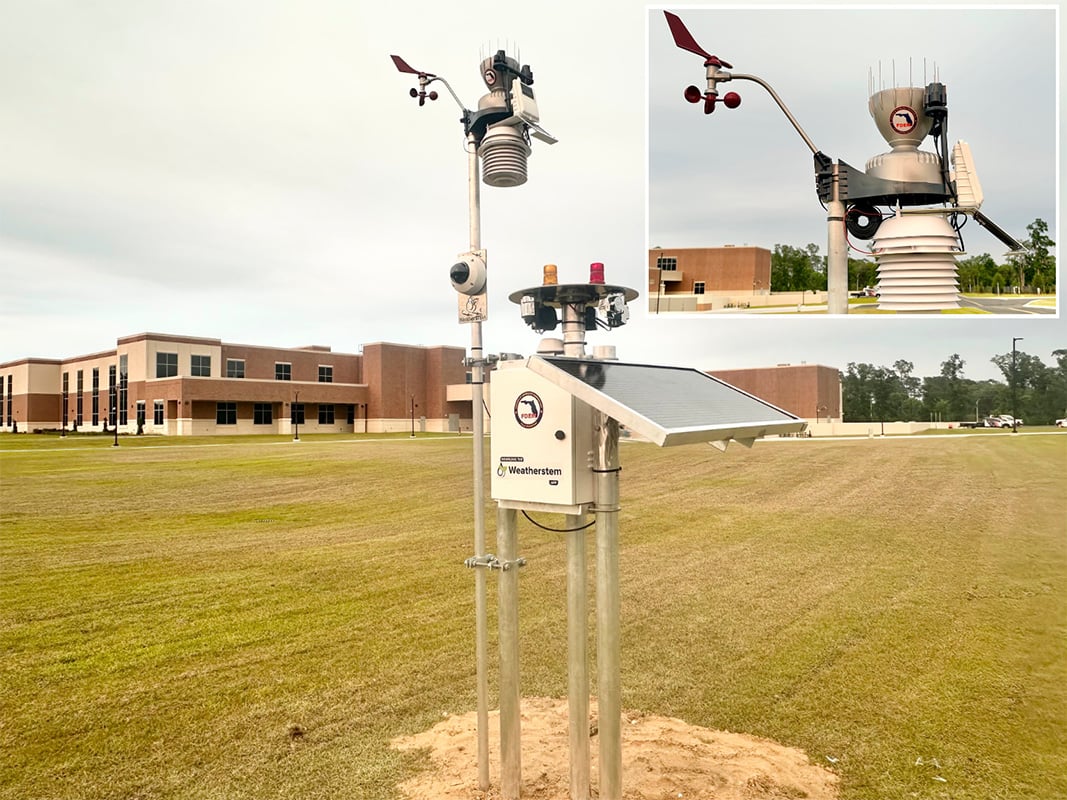
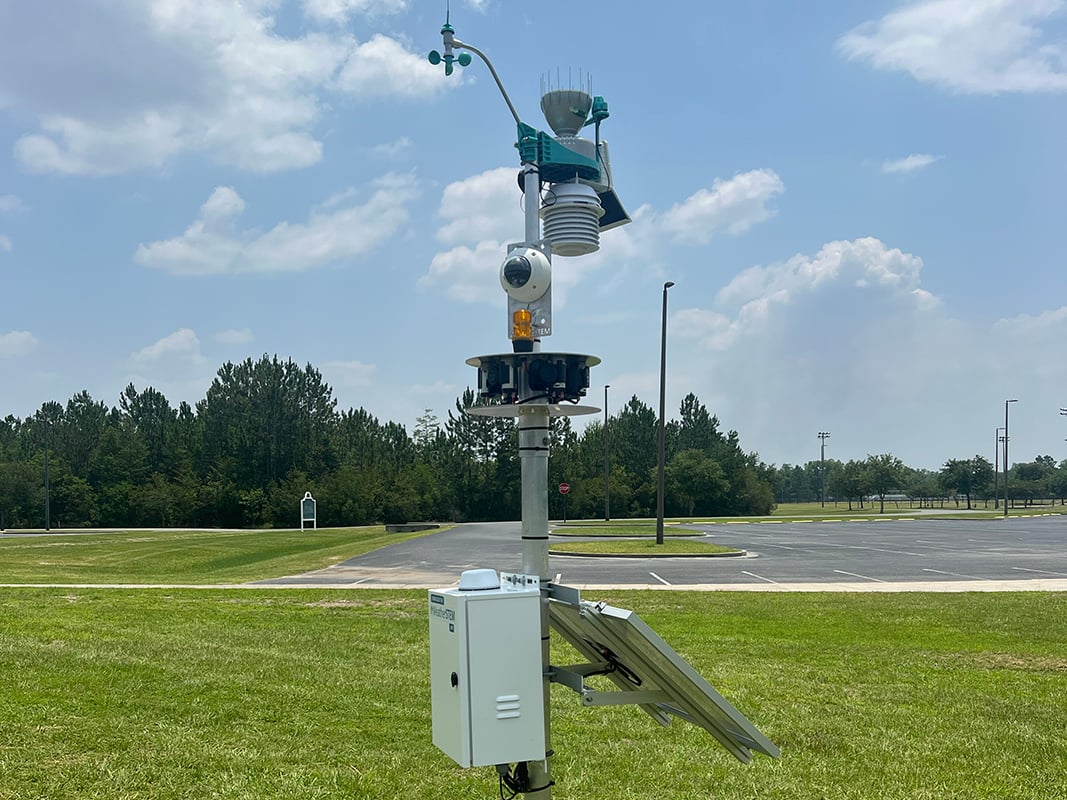
Weatherstem's on-site weather stations, automated alerting, and timestamped documentation are built around exactly the requirements the Heaven's 27 Act puts into statute.
On-site, hyperlocal data provides readings from your camp's exact location every 0.8 seconds. Supports your EAP with site-specific weather documentation no regional model or airport station can provide.
Redundant NWS-integrated alerting delivers warnings to your dashboard, mobile app, and PA or siren system simultaneously. At least one delivery path functions without cellular service, satisfying the non-cellular requirement directly.
Dual lightning detection uses NLDN as the primary network with AccuWeather as a live backup. If one network experiences any disruption, alerting continues without interruption. This is redundancy at the detection level, not just the notification layer.
Blast outdoor warning siren provides a 117dB audible alert heard 700 yards away, triggered automatically when conditions require action. Operates independently of internet connectivity, satisfying the PA system without internet requirement.
Permanent compliance logs capture every alert, all-clear, drill, and weather event automatically with full timestamps. Exportable for any date range, ready for DSHS review or inspection.
A team that responds. When conditions are developing fast, you can reach us. Weatherstem has been trusted by emergency management agencies, school districts, and government operations for years. We pick up the phone.
See how Weatherstem helps camps meet every requirement on one platform.
What Sets Weatherstem Apart for Texas Camps
Most other solutions satisfy the delivery side of the redundancy requirement. Weatherstem goes further by providing redundancy at the detection level. Your camp receives lightning alerts from two completely independent networks simultaneously. If NLDN goes down, AccuWeather's network keeps your alerts running. That is an industry first and it matters most exactly when severe weather strikes.
Weatherstem is also the platform behind the Florida Severe Weather Mesonet, which includes more than 240 stations deployed statewide in partnership with the Florida Division of Emergency Management. New Orleans OHSEP runs 26 Weatherstem stations across Orleans Parish. That government-grade credibility is the same infrastructure your camp gets access to.
The Floodplain Question Is the Most Urgent
For many Texas camps, the floodplain restriction is the most immediately consequential part of the law. If your camp has sleeping cabins in a river floodplain, you cannot be licensed to operate unless you fall under one of the narrow exceptions.
Start with a FEMA flood map review at your property. If you have cabins within a designated floodplain, get your county emergency management director involved immediately. They are your partner in this process, not your adversary.
If you are outside the floodplain restrictions but still working on alerting infrastructure, the redundancy requirement is your next priority. A single weather app or a single notification system does not meet the standard.
What to Do Now
The April 1, 2026 EAP submission deadline has passed. If your camp has not submitted an Emergency Action Plan to DSHS, that is your most urgent task. DSHS will provide a deficiency notice and 45 days to correct, but operating without a submitted plan puts your license at risk.
After that, audit your alerting infrastructure. Two independent systems, at least one without cellular dependency. If you are not there yet, that is what needs to be addressed before your next session.
If you want to see how Weatherstem works for your specific camp location, we are happy to show you real data from your area in a free 15-minute demo.
Also operating an Oklahoma camp? Read about Oklahoma HB 1675 and what it requires.

Weatherstem provides real-time weather monitoring, lightning detection, and automated alerting systems for emergency management, government agencies, athletics programs, and commercial operations. 900+ stations deployed nationwide.
Weatherstem
Real-time weather monitoring built for compliance and life-safety decisions.
Professional hardware, dual lightning detection, automated alerts, and permanent data logging — installed and managed for you. Used by emergency management agencies, athletic programs, and government operations nationwide.
Book a Free Demo
.jpg)