Every emergency operations center has a wall of displays. Radar mosaics, NWS warnings, traffic cameras, social media feeds, GIS layers, dispatch. The watch desk monitors all of it during an active event. One thing is usually missing: a real-time, on-site weather station feeding ground-truth conditions from the EOC itself into the same screens.
This is a small omission with meaningful operational consequences. Here's why an on-site weather station belongs at every EOC, what configurations work for different agency sizes, and how the data gets used during events.
Overview: Why an On-Site Station Belongs at the EOC
An emergency operations center is the place where weather decisions get made. Shelter activations, evacuation calls, resource staging, mutual aid requests, public messaging, road closure recommendations. Every one of those decisions has a weather input.
The watch desk is already getting weather data from NWS, radar feeds, and commercial weather services. That data is essential and irreplaceable for forecasting and broad situational awareness. But none of it tells you what is happening at the EOC right now, on the ground, where your incident commander, your dispatch staff, and your liaison officers are working.
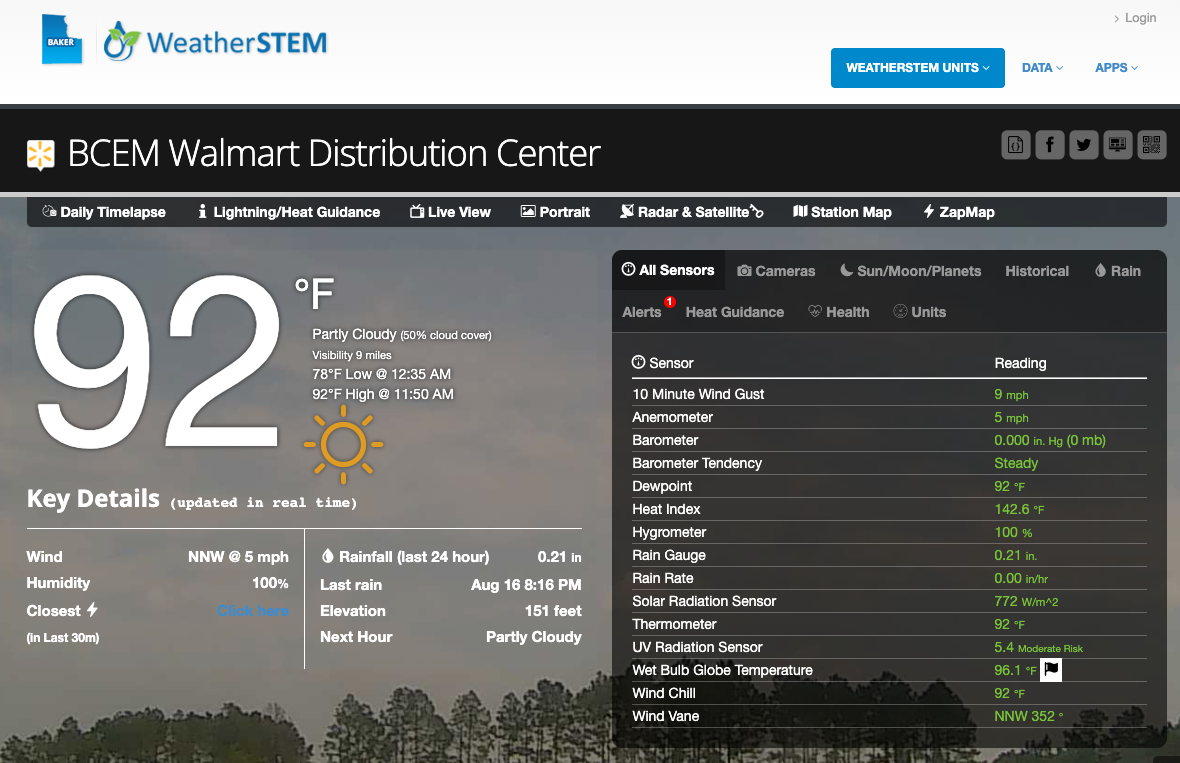
A locally-installed station closes that gap. The wind reading on your screen is the wind at the EOC. The rainfall accumulation is what is falling in the parking lot. The temperature is what your field staff are working in when they step outside to brief a reporter. That is a different kind of data than a forecast, and it changes how decisions get made.
The Decisions an EOC Station Actually Drives
A few specific operational decisions get noticeably easier when the EOC has its own weather station.
Activation triggers and pre-positioning
When wind, pressure, or rainfall at the EOC crosses pre-defined thresholds, the system can trigger automatic notifications to staff and partner agencies. Activation decisions get faster because the data driving them is local and continuous, not pulled from a regional source on demand.
Public messaging accuracy
When the PIO or director is briefing the public or media, citing real-time on-site conditions — "wind gusts to 62 mph were recorded at the county EOC at 3:47 PM" — is more credible and more actionable than citing a regional forecast.
Field staff safety
Lightning detection at the EOC drives clearance and return-to-activity decisions for outdoor staff and visiting partner agency personnel. The system fires the alert automatically when a strike is detected within range and signals an all-clear when conditions reset.
After-action documentation
Every reading from the EOC station is timestamped and logged permanently. When the AAR is being written, every weather condition that drove a decision is retrievable for any minute of the event. Same data supports FEMA reimbursement and any insurance or legal review.
Visual confirmation through the camera
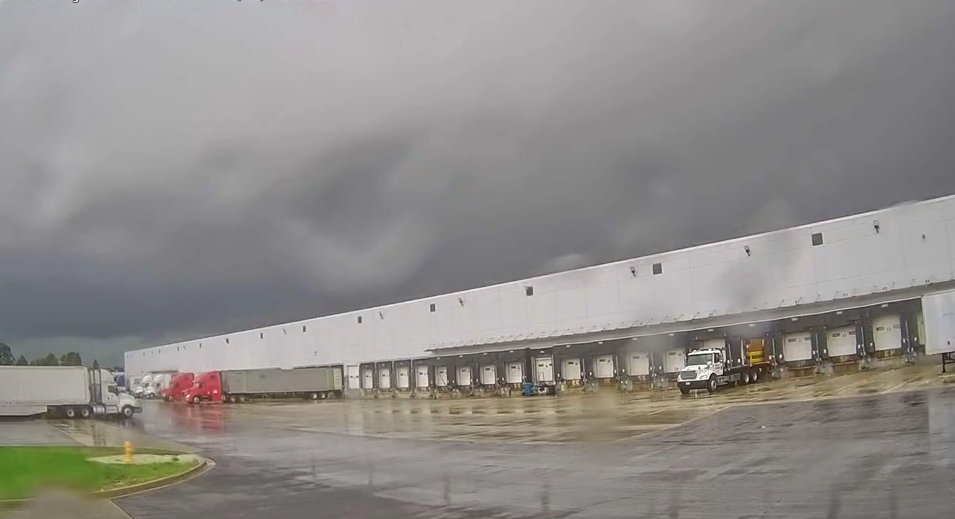
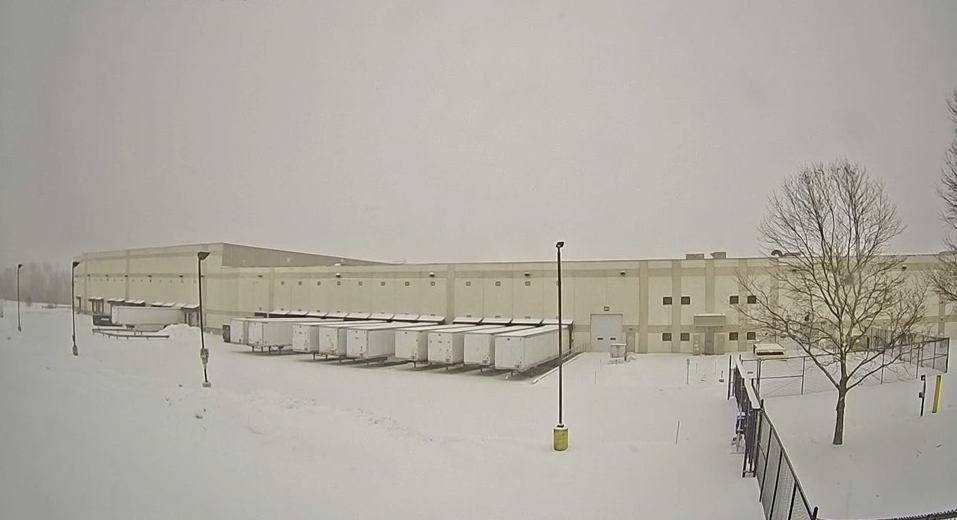
A live HD camera at the station adds a piece the data alone cannot provide: visual confirmation. Is the sky actually as ominous as the radar suggests? Are the trees moving the way the wind reading indicates? Is there visible smoke from the wildfire to the north? Eyes on the conditions, from the EOC itself.
EOC Station Configurations by Agency Size
The right station configuration depends on the agency's role and exposure. A few practical reference points based on deployments we have operated.
State Emergency Operations Center
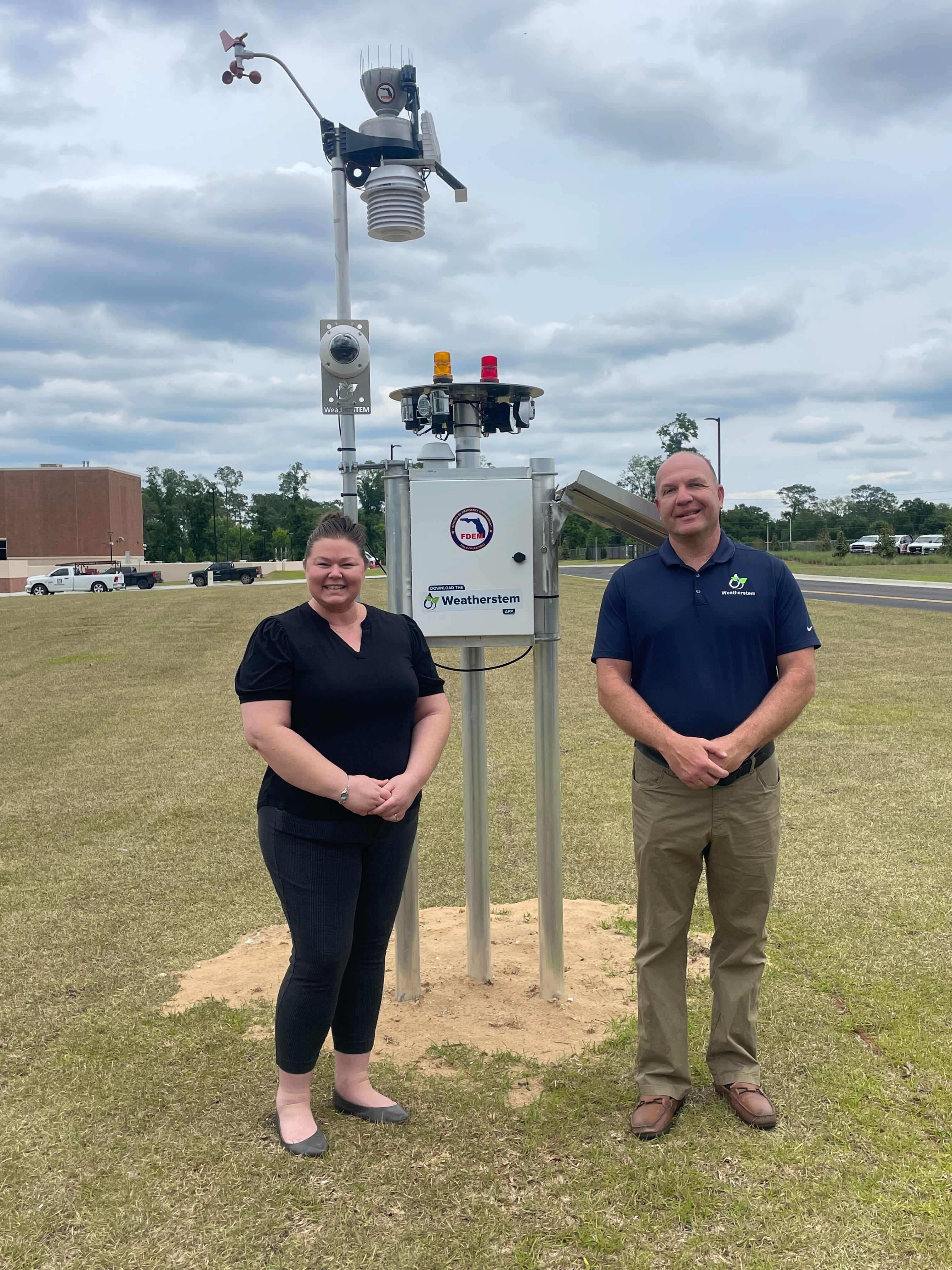
A state EOC is the network anchor. The Florida Division of Emergency Management runs a Protect Pro+ station at the State EOC in Tallahassee, integrated into the Florida Severe Weather Mesonet alongside stations at host entities across nearly all 67 Florida counties. The state-level deployment uses hurricane-rated hardware because the building itself may need to remain functional during landfall events.
Pair the station with a unified software platform that aggregates data from local stations across the state, so the state EOC has both ground-truth at its own location and a network-level view across the jurisdiction.
County Emergency Operations Center
A county EOC typically warrants a Protect or Protect Pro station depending on the region's hazard profile. Coastal counties in hurricane country use the Pro+ for the same hurricane-rated reasons as the state. Inland counties facing severe weather, wildfire, or extreme heat as the primary threats can run a standard Protect Pro configuration.
The county-level deployment also tends to be the anchor for additional stations at high-priority county facilities — shelter sites, schools that serve as shelters, public works yards, and athletic complexes. The Wayne County, Georgia deployment is a clean example: started with a single station with Emergency Management, expanded to school district facilities once the operational value was visible.
Municipal or Parish Operations Center
Municipal and parish operations centers often need denser monitoring within a smaller geographic area. The New Orleans Office of Homeland Security and Emergency Preparedness operates 26 Weatherstem Protect Pro stations across Orleans Parish for continuous monitoring of wind, rainfall, heat, and air quality at neighborhood resolution. The density is necessary because urban microclimates can vary substantially between neighborhoods, and EOC decisions need to reflect that variability.
Parameters the EOC Station Should Actually Measure
For EOC use specifically, the parameter list is shorter than the full sensor catalog. The readings that show up on the wall during an event are:
- Wind speed, gust, and direction — drives hurricane operations, wildfire spread modeling, hazmat dispersion, and outdoor event safety
- Rainfall and accumulation — flood monitoring, storm event documentation, and drainage assessment
- Temperature and heat index — worker safety and shelter activation thresholds
- Lightning detection — outdoor staff clearance and event safety
- Barometric pressure — rapid drops indicate developing systems
- Air Quality Index — wildfire smoke events, industrial incidents, and post-disaster air monitoring
- Live camera feed — visual confirmation of conditions and historical playback
NWS watches, warnings, and advisories integrate into the same alert stream so the EOC has one unified data picture rather than multiple monitors to track.
A Note on Funding the Deployment
Weather monitoring equipment for an EOC is generally eligible under several federal grant programs — BRIC, HMGP, EMPG, and the SHSP / UASI Homeland Security Grant Program. The investment justification tends to be straightforward: weather monitoring infrastructure supports life-safety decisions and hazard mitigation planning, both of which are explicitly within scope for these programs.
Weatherstem works directly with grant administrators to provide the technical specifications, pricing documentation, and language needed to support an application. Start early. Grant cycles are slow and the application is much easier when the vendor is involved from the beginning.
Where to Start if Your EOC Isn't Yet Covered
If your EOC currently runs on NWS feeds and a commercial weather data subscription with no on-site station, the highest-leverage first step is to deploy a single Protect or Protect Pro station at the EOC itself. Get the ground-truth data flowing into your existing wall, configure the automated alerting for your specific operational thresholds, and integrate the data into whatever situational awareness platform you already run.
From there, expansion to additional county facilities — shelters, public works, schools, athletic facilities — tends to happen organically once the operational value is visible. The Wayne County deployment we operate in Georgia followed exactly this pattern, and similar expansion sequences have happened in Florida, Louisiana, and other deployments we have built.
An on-site weather station at the EOC is the single highest-leverage situational awareness investment most agencies are not making. The first time you cite ground-truth wind speeds from your own roof during a hurricane briefing, the value becomes obvious to everyone in the room.
Frequently Asked Questions
Does every emergency operations center need an on-site weather station?
Yes. NWS products and commercial weather data are essential for forecasting and broad situational awareness, but neither provides ground-truth conditions at the EOC itself. An on-site station delivers data from the exact location where decisions are being made — a different kind of data with different operational value.
What is the difference between a state EOC weather station and a county EOC weather station?
State EOCs typically anchor a network of stations across multiple jurisdictions and require hurricane-rated hardware capable of remaining functional during landfall events. County EOCs are usually single-station deployments tuned to the county's specific hazard profile, often serving as the anchor for additional stations at high-priority county facilities.
Can Weatherstem integrate EOC weather data with our existing situational awareness platform?
Weatherstem integrates with major situational awareness platforms used in emergency management, including Everbridge, Esri / ArcGIS, and Noggin. Station data and alerts can flow into the systems the EOC already runs through native integrations and our REST API.
What weather parameters does an EOC station need to measure?
For EOC use specifically: wind speed and direction, rainfall and accumulation, temperature and heat index, lightning detection, barometric pressure, AQI, and a live camera feed. NWS watches and warnings integrate into the same alert stream.
Are EOC weather monitoring deployments grant-eligible?
Yes. Weather monitoring equipment for an EOC is generally eligible under several federal grant programs administered by FEMA and DHS, including BRIC, HMGP, EMPG, and SHSP / UASI. The investment justification typically aligns directly with the life-safety and hazard mitigation scope of those programs.

Weatherstem provides real-time weather monitoring, lightning detection, and automated alerting systems for emergency management, government agencies, athletics programs, and commercial operations. 900+ stations deployed nationwide.
Weatherstem
Real-time weather monitoring built for compliance and life-safety decisions.
Professional hardware, dual lightning detection, automated alerts, and permanent data logging — installed and managed for you. Used by emergency management agencies, athletic programs, and government operations nationwide.
Book a Free Demo