In our previous On the Radar update, we highlighted the potential for a tropical system to threaten Hawai'i while three areas were being monitored in the Atlantic. That potential threat has now become Tropical Storm Lala, which is expected to impact Hawai'i this weekend. Meanwhile, the Atlantic has become somewhat quieter, with two areas currently being monitored for possible development.
Tropical Storm Lala and Hawai'i
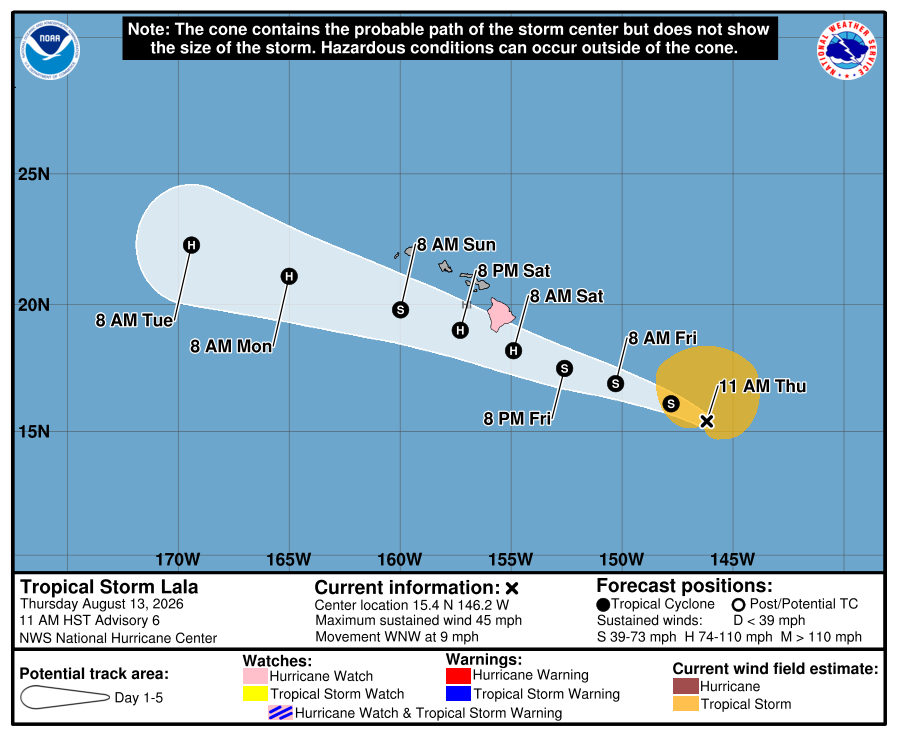
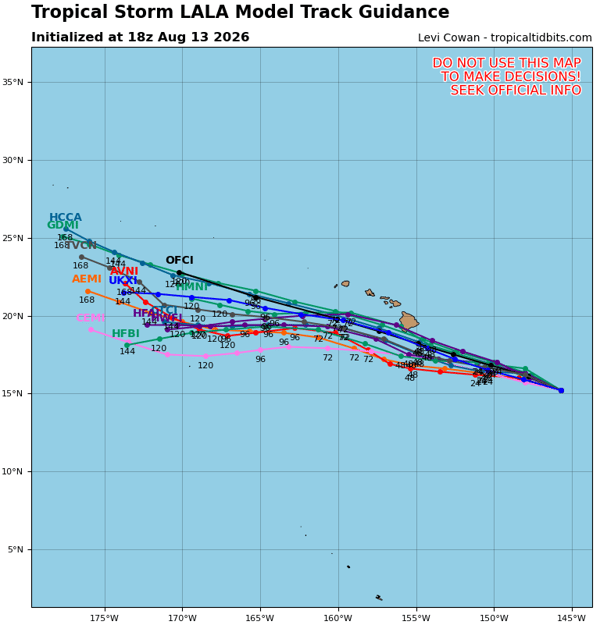
Tropical Storm Lala formed on Thursday morning about 700 miles east-southeast of Hilo with 40 mph winds. As of 5 pm on Thursday, Lala is now at 45 mph and is expected to continue moving west towards the Hawaiian Islands through the weekend.
Forecast models have shifted south somewhat today, with most now taking the center of the storm just south of the state:
 In addition, the intensity forecasts are in good agreement that Lala should continue strengthening as it heads west, potentially becoming a strong tropical storm or even a Category 1 hurricane on its closest approach to the islands:
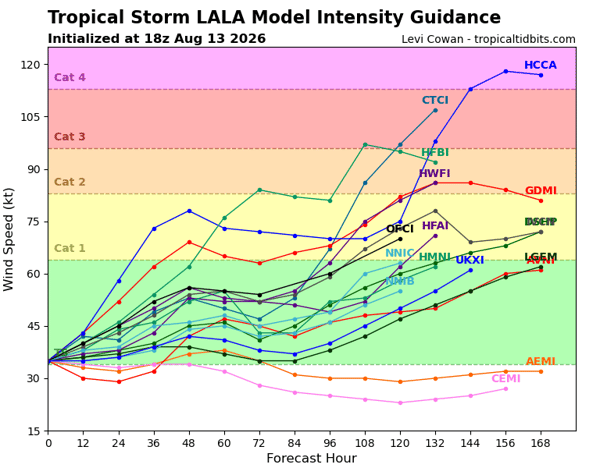 Once past the islands, Lala could continue strengthening into a much stronger hurricane. Fortunately, it should be well away from Hawaiʻi by that point.
Hawai'i Impacts From Lala
While the exact impacts will depend heavily on Lala's eventual track and intensity, Hawaiʻi should prepare for damaging winds, heavy rain that could lead to mudslides and landslides, and large waves and dangerous rip currents.
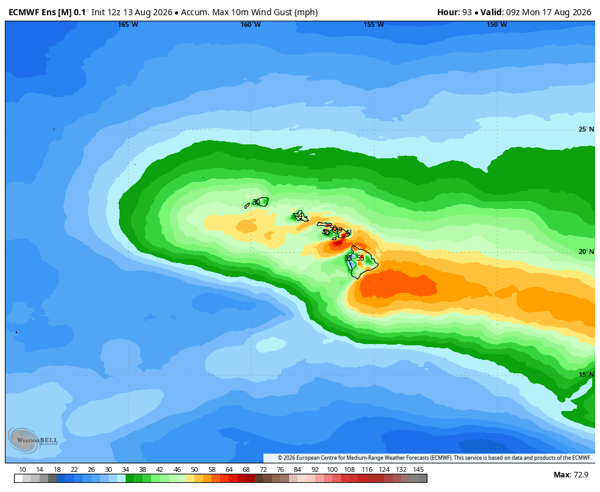
The wind forecast will depend on how strong the storm becomes but gusts of 40-60 mph are possible, especially in the higher elevations across the mountainous state:
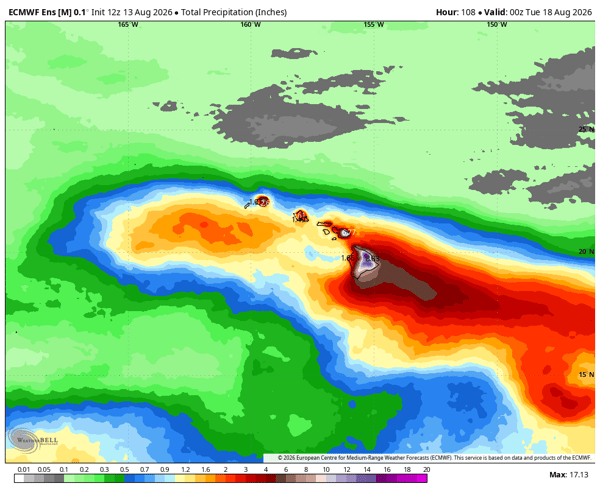
 Heavy rain may be the greater concern, particularly if strong winds occur after the ground becomes saturated. Saturated soils combined with strong winds can increase the potential for trees to fall and cause damage. Current forecasts indicate that some areas could receive more than 8 inches of rain:
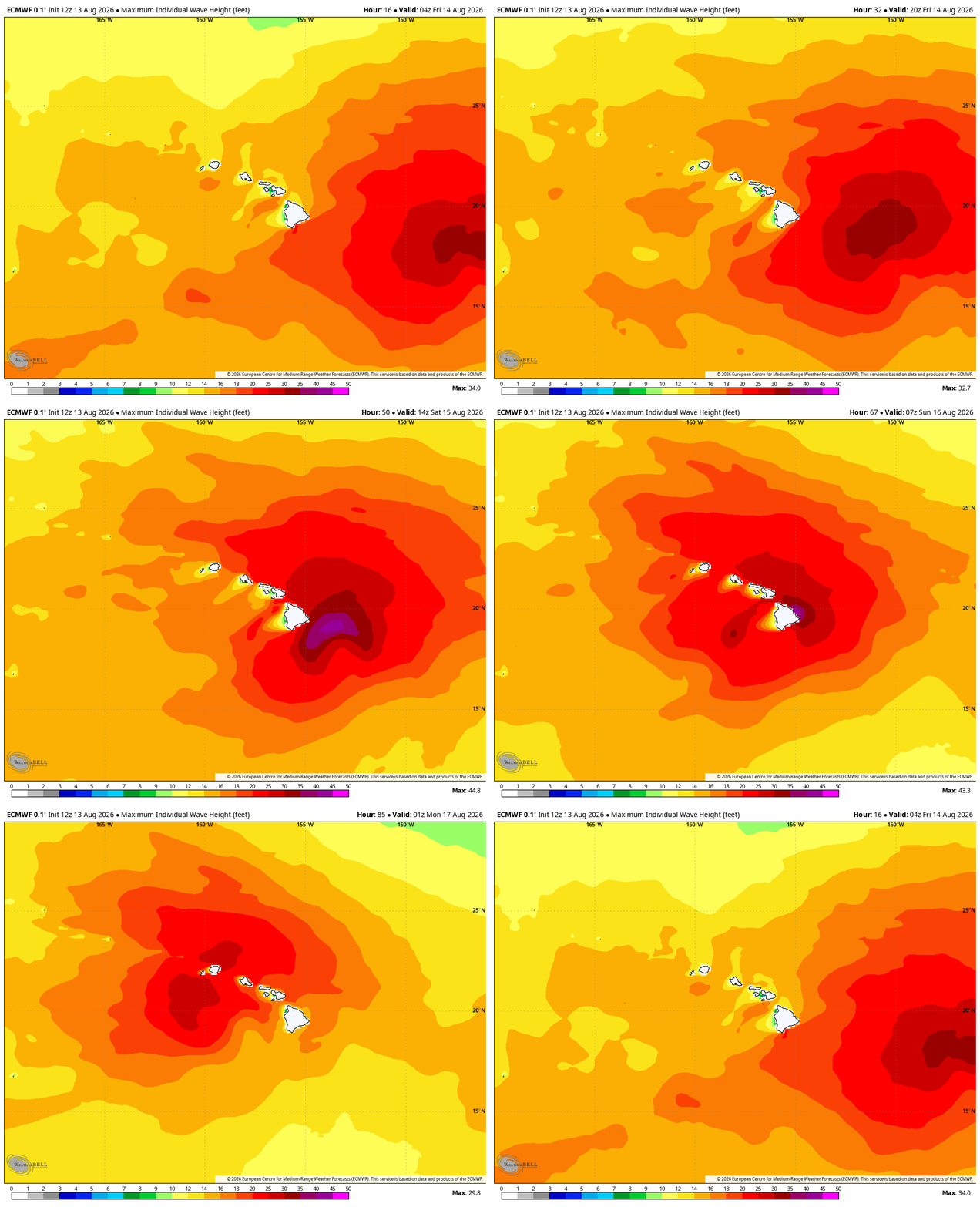
 Finally, while Hawaiʻi is known for its large waves, Lala could bring dangerous surf conditions this weekend. Large waves and powerful rip currents will make ocean conditions hazardous, and people should use extreme caution around the water:
 Watching Two Areas in the Atlantic Ocean
Earlier this week, we were monitoring three areas in the Atlantic Ocean. The area farthest north developed into a short-lived storm named Cristobal. It was a tropical storm for only about 12 hours and had already dissipated by Thursday afternoon.
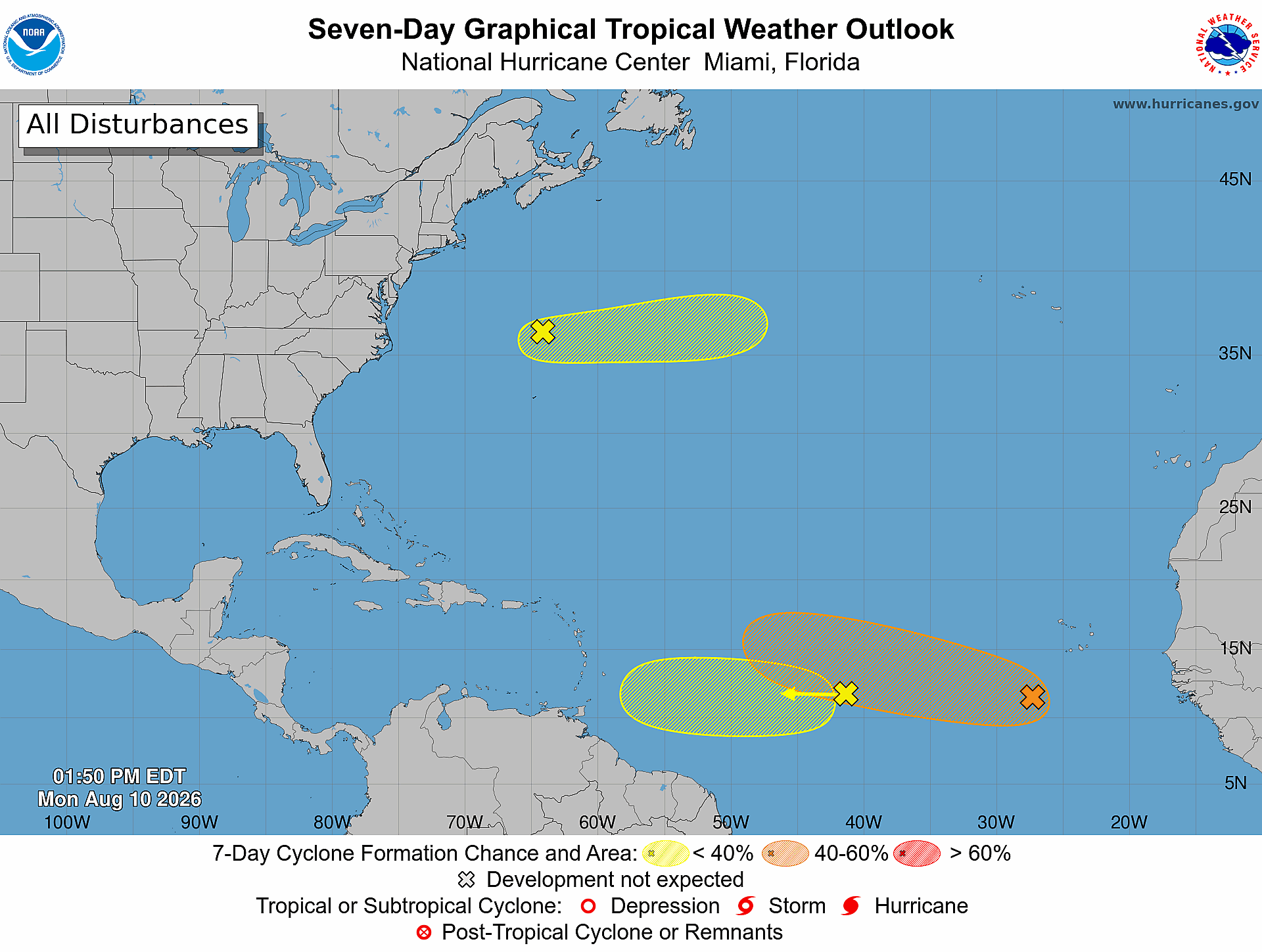
The other two areas being monitored are located in the main development region:
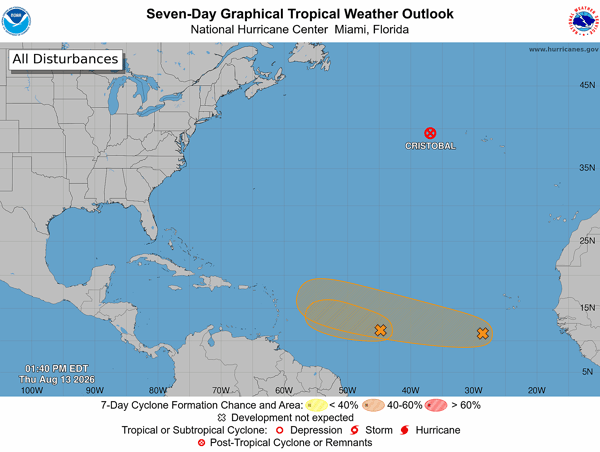
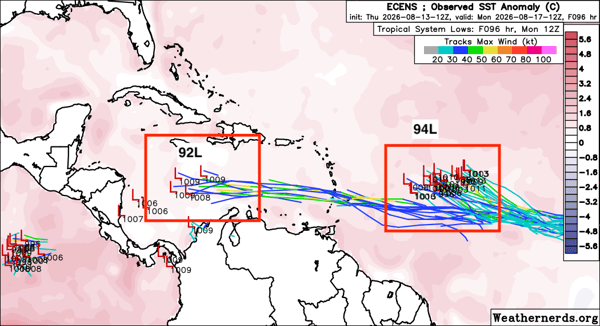
The odds for development have actually decreased for the disturbance farther west, 92L. This morning, it had an 80% chance of developing, but that has now decreased to 50%.
The system farther east, 94L, also has a 50% chance of developing, but it faces the same unfavorable conditions that have limited 92L.
By Monday, 92L is expected to be moving through the Caribbean, likely as a weakening tropical disturbance, while 94L will be approaching the islands:
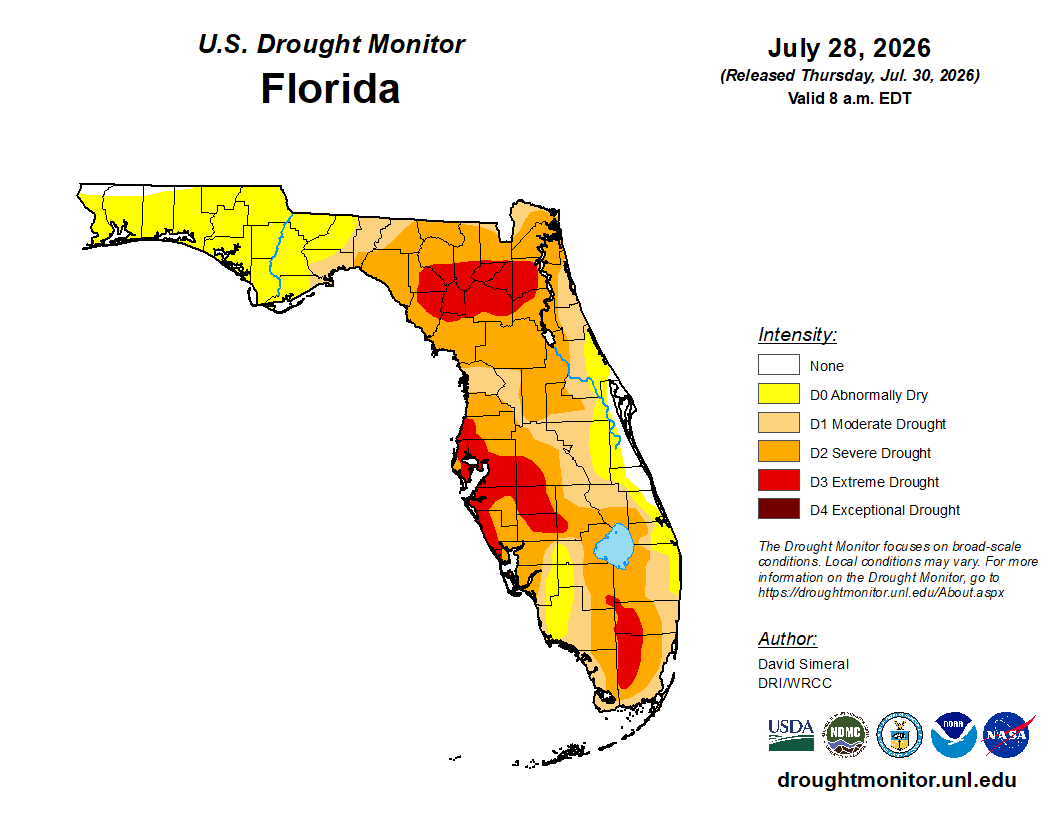
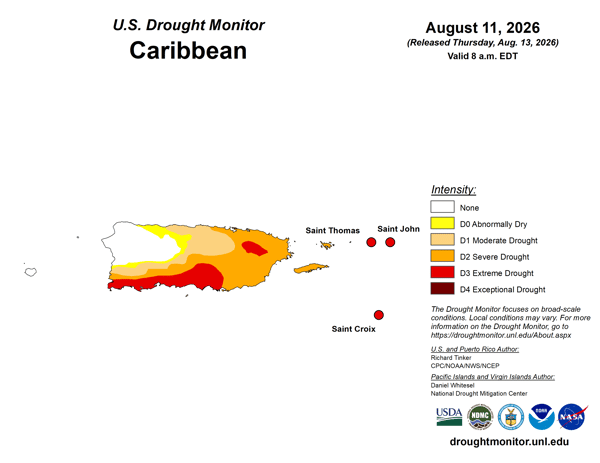
Hopefully, these systems can remain weak while bringing some much-needed rainfall to the Caribbean. Drought conditions are a growing concern across parts of the region, including Puerto Rico and the U.S. Virgin Islands:
As for 94L, it still has a long way to go before it could impact any land, let alone the United States. For now, it is simply something to monitor and another reminder that we are nearing the peak of the Atlantic Hurricane Season.
What is the current forecast for Tropical Storm Lala?
Tropical Storm Lala is expected to move west toward the Hawaiian Islands this weekend, with the exact track and intensity remaining uncertain.
Will Tropical Storm Lala hit Hawaii?
The center of Lala is currently forecast to pass near the Hawaiian Islands, but the exact track could still change. Impacts will depend on the storm's eventual path and intensity.
What impacts could Tropical Storm Lala bring to Hawaii?
Potential impacts include damaging winds, heavy rainfall, mudslides and landslides, large waves and dangerous rip currents.
Are there other tropical systems being monitored?
Yes. Two areas are currently being monitored for possible tropical development in the Atlantic Basin, although both face unfavorable environmental conditions.
Weatherstem
Real-time weather monitoring for the organizations that can't afford to guess.
Professional hardware, live HD camera, automated alerts, and software — installed and managed for you. 900+ stations deployed nationwide across emergency management, athletics, and commercial operations.
Book a Free Demo