If you are comparing lightning warning systems, the spec sheets blur together fast. The useful question is narrower: which system fits your site, your policy, and your response process? Use these seven criteria to compare any options on the same terms.
1. Prediction, detection, or both
Start here, because it defines everything downstream. Prediction-based systems estimate lightning risk from the local atmospheric electric field. Detection-based systems report observed strikes measured against your thresholds. Decide which input you want your team to act on. Here is the full comparison of prediction versus detection.
2. The data source and its continuity
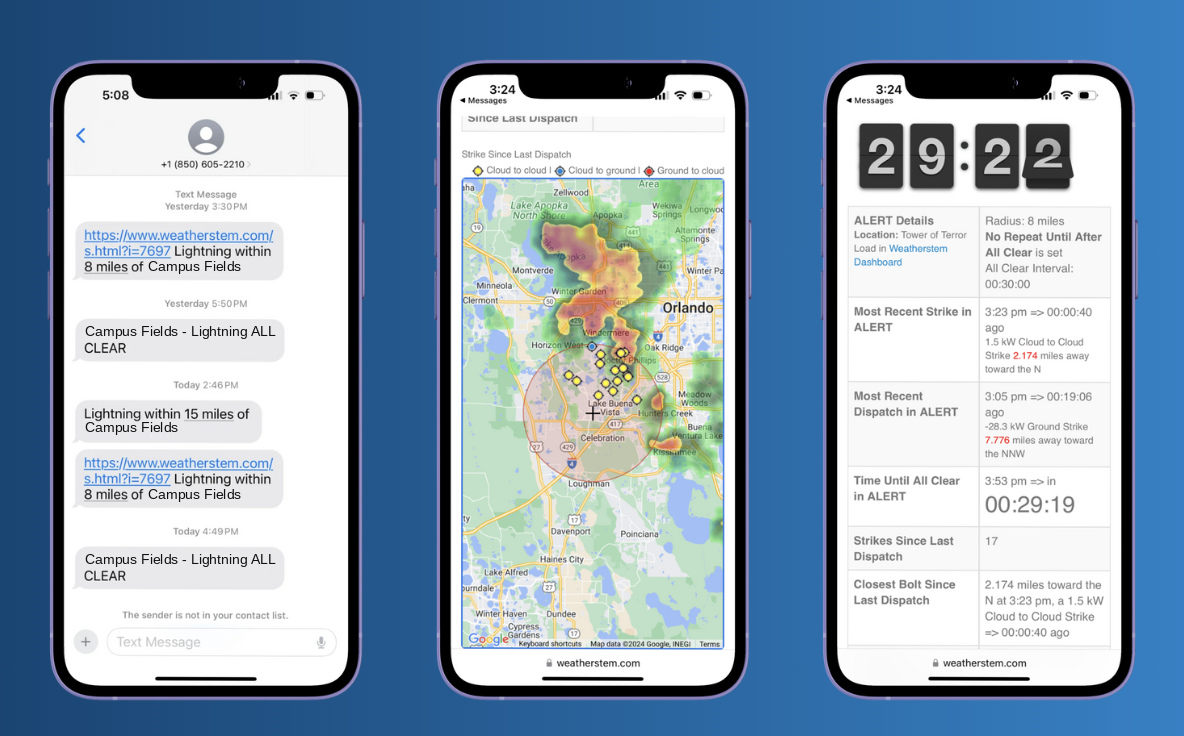
A detection system is only as good as the data behind it. Ask what source a system uses and what happens if that source, power, or connectivity is disrupted. Weatherstem uses NLDN as the primary lightning-data source with AccuWeather as a secondary source intended to support continuity. See how detection works.
3. Automated alerts and an outdoor siren
A warning that depends on a person to relay it can be missed. Look for automatic alerts by text, email, and voice, plus an outdoor warning siren that sounds across the property on its own, with an automatic all clear once your interval passes with no new reported strikes.
4. A documented record
If a decision is ever questioned, you need proof. Look for a system that timestamps and logs every reported strike, alert, and all clear, and lets you pull a historical report for any past event.
5. Custom alert zones
Your site is not a one-size circle. You should be able to set your own alert distance, draw custom zones for different facilities, and set different rules for different teams or locations from one platform.
6. The data beyond lightning
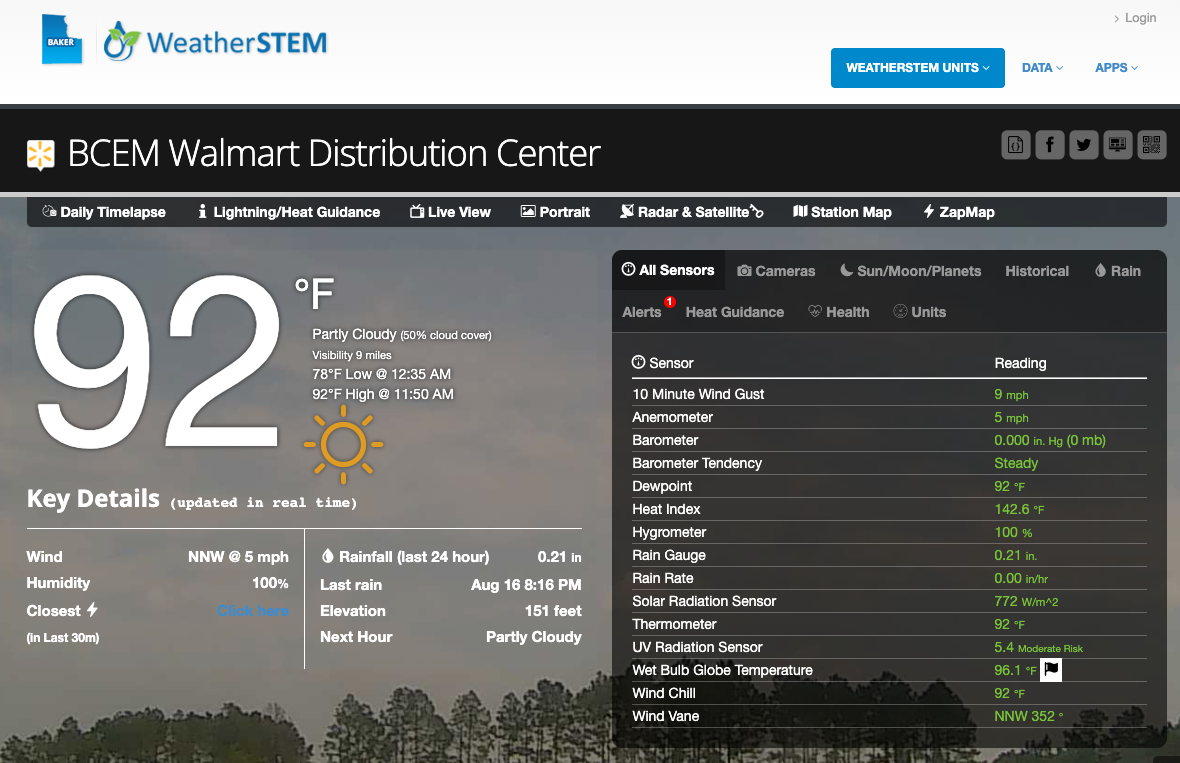
The best value is a system that does more than one job. A full weather station adds wind, temperature, rain, WBGT for heat safety, air quality, and a live camera, so the same investment covers heat, severe weather, and operations.
7. Support and installation
Ask who installs it, who maintains it, and who answers the phone during a storm. A managed platform with professional installation and meteorologist support is a different experience than a unit you mount and maintain yourself.
Putting it together
Score any system you are considering against these seven points. If you are reviewing an older system, our guide to when it is time to replace covers the signals to watch for, and our lightning system replacement page shows how a detection-based platform compares.
Frequently asked questions
What is the most important feature in a lightning warning system?
The lightning input it acts on and the data source behind it. Everything else, from sirens to documentation, depends on what the system uses to decide an alert.
Should one system handle lightning and other weather?
Often yes. A platform that also measures wind, heat, and air quality covers more for one investment and gives your team a single place to look.
Ready to compare against your current setup? Book a short demo.