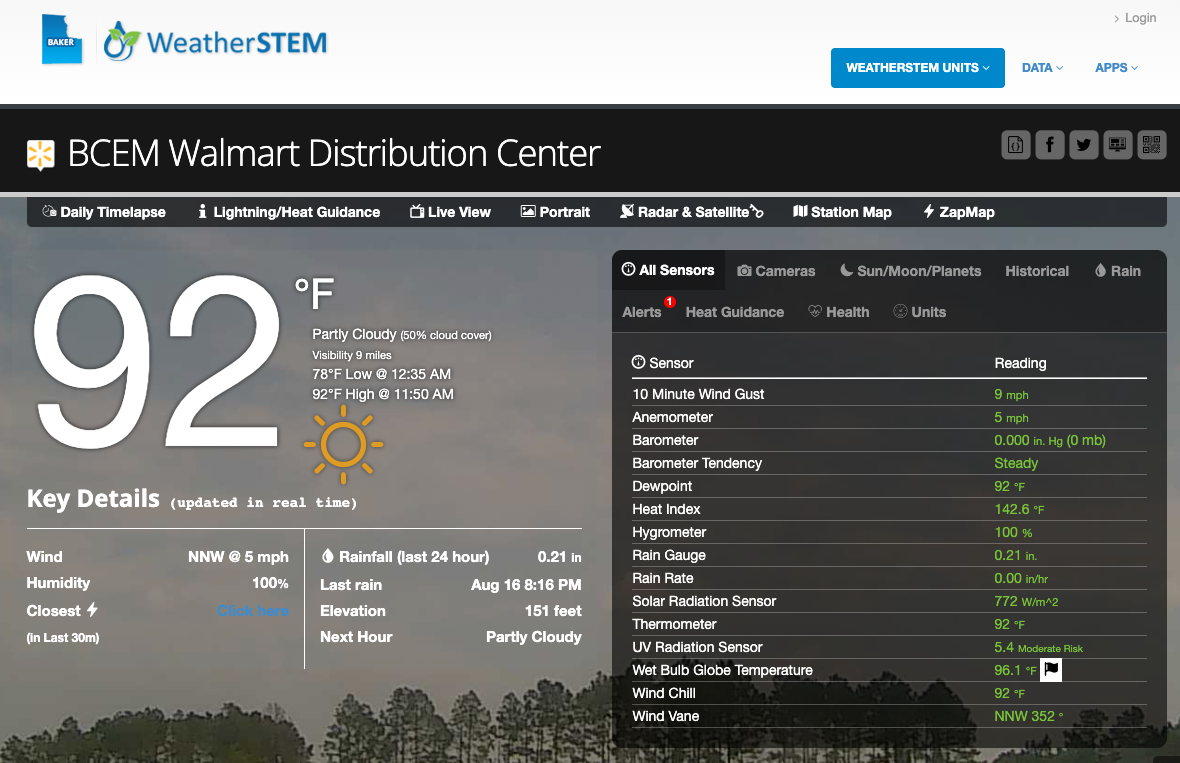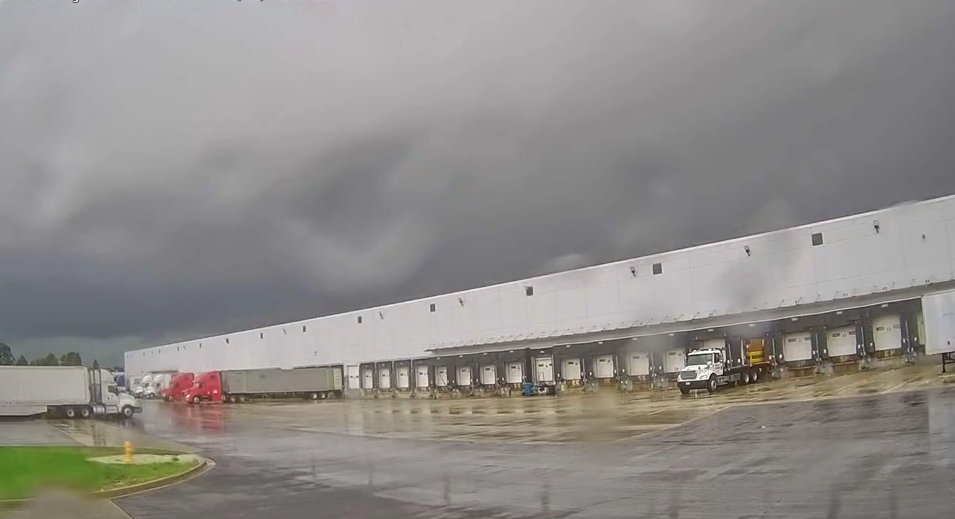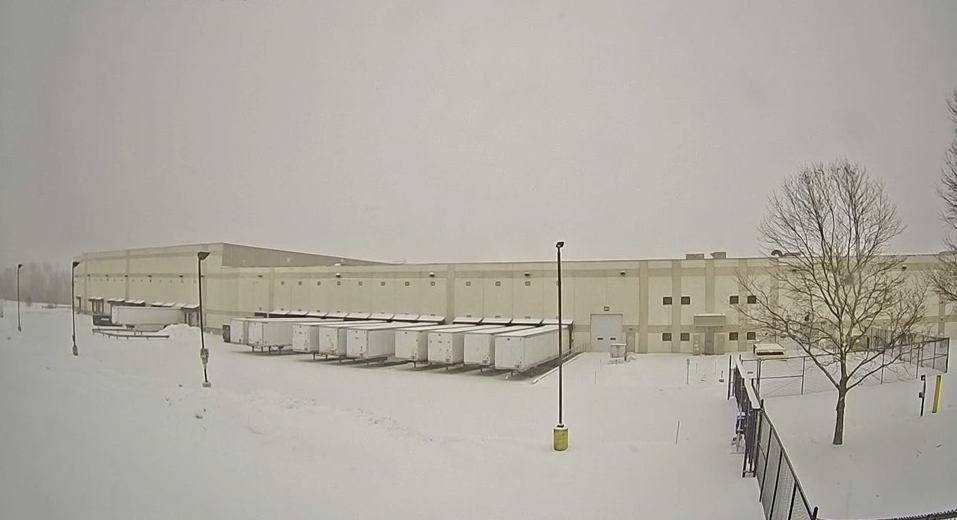
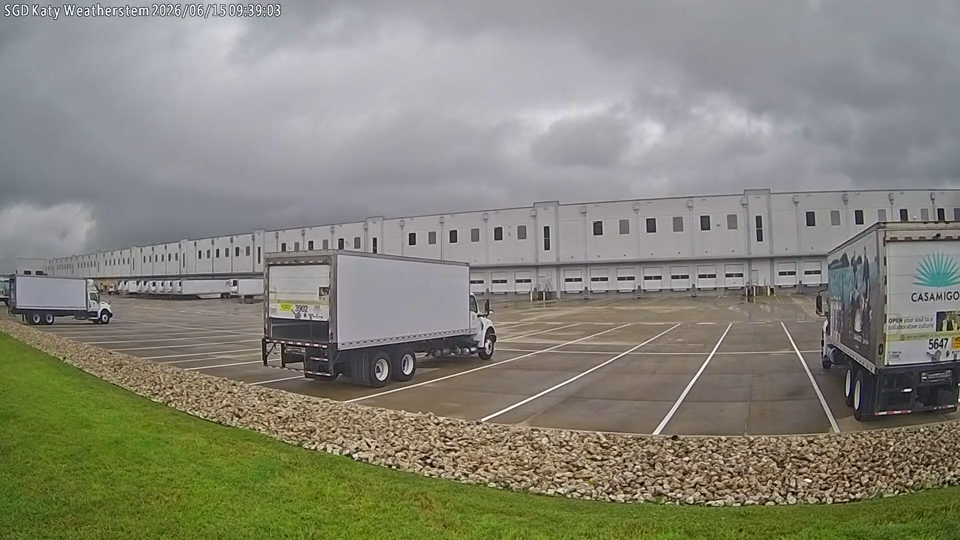
Most distribution centers already have access to weather information. Operations teams can check forecasts, pull up radar, glance at a weather app, or watch for alerts from a regional weather service. None of that is hard to come by anymore.
The problem is that regional weather information doesn't necessarily tell an operations team what's happening at its facility right now.
A forecast might say thunderstorms are expected in the area this afternoon. It won't tell you the moment lightning actually reaches your facility's defined stop-work threshold. And that gap, between general weather information and facility-specific conditions, shows up in more than just lightning.
- Is the heat reaching a level that requires action?
- How strong are winds at the facility right now?
- How much rain has actually fallen on-site?
- Are conditions changing faster than expected?
- Have conditions improved enough to resume outdoor operations?
A forecast alone can't answer those questions with the facility-specific precision an operations team may need. For distribution centers, the value of on-site weather monitoring isn't simply knowing what the weather is. It's having facility-specific data that can support operational decisions.
What Is On-Site Weather Monitoring?
On-site weather monitoring means collecting weather observations at or immediately around the facility, rather than relying exclusively on a distant weather station or a regional forecast. Instead of relying solely on observations from other locations, the facility has its own read on what's happening in its truck yard, loading area or outdoor workspace.
Depending on the facility, that might include:
- Temperature
- Humidity
- Heat index
- Wind speed and direction
- Rainfall
- Lightning detection
- Weather alerts
- Historical observations
It's worth drawing a clear line here: monitoring is not the same as forecasting. A monitoring system measures what is happening at the facility right now. A forecast estimates what may happen in the future. Both are useful, but they answer different questions, and a distribution center that leans on only one of them is missing half the picture.
Why Can't Distribution Centers Rely on Weather Forecasts Alone?
Forecasts Describe Conditions Across an Area
A forecast typically covers an entire county or metro area. But weather conditions can vary significantly within that footprint. A storm cell producing lightning ten miles away may or may not be a threat to your specific location, and a forecast alone won't tell you which.
Weather Can Change Faster Than Expected
Storms don't always follow the script. They can develop earlier, arrive later, strengthen, weaken, change direction, or produce lightning and heavy rain sooner than a forecast anticipated. An operational decision needs to be based on what is actually happening, not on what was forecast several hours earlier.
Weather Apps Don't Measure Conditions at Your Facility
This distinction matters more than it might seem. A weather app may display information pulled from a nearby observation station, a forecast model, a regional network, or some blend of sources. None of that necessarily represents what's happening in your facility's truck yard or on your loading docks at this exact moment.
Forecasts Don't Tell You When Your Operational Threshold Has Been Reached
This is the core gap. A forecast can tell you thunderstorms are likely this afternoon. It can't tell you whether lightning has reached the facility's stop-work threshold. A forecast can tell you it's going to be very hot today. It can't tell you whether conditions have crossed the line that triggers your heat-safety procedures.
That's the difference between weather information and decision-support information, and it's the reason forecasts alone aren't enough for facilities that need to act on real conditions.
What Weather Conditions Should Distribution Centers Monitor?
Not every facility needs to track every variable. The right monitoring strategy reflects the facility's actual hazards and operations, but these are the conditions most distribution centers should at least consider.
Lightning Information
Relevant for loading docks, truck yards, drivers, outdoor employees, and yard operations generally. Lightning can develop and move into a facility's operating area quickly, which makes real-time detection especially valuable.
Heat
Relevant for outdoor workers, hot loading docks, trailer interiors, yard operations, and any facility with formal heat-safety procedures.
Wind
Relevant for trailer doors, outdoor equipment, yard activity, temporary structures, and exposed workers.
Rainfall
Relevant for flooding awareness, yard conditions, access roads, loading operations, and drainage concerns.
Temperature and Humidity
These provide useful context for worker comfort and heat exposure, general facility conditions, and temperature-sensitive operations.
How Can On-Site Weather Data Support Distribution Center Decisions?
The real value of on-site monitoring shows up when it's tied to specific operational decisions, not just displayed on a dashboard.
When should outdoor operations stop? When lightning reaches a defined threshold, yard and loading activity is suspended.
When should heat-safety procedures begin? When heat conditions reach a defined threshold, the appropriate procedures are activated.
Should yard operations continue during high winds? When wind reaches an operational threshold, exposed activities are reevaluated.
Is heavy rain creating an operational problem? When rainfall or flooding reaches a defined threshold, access and yard operations are reevaluated.
When is it safe to resume? This last one is easy to overlook, but it matters just as much as knowing when to stop. Weather monitoring isn't only about triggering a shutdown. It can also help establish when conditions have returned to an acceptable range.
Stop when necessary. Resume when conditions meet the facility's criteria. That combination is what turns monitoring into a genuine operational tool rather than a passive data feed.
How Do Weather Alerts Turn On-Site Data Into Action?
Data only helps if someone acts on it, and nobody should have to sit and watch a weather dashboard all day waiting for a threshold to be crossed.
That's where automated alerts come in. The basic progression looks like this: measure → threshold → alert → action.
When a predefined condition is reached, the system can automatically notify the people who need to know, which might include:
- Operations managers
- EHS teams
- Supervisors
- Security
- Yard managers
- Other designated personnel
But an alert by itself isn't a safety plan. Alerts only work when they're connected to predefined procedures: clear steps that tell people what to actually do once the notification arrives.
Alerts don't have to be limited to phones or dashboards. Weatherstem's Bright provides weather-controlled visual alerts, giving facilities another way to communicate changing conditions to employees in the yard, at loading docks or in other areas where a phone notification may not be immediately visible. In a busy truck yard or loading area, visual signals can provide an additional layer of communication, helping make weather-related changes more visible to people working throughout the facility.
For larger outdoor areas, an audible alert can provide another layer of communication. Weatherstem's Blast outdoor warning siren can deliver weather-triggered audible alerts across areas such as truck yards and loading areas, helping ensure that people working outside can receive a warning even when they aren't look at a phone or dashboard.
Together, visual and audible alerts can extend weather notifications beyond the screen, giving facilities additional ways to communicate operational changes to people throughout the property.
How Should a Distribution Center Choose What to Monitor?
Rather than trying to monitor everything, it's more effective to start with the facility's actual operational vulnerabilities.
- Identify outdoor operations. Where are employees and drivers actually exposed to the weather?
- Identify weather-dependent decisions. What conditions cause the facility to change how it operates?
- Establish measurable thresholds. What specific condition triggers action?
- Determine who needs the information. Who actually makes the operational call when a threshold is hit?
- Decide how alerts should be delivered. Choose phone notifications, dashboard alerts or automated messages based on how the team actually works.
- Define return-to-operations criteria. Don't stop at defining when to shut down. Define when it's safe to start back up.
How Can Distribution Centers Use Historical Weather Data?
On-site monitoring isn't only valuable in the middle of an active storm. The historical record it builds over time has its own operational value.
Historical data can help facilities:
- Review past weather-related disruptions
- Identify recurring patterns
- Evaluate whether current operational thresholds still make sense
- Document actual conditions during an incident
- Support post-event analysis and reviews
- Identify periods when weather repeatedly affects operations
Real-time data supports today's decision. Historical data can improve tomorrow's plan.
Why is On-Site Weather Monitoring an Operational Tool?
A distribution center doesn't need another weather forecast. It needs reliable information tied to the decisions its people actually make.
Forecasts tell you what may happen. On-site monitoring tells you what is happening at your facility. Alerts tell the right people when a threshold is reached. Operational procedures tell them what to do next. That combination turns weather monitoring from a passive source of information into an active part of operational decision-making.
For distribution centers, the goal isn't to collect more weather data. It's to have the right information at the right location, connected to clear operational thresholds and alerts. That's what makes on-site weather monitoring useful as part of a facility's safety and business continuity strategy.
Want to see how facility-specific weather monitoring can support safer, more consistent operational decisions at your distribution center? Talk with Weatherstem.
Why is on-site weather monitoring important for distribution centers?
On-site weather monitoring gives distribution centers facility-specific information about current conditions rather than relying exclusively on regional forecasts or observations from other locations. That information can help operations teams make decisions about outdoor work, yard activity, employee safety and other weather-dependent operations.
What weather conditions should a distribution center monitor?
The conditions a facility monitors should reflect its location and operational risks, but common considerations include lightning, temperature, humidity, heat index, wind and rainfall. Distribution centers should establish measurable thresholds for the conditions that can affect their operations.
Can weather monitoring automatically alert distribution center employees?
Yes. Weather monitoring systems can be configured to send automated alerts when defined weather thresholds are reached. Depending on the facility's communication strategy, alerts can reach designated personnel through digital notifications, while visual or audible systems such as Bright and BLAST can provide additional ways to communicate conditions to people working outdoors.

Weatherstem provides real-time weather monitoring, lightning detection, and automated alerting systems for emergency management, government agencies, athletics programs, and commercial operations. 900+ stations deployed nationwide.
Weatherstem
Real-time weather monitoring built for compliance and life-safety decisions.
Professional hardware, dual lightning detection, automated alerts, and permanent data logging — installed and managed for you. Used by emergency management agencies, athletic programs, and government operations nationwide.
Book a Free Demo