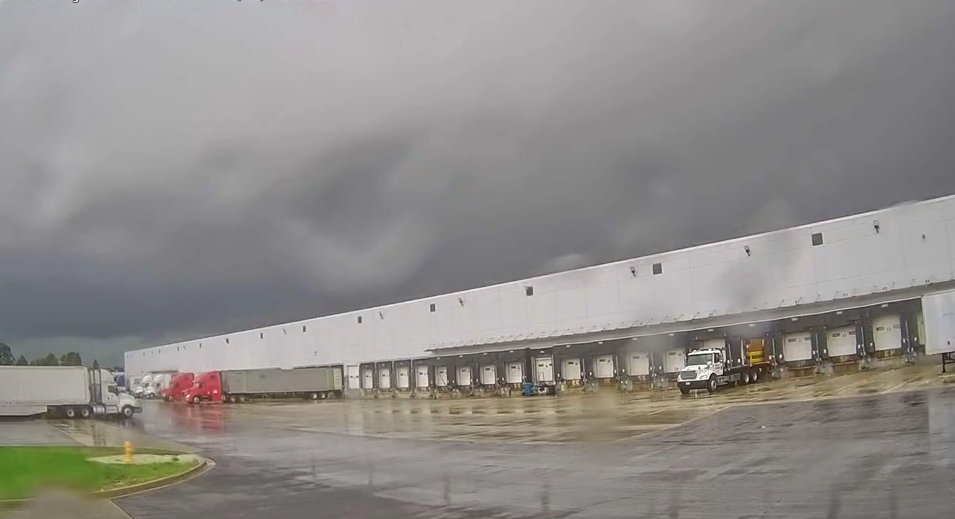

For an athletic director or superintendent, the hard part of the UIL heat rule is not the science. It is the scale. The requirement applies to every outdoor practice, contest, workout, and band rehearsal across every campus, and the weakest link sets your exposure. The middle-school field with no athletic trainer is as much a compliance obligation as the varsity stadium.
What changes at the district level
Each outdoor activity site now needs a valid WBGT reading, activity modified to the chart for its zone class, a rapid cooling zone available at the trigger, an emergency action plan that covers athletics and band, and records kept on file. Multiply that across your campuses and the question stops being whether a coach can read a meter and becomes whether the district can prove all of this happened, everywhere, all season.
The district checklist
- Inventory every outdoor activity site. Football, practice fields, track, tennis, band lots, and any surface used for conditioning, at every campus.
- Confirm the WBGT class per site. Use the UNC tool to set each location as Texas UIL Class 2 or Class 3, since thresholds differ.
- Ensure a valid reading at each site. Decide how each location captures WBGT before, and every 30 minutes during, outdoor activity.
- Stage rapid cooling zones. Cold-water immersion available at every site at the trigger, with someone trained to use it.
- Update emergency action plans district-wide. Each plan names athletics and band, with heat procedures and designated readers.
- Standardize record-keeping. One consistent way readings are logged and retained, so any campus can produce them on request.
- Train and assign. Staff trained on the rule, and a named owner for monitoring at each campus.
- Decide procurement. Choose between per-campus handhelds and a fixed station network, and budget for the season ahead.
The handheld problem at scale
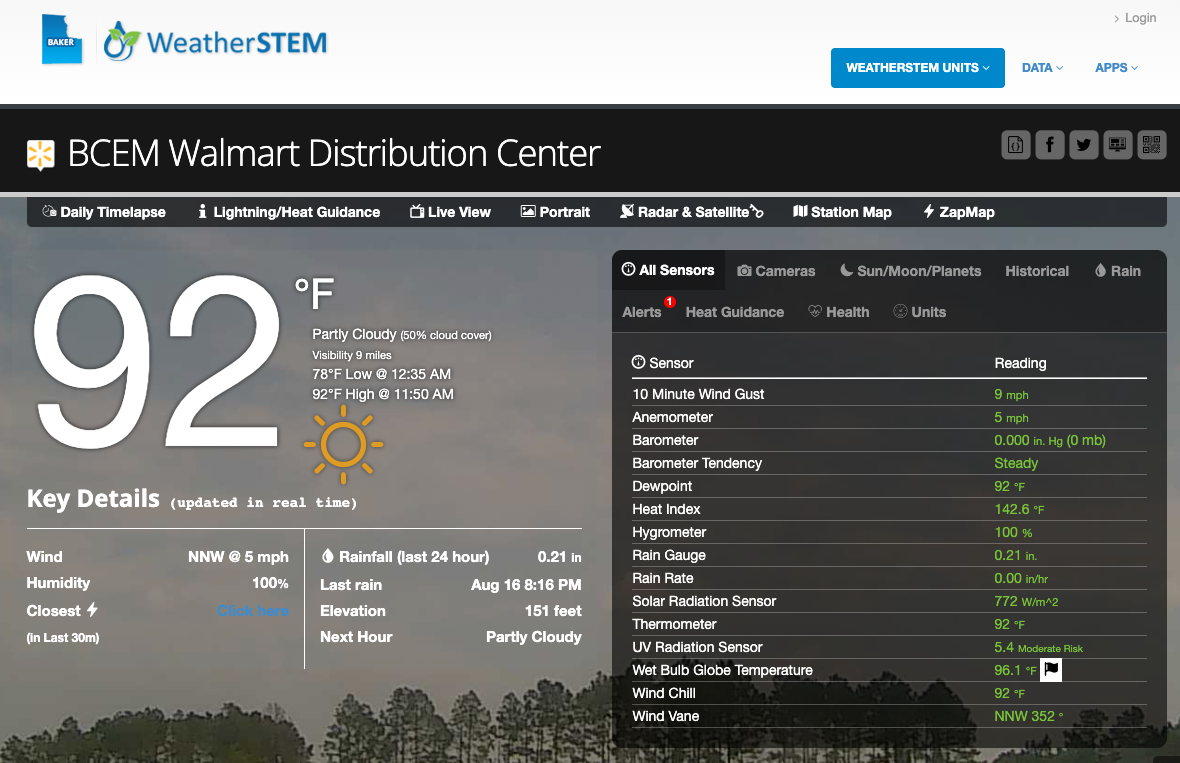
One handheld meter on one field is manageable. Twelve campuses, each depending on a staff member to set up a meter, read it every 30 minutes, and write the result down, is where compliance quietly breaks. Readings get skipped on busy days. Logs live in different notebooks, or nowhere. When the records are requested, the district cannot produce a clean, consistent file. A fixed station network solves the scale problem directly: every site reads continuously, logs to one place, and alerts staff at zone transitions, so the district has a single defensible source of truth.
How Weatherstem helps districts
Weatherstem already operates stations across Texas, including at the University of Texas, Texas A&M, and Texas Motor Speedway, and more than 900 nationwide. A standardized network across your sites means the same reading method and the same record format district-wide, every reading and alert logged to one dashboard and exportable by site or date range, zone-transition alerts that reduce staff load, and one vendor that installs and manages it, covering lightning and severe weather on the same system.
Frequently asked questions
Whose responsibility is WBGT compliance in a district?
The rule is applied at the activity level by coaches and directors, but ensuring every campus can monitor, modify, and document is a district responsibility. Gaps tend to appear at campuses without a full-time athletic trainer.
Do we need a WBGT device at every campus?
Every site with outdoor athletic or band activity needs a valid reading for that location. A district can meet this with handhelds per campus or with a fixed station network that standardizes readings and centralizes records.
What is the biggest compliance gap districts miss?
Record-keeping. Readings have to be taken every 30 minutes and kept on file, and that is the step that quietly fails across a busy district when it depends on manual handheld logging.
See the exact WBGT thresholds, the record-keeping and EAP rules, or the full Texas UIL WBGT mandate guide.
Weatherstem is not affiliated with or sponsored by the University Interscholastic League. References to the UIL are for informational purposes only.

Weatherstem provides real-time weather monitoring, lightning detection, and automated alerting systems for emergency management, government agencies, athletics programs, and commercial operations. 900+ stations deployed nationwide.
Weatherstem
Real-time weather monitoring built for compliance and life-safety decisions.
Professional hardware, dual lightning detection, automated alerts, and permanent data logging — installed and managed for you. Used by emergency management agencies, athletic programs, and government operations nationwide.
Book a Free Demo