FEMA Grant Funding for Weather Monitoring: BRIC, HMGP, EMPG, and SHSP Explained
Emergency management agencies are expected to make critical decisions before, during, and after severe weather events. Whether coordinating evacuations ahead of a hurricane, monitoring flooding during a tropical system, or supporting recovery operations after a disaster, timely and accurate weather information plays a central role in protecting lives and property.
Weather monitoring systems help create a common operating picture by providing decision-makers, field personnel, public works departments, law enforcement, and emergency operations centers with access to the same real-time environmental information. Many agencies assume that new weather stations, cameras, alerting systems, and monitoring platforms must be funded through local budgets. In reality, several federal grant programs may help support these investments.
Understanding which grant programs align with weather monitoring projects is often the first challenge. While funding eligibility varies by program, state priorities, and project scope, weather monitoring initiatives frequently support broader goals related to mitigation, preparedness, resilience, and public safety.
FEMA grant programs and funding availability can change over time. Agencies should consult current FEMA guidance and state grant administrators to confirm eligibility requirements, funding availability, and application timelines.
If you are still scoping what to fund, start with our step-by-step guide to building an emergency management weather monitoring program, then match the pieces to the grant programs below.
Why Weather Monitoring Investments Align with FEMA Priorities
Most FEMA grant programs are designed to reduce risk, strengthen community resilience, and improve preparedness for future disasters. Weather monitoring projects can support each of these objectives by providing decision-makers with the information needed to identify hazards, assess conditions, and respond more effectively.
Weather monitoring contributes to:
- Improving hazard mitigation through improved awareness of developing threats
- Supporting risk reduction by supporting earlier and more informed decisions
- Enhancing community resilience through enhanced preparedness capabilities
- Increasing public safety by improving warning and response efforts
- Stregthening emergency preparedness through ongoing situational awareness
- Simplifying operational coordination during incidents and disasters
Real-time weather data supports decision-making throughout the disaster lifecycle. Before an event, it helps agencies prepare and position resources. During an incident, it provides situational awareness and supports operational decisions. After a disaster, weather monitoring can assist with recovery operations, damage assessments, and ongoing hazard identification.
Because of these benefits, weather monitoring projects often align well with the objectives of several FEMA funding programs.
What Types of Weather Monitoring Projects May Be Eligible for Grant Funding?
Weather monitoring can take many forms depending on an agency's operational needs and hazards.
Potential projects may include:
- Weather station networks across a county or region
- Flood monitoring systems in vulnerable areas
- Weather cameras that provide visual situational awareness
- Outdoor warning systems for parks, public facilities, and gathering spaces
- Emergency operations center weather monitoring capabilities
- Weather intelligence platforms that consolidate forecasts, observations, cameras, and alerts
- Regional weather monitoring initiatives involving multiple jurisdictions
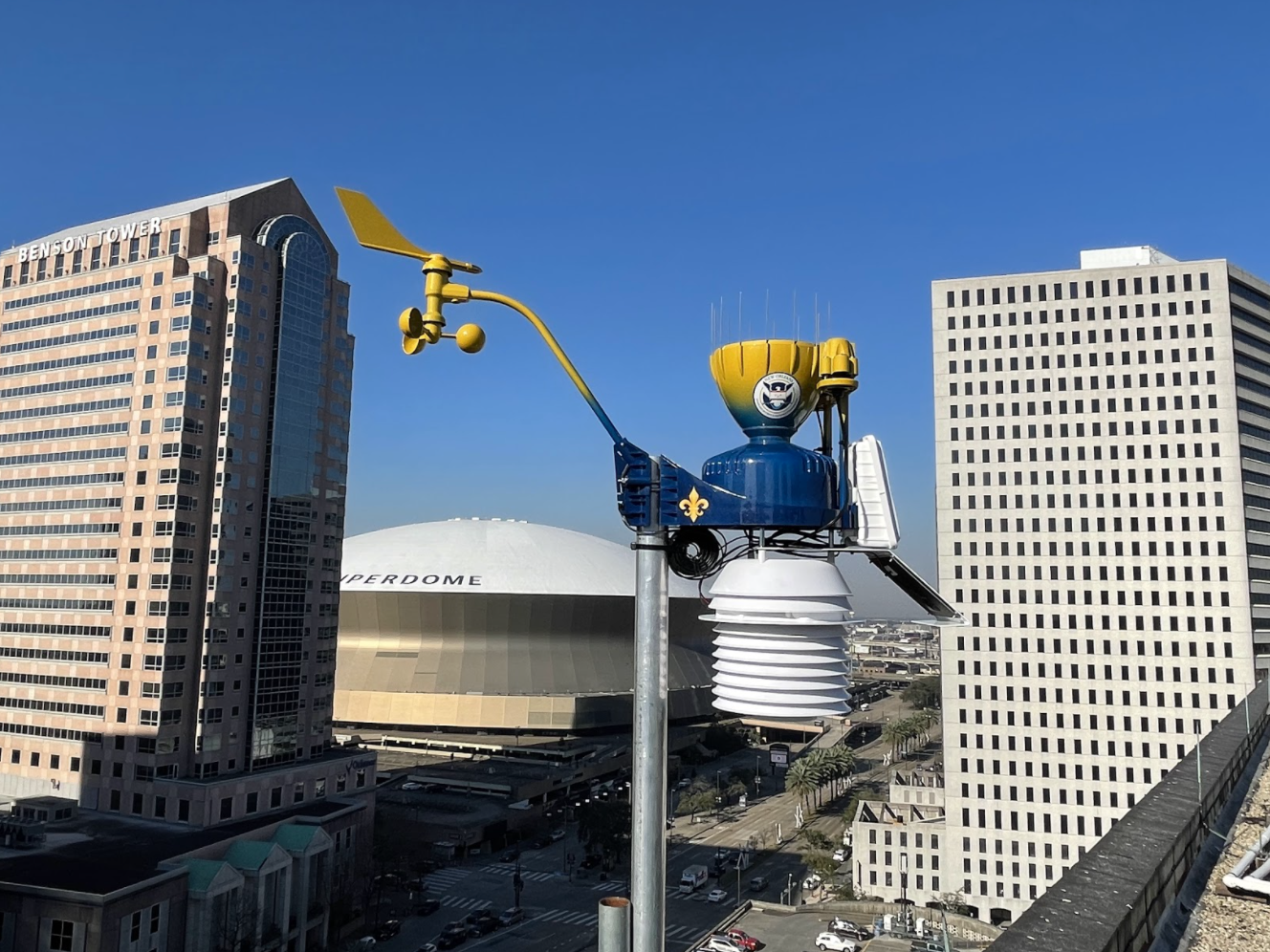
For example, an emergency management agency may seek funding to install weather stations at critical facilities, deploy cameras in flood-prone locations, and provide a centralized platform that gives emergency managers a common operating picture during severe weather events. One example of this is the project completed by the New Orleans Office of Homeland Security and Emergency Preparedness (NOHSEP) after Hurricane Ida. Read more about this project here.
The specific technology matters less than the operational outcomes it supports. Successful projects typically focus on improving preparedness, reducing risk, and strengthening decision-making capabilities.
Understanding BRIC Funding for Weather Monitoring Projects
The Building Resilient Infrastructure and Communities (BRIC) program was designed to support projects that reduce future disaster risk and increase community resilience.
BRIC projects typically focus on long-term mitigation rather than day-to-day operations. As a result, weather monitoring projects are often most successful when they are tied to broader resilience initiatives.
For example, a jurisdiction seeking to improve flood resilience may propose a network of weather stations and flood monitoring locations that provide early awareness of developing conditions. The project could support emergency response while also helping reduce future impacts through improved planning and risk management.
Because BRIC is highly competitive, agencies should focus on demonstrating how weather monitoring supports measurable mitigation outcomes and strengthens community resilience over the long term.
How HMGP Can Support Weather Monitoring Improvements
The Hazard Mitigation Grant Program (HMGP) becomes available following federally declared disasters and is intended to reduce future disaster losses.
For emergency managers, HMGP can provide an opportunity to address gaps identified during recent events.
Following a hurricane, flood, or severe weather disaster, agencies often discover limitations in their ability to monitor conditions across their jurisdiction. Weather monitoring projects funded through HMGP may help address those challenges by improving situational awareness and supporting future response efforts.
Examples could include:
- Expanding weather monitoring coverage in vulnerable areas
- Installing flood monitoring systems along frequently impacted roadways
- Improving weather monitoring capabilities at emergency operations centers
- Adding weather cameras to support incident assessment and response
Projects that clearly connect lessons learned from past disasters to future risk reduction efforts are often well positioned within the program's mitigation-focused framework.
Using EMPG Funds to Enhance Emergency Management Capabilities
The Emergency Management Performance Grant (EMPG) program is designed to support preparedness and operational readiness activities.
Unlike mitigation-focused programs, EMPG often supports the day-to-day capabilities emergency management agencies rely on to carry out their mission.
Weather monitoring can be a valuable component of these capabilities.
Examples may include:
- Situational awareness tools for emergency management personnel
- Weather monitoring equipment for emergency operations centers
- Technology that supports operational coordination
- Training related to weather monitoring and emergency response
- Systems that improve decision-making during severe weather events
For many agencies, EMPG may represent one of the most practical funding sources for enhancing weather monitoring capabilities because it directly supports preparedness and emergency management functions.
Can SHSP Funding Be Used for Weather Monitoring?
The State Homeland Security Program (SHSP) focuses on strengthening capabilities that support homeland security and emergency preparedness objectives.
Weather monitoring projects may be considered when they support broader goals such as:
- Critical infrastructure protection
- Emergency communications
- Operational coordination
- Situational awareness
- Multi-agency response capabilities
Eligibility often depends on state priorities and investment justifications. Agencies should work closely with their state administrative agency to determine whether a proposed weather monitoring project aligns with current funding priorities.
Projects that demonstrate value across multiple agencies and support regional coordination may be particularly attractive within this framework.
Building a Strong Justification for Emergency Management Grants for Weather Monitoring
Regardless of the funding source, successful applications typically focus on operational outcomes rather than equipment specifications. Strong justifications often begin with a clear understanding of local hazards and risks.
Questions to consider include:
- What weather hazards most frequently impact the jurisdiction?
- Where are current monitoring gaps?
- What operational decisions would benefit from additional weather information?
- How would improved situational awareness reduce risk?
Applicants should also identify measurable benefits whenever possible.
For example:
- Improving monitoring along flood-prone roadways
- Supporting hurricane response operations
- Enhancing outdoor warning capabilities
- Monitoring critical infrastructure during severe weather
- Strengthening coordination among regional partners
Past incidents can also help build a compelling case. If a recent flood, hurricane, or severe weather event exposed monitoring limitations, agencies should explain how the proposed project addresses those gaps and reduces future risk.
Regional collaboration can further strengthen an application. Projects that benefit multiple departments, municipalities, or partner agencies often demonstrate broader community value.
Common Mistakes Agencies Make When Seeking Grant Funding
Many grant applications focus heavily on technology while spending too little time explaining operational benefits.
Common mistakes include:
Focusing on Equipment Instead of Outcomes
Grant reviewers are generally more interested in what a project accomplishes than the equipment being purchased.
Weak Risk Assessments
Projects should clearly identify the hazards, vulnerabilities, and operational challenges they address.
Lack of Operational Justification
Applicants should explain how weather monitoring improves decision-making, preparedness, response, or mitigation activities.
Failure to Connect Projects to Program Goals
Every funding opportunity has specific priorities. Agencies should clearly demonstrate how weather monitoring supports those objectives.
Waiting Too Long to Engage Grant Administrators
Early conversations with state and regional grant administrators can help agencies determine whether a project aligns with funding requirements before significant effort is invested.
How Agencies Are Using Weather Monitoring to Improve Resilience
Across the country, emergency management agencies are expanding their weather monitoring capabilities to improve preparedness and strengthen operational decision-making.
Examples include:
- County emergency management departments monitoring conditions across large geographic areas
- Regional emergency management coalitions sharing weather intelligence across jurisdictions
- Municipal governments improving flood awareness and response capabilities
- Emergency operations centers enhancing situational awareness during activations
- Public safety agencies supporting field operations with real-time weather information
The benefits often extend beyond individual incidents.
Agencies that invest in weather monitoring frequently report:
- Better situational awareness
- Faster response times
- More informed operational decisions
- Improved coordination among stakeholders
- Stronger preparedness capabilities
- Enhanced community resilience
By combining local observations, visual intelligence, alerts, and weather data into a common operating picture, agencies can better understand conditions as they develop and respond more effectively when disasters occur.
Conclusion
Weather monitoring plays an increasingly important role in emergency management, supporting preparedness, response, mitigation, and recovery operations.
Several FEMA grant programs, including BRIC, HMGP, EMPG, and SHSP, may help agencies fund weather monitoring initiatives that improve situational awareness and strengthen resilience. While eligibility requirements vary, the strongest applications focus on reducing risk, improving preparedness, and supporting public safety outcomes.
By understanding available funding opportunities and building projects around operational needs, emergency management agencies can expand their weather monitoring capabilities without relying solely on local funding sources.
Whether you're evaluating BRIC, HMGP, EMPG, or SHSP funding opportunities, Weatherstem can help identify weather monitoring gaps, develop project concepts, and support grant planning efforts. Contact Weatherstem to learn how weather stations, cameras, alerts, and centralized weather intelligence tools can support your agency's preparedness and resilience goals.
FAQ SECTION
What FEMA grants can be used for weather monitoring projects?
Several FEMA grant programs may support weather monitoring initiatives depending on project goals and eligibility requirements. Common programs include BRIC, HMGP, EMPG, and SHSP, each of which focuses on areas such as mitigation, preparedness, resilience, and situational awareness.
Can FEMA grants fund weather stations and weather cameras?
Weather stations, weather cameras, flood monitoring systems, and related situational awareness technology may be eligible when they support program objectives such as hazard mitigation, emergency preparedness, risk reduction, or critical infrastructure protection.
How do I justify a weather monitoring project in a FEMA grant application?
Successful applications focus on operational outcomes rather than equipment alone. Agencies should demonstrate how weather monitoring reduces risk, improves situational awareness, supports emergency response, and strengthens community resilience.

Weatherstem provides real-time weather monitoring, lightning detection, and automated alerting systems for emergency management, government agencies, athletics programs, and commercial operations. 900+ stations deployed nationwide.
Weatherstem
Real-time weather monitoring built for compliance and life-safety decisions.
Professional hardware, dual lightning detection, automated alerts, and permanent data logging — installed and managed for you. Used by emergency management agencies, athletic programs, and government operations nationwide.
Book a Free Demo