
How is OSHA Enforcing Heat Safety Today?
OSHA does not yet have a final federal heat-specific standard, but it isn't waiting to act. Employers still have a legal obligation to protect workers from recognized heat standards. Under the General Duty Clause, employers can be cited for failing to protect workers from recognized heat hazards when feasible protective measures are available. Since 2022, OSHA's National Emphasis Program on heat has directed inspectors to proactively investigate outdoor and indoor worksites during high-heat conditions, prioritizing industries like construction, agriculture, warehousing, and delivery.
What Does OSHA's Proposed Federal Heat Standard Include?
OSHA has proposed a permanent heat standard that would apply once heat index or wet bulb globe temperature crosses defined trigger points, proposed trigger levels beginning at a heat index of approximately 80°F for baseline protections and 90°F for high-heat procedures. Draft provisions include mandatory water and shade access, paid rest breaks, acclimatization schedules for new and returning workers, heat illness training, and monitoring of conditions throughout the shift. The rule is still moving through the federal process, so employers should track its status rather than assume a final effective date.
Which States Have Heat Safety Requirements?
Several states aren't waiting for a federal rule. California, Washington, Oregon, Colorado, Nevada, and Minnesota all enforce their own heat illness prevention standards, each with its own thresholds and documentation requirements. Multi-state employers need to comply with the strictest applicable rule at each location, which makes a single, consistent monitoring and response process valuable even where it exceeds the local minimum.
As additional states consider their own heat regulations, organizations with operations in multiple jurisdictions should expect compliance requirements to continue evolving.
What Heat Safety Documentation Should Employers Maintain?
Whether under a state rule or the General Duty Clause, documentation is what turns a good-faith effort into a defensible compliance record. That means a written heat illness prevention plan, training sign-offs, documentation of rest breaks and water access, and a log of actual on-site conditions showing when heat thresholds were reached and what action was taken.
How Does Weather Monitoring Support OSHA Heat Compliance?
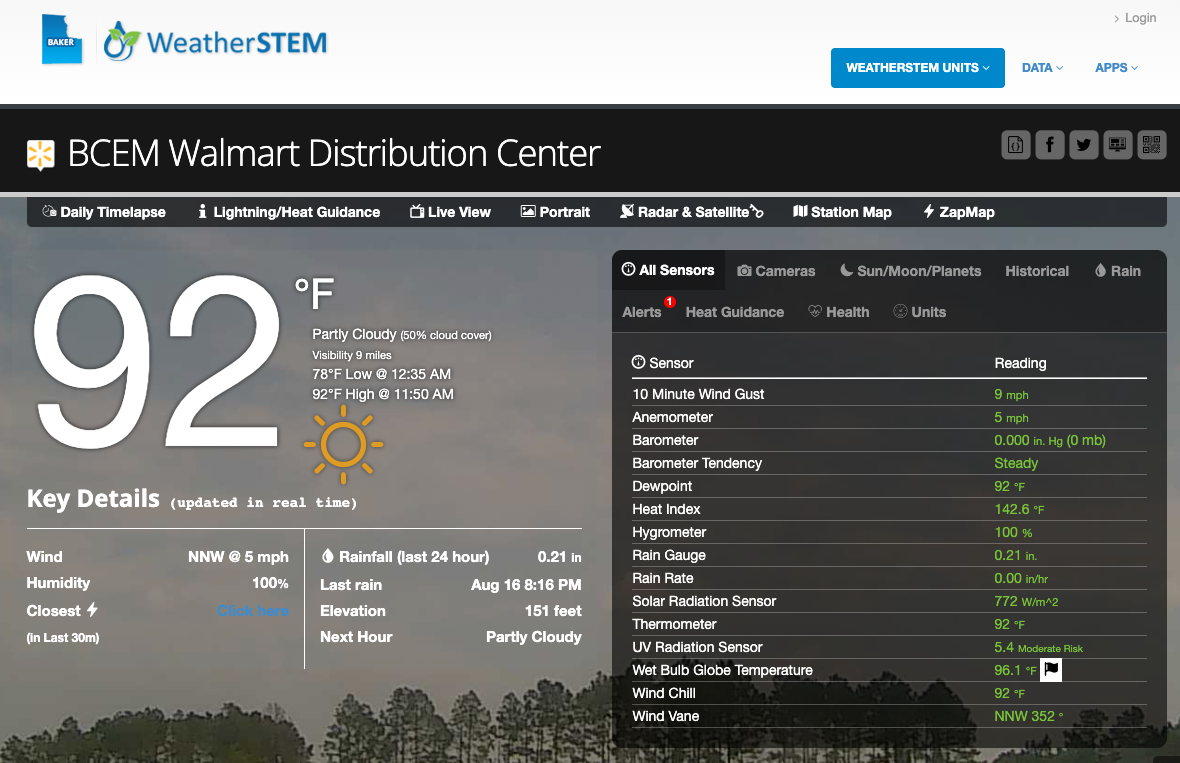
Every trigger point in these regulations, state or federal, is tied to a measurable condition at the worksite. Real-time, on-site weather monitoring is what turns a written plan into an enforced one: it tells supervisors the moment a threshold is crossed and creates creates a timestamped record of environmental conditions that supports documentation of the actions supervisors took in response.
What Practical Steps Can Employers Take Today?
Employers don't need to wait for a final federal heat standard before strengthening their heat safety programs. Practical steps include:
- Develop a written heat illness prevention plan.
- Monitor on-site weather conditions throughout the workday.
- Establish procedures for water, rest, and shade.
- Train supervisors and employees to recognize heat illness.
- Acclimatize new and returning workers.
- Document environmental conditions and protective actions.
These practices not only improve worker safety but also position organizations to comply with evolving federal and state requirements. Learn how Weatherstem helps organizations monitor on-site heat conditions, automate alerts, and document weather data to support heat safety programs and compliance efforts.
Explore Other Heat Safety Compliance Articles
Use the articles below to go deeper on any part of your heat safety program, from the regulations themselves to industry-specific guidance:
- Heat Safety Compliance and Weather Monitoring Guide
- Heat Index vs WBGT: Which Should Employers Use?
- How to Build a Heat Illness Prevention Plan
- How Weather Monitoring Supports OSHA Heat Compliance
Frequently Asked Questions
Does OSHA have a heat safety standard?
OSHA has proposed a federal Heat Injury and Illness Prevention Standard, but it has not yet been finalized. In the meantime, OSHA enforces heat-related workplace safety through the General Duty Clause and its National Emphasis Program on heat.
Can OSHA cite employers for heat-related hazards?
Yes. Even without a final heat-specific standard, OSHA may cite employers under the General Duty Clause if workers are exposed to recognized heat hazards and appropriate protective measures are not implemented.
What should employers document for heat safety compliance?
Employers should maintain a written heat illness prevention plan, training records, documentation of water, rest, and shade procedures, records of environmental conditions, and documentation of the protective actions taken when heat thresholds are reached.

Weatherstem provides real-time weather monitoring, lightning detection, and automated alerting systems for emergency management, government agencies, athletics programs, and commercial operations. 900+ stations deployed nationwide.
Weatherstem
Real-time weather monitoring built for compliance and life-safety decisions.
Professional hardware, dual lightning detection, automated alerts, and permanent data logging — installed and managed for you. Used by emergency management agencies, athletic programs, and government operations nationwide.
Book a Free Demo