Why Heat Safety Compliance Is Becoming Non-Negotiable
Heat is now the leading weather-related cause of workplace death in the United States, and the risk is increasing as more frequent and intense heat waves affect workers across the country. Regulators and employers are responding accordingly. OSHA has run a National Emphasis Program targeting heat hazards since 2022 and has proposed a permanent federal heat injury and illness prevention standard. A growing list of states already enforce their own heat rules, some with steep penalties for noncompliance. For employers, treating heat as a seasonal inconvenience is no longer a defensible position. It needs to be a documented, proactive program built on real data rather than assumptions.
Understanding the Regulatory Landscape
Compliance today means navigating a patchwork of federal guidance, state-specific standards, and industry best practices from organizations like NIOSH and ACGIH. States including California, Oregon, Washington, Colorado, Nevada, and Minnesota have their own enforceable heat rules, and more are expected to follow as the federal standard moves through rulemaking. Requirements generally cover access to water and shade, scheduled rest breaks, acclimatization for new or returning workers, supervisor training, and emergency response procedures, most of which are triggered at specific temperature or heat index thresholds.
Regardless of the specific regulation, the common thread is that employers are expected to assess heat risk, implement protective measures, and respond when environmental conditions become hazardous.
The Role of Real-Time Weather Monitoring in Compliance
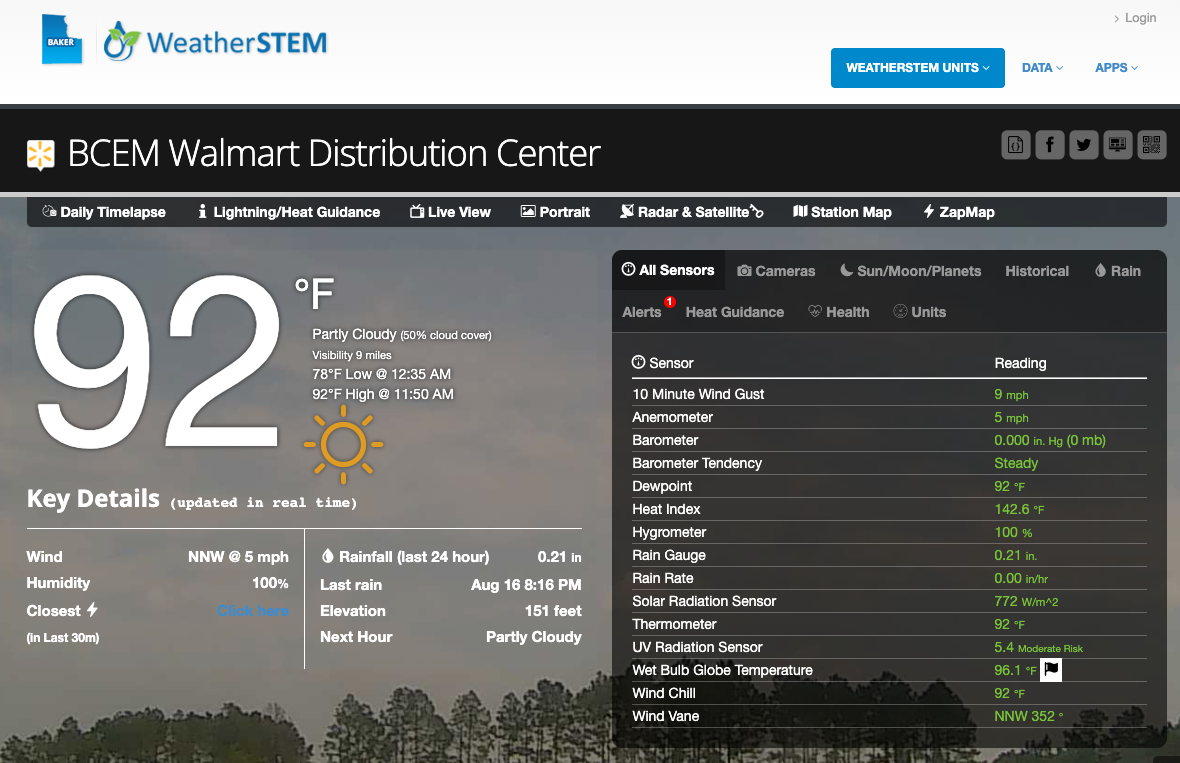
Threshold-based rules only work if you know, in real time, what conditions actually are at the worksite, not at an airport that may be miles away. Hyperlocal, on-site weather monitoring gives supervisors continuous temperature, humidity, heat index, or WBGT data, allowing them to trigger rest breaks, adjust workloads, or halt outdoor work based on actual conditions rather than forecasts or assumptions.
Automated alerts based on configurable thresholds also help ensure supervisors receive timely notifications when conditions require action, reducing reliance on manual checks and improving consistency across multiple locations.
Key Elements of Heat Safety Compliance
While specific regulations vary by jurisdiction and industry, most heat safety programs include the same core components:
- Monitoring environmental conditions
- Providing water, rest, and shade
- Acclimatizing new and returning workers
- Training supervisors and employees
- Establishing emergency response procedures
- Documenting conditions and protective actions
The supporting articles in this guide examine each of these topics in greater detail.
Building a Heat Safety Program That Works
An effective program combines four things: a written heat illness prevention plan, accurate on-site monitoring, supervisors trained to act on that data, and a documentation trail proving the program was actually followed. Monitoring data does double duty by driving real-time decisions in the field and creating a documented record of conditions and actions taken. That information can become an important audit trail during inspections, incident investigations, or insurance claims.
Heat Safety Across Industries
Heat safety risks vary widely by industry. Construction crews often perform strenuous work in direct sunlight. Parks and recreation departments oversee outdoor employees and public programs. Athletic organizations must protect student-athletes during practices and competitions, while emergency responders face high physical demands in protective gear during emergencies. Although the hazards differ, every organization benefits from accurate weather data, clear response procedures, and documented decision-making. The articles below explore how heat safety compliance and weather monitoring apply across these and other industries.
Ready to strengthen your heat safety program with real-time weather monitoring and automated alerts? Contact Weatherstem to learn how our platform helps organizations make informed, defensible decisions during extreme heat.
Heat Safety Compliance Resources
Use the articles below to go deeper on any part of your heat safety program, from the regulations themselves to industry-specific guidance:
- OSHA Heat Safety Requirements Explained
- Heat Index vs WBGT: Which Should Employers Use?
- How to Build a Heat Illness Prevention Plan
- Why Real-Time Weather Monitoring Matters During Heat Waves
- Monitoring Heat Across Multiple Job Sites
- Heat Safety for Construction Companies
- Heat Safety for Public Works
- Heat Safety for Parks and Recreation
- Heat Safety for Athletic Programs
- Heat Safety for Emergency Responders
- How Weather Monitoring Supports OSHA Heat Compliance
Frequently Asked Questions
What is heat safety compliance?
Heat safety compliance refers to the policies, procedures, and protective measures organizations use to reduce the risk of heat-related illnesses. Depending on the jurisdiction, this may include providing water, rest, shade, employee training, acclimatization procedures, and monitoring environmental conditions.
Does OSHA require employers to monitor heat?
While OSHA's proposed federal heat standard is still progressing through rulemaking, employers are expected to protect workers from recognized heat hazards under the General Duty Clause. Monitoring environmental conditions is a key component of an effective heat illness prevention program.
Why is on-site weather monitoring important for heat safety?
Weather conditions can vary significantly between a jobsite and the nearest airport. Hyperlocal weather monitoring provides real-time temperature, humidity, heat index, and WBGT data so organizations can make informed decisions based on actual conditions rather than regional observations.

Weatherstem provides real-time weather monitoring, lightning detection, and automated alerting systems for emergency management, government agencies, athletics programs, and commercial operations. 900+ stations deployed nationwide.
Weatherstem
Real-time weather monitoring built for compliance and life-safety decisions.
Professional hardware, dual lightning detection, automated alerts, and permanent data logging — installed and managed for you. Used by emergency management agencies, athletic programs, and government operations nationwide.
Book a Free Demo