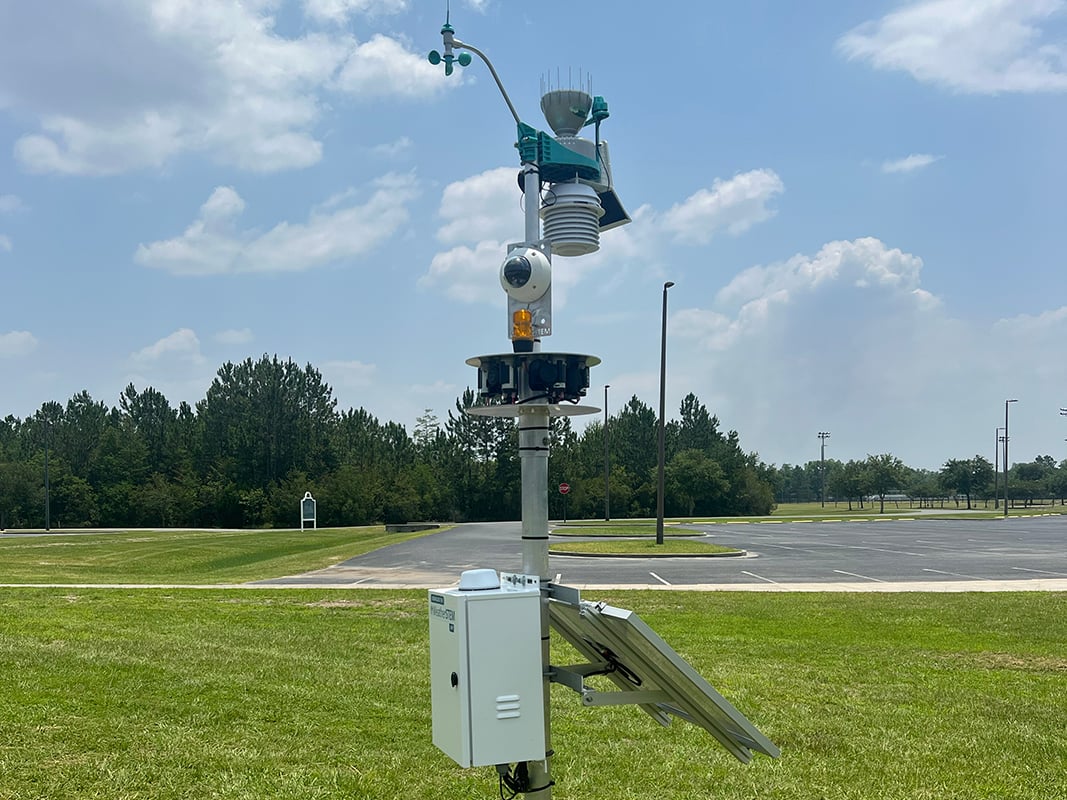
Once you know you have to monitor WBGT, the next question is how. There are three common methods, and they are not equal once you factor in the parts of the rule that are easy to forget: every 30 minutes, recorded, and acted on.
| Capability | Phone app | Handheld meter | Fixed station |
|---|---|---|---|
| On-site reading for your field | Estimated | Yes | Yes |
| Continuous, every 30 minutes | Manual | Manual | Automatic |
| Records kept on file automatically | No | No | Automatic |
| Alerts at zone transitions | Some | No | Yes |
| Works with no staff present | No | No | Yes |
| Lightning and severe weather too | Varies | No | Yes |
| Scales across campuses | Loosely | Per unit | One network |
Phone app
An app is the easiest place to start and the weakest place to finish. It estimates WBGT from the nearest available weather data, which may not reflect the sun and surface on your field, and it leaves the rule's harder parts, the 30-minute cadence, the records, the alerting, to a person. It is a reasonable backup or a way to spot-check. It is not a compliance system.
Handheld meter
A quality handheld gives a genuinely accurate on-site reading, which is its strength. Its weakness is everything that has to happen around it. Someone has to set it up, read it every 30 minutes, and write the result down, every practice, all season, at every site. On a field with a dedicated athletic trainer, that works. Where staffing is thin, or across many campuses, the manual burden is exactly where compliance slips.
Fixed station
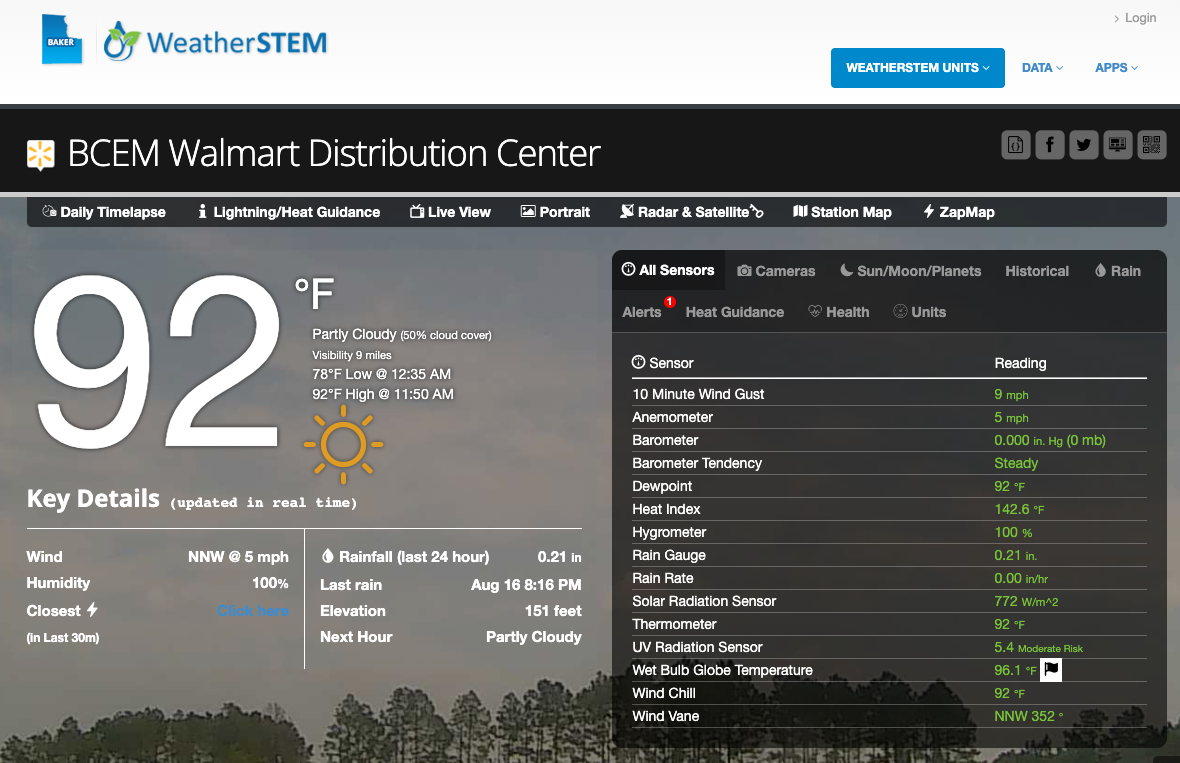
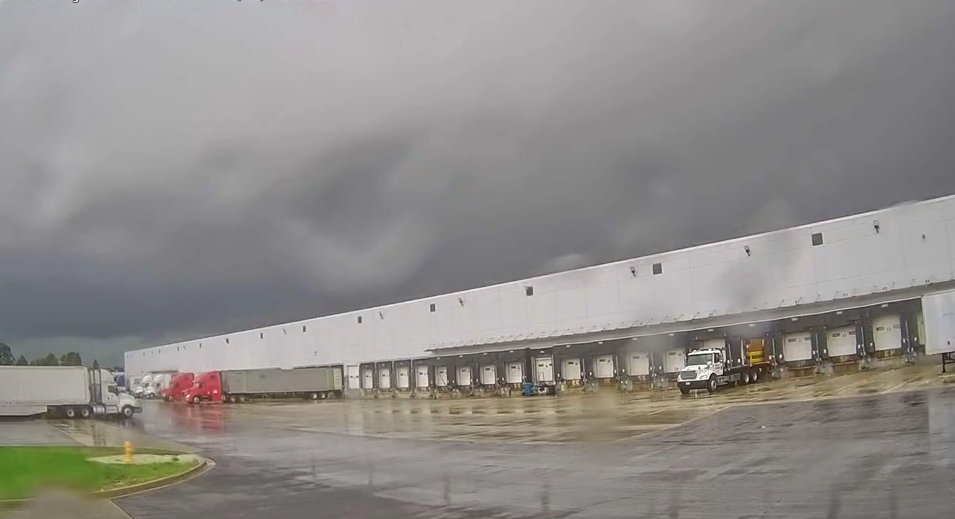
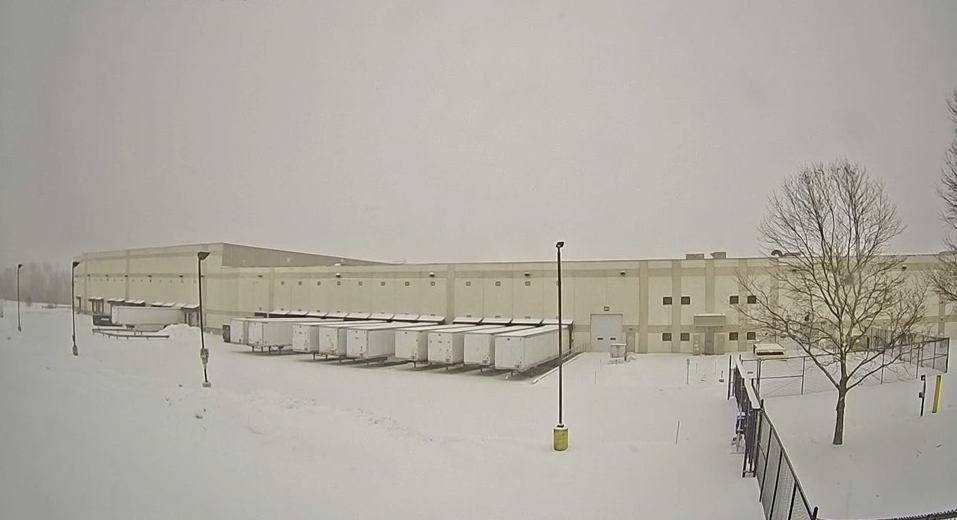
A fixed station is built for the parts that trip up the other two. It reads continuously at the site, on the same surface and in the same sun as the students, logs every reading automatically, and alerts staff the moment a threshold is crossed, with no one required to be standing there. Across a district it becomes one network with one record format, and the same station covers lightning and severe weather. The tradeoff is that it is an installed system rather than a pocket device, which is why it pairs best with a provider that installs and manages it.
How Weatherstem fits
Weatherstem already operates stations across Texas, including at the University of Texas, Texas A&M, and Texas Motor Speedway, and more than 900 nationwide. You get an accurate on-site WBGT measurement that updates on its own, automatic logging that satisfies the keep-on-file requirement, and a system Weatherstem deploys and maintains, so the fixed-station tradeoff lands on us rather than your staff.
Frequently asked questions
Is a phone app good enough for compliance?
An app estimates WBGT from the nearest weather data, may not match your field, and does not log or alert automatically. It can be a backup, but it is the weakest option for a rule that asks you to record readings every 30 minutes and act on them.
Handheld meter or fixed station?
A handheld gives an accurate on-site reading but needs a person every 30 minutes. A fixed station reads continuously, logs automatically, and alerts staff at zone transitions without anyone present.
Which is best for a district?
For a single field with dedicated staff, a handheld can work. Across multiple campuses or where no trainer is present, a fixed station network usually fits better because it standardizes readings, centralizes records, and removes the staffing burden.
Start with what WBGT is, see the record-keeping and EAP rules, or read the full Texas UIL WBGT mandate guide.
Weatherstem is not affiliated with or sponsored by the University Interscholastic League. References to the UIL are for informational purposes only.

Weatherstem provides real-time weather monitoring, lightning detection, and automated alerting systems for emergency management, government agencies, athletics programs, and commercial operations. 900+ stations deployed nationwide.
Weatherstem
Real-time weather monitoring built for compliance and life-safety decisions.
Professional hardware, dual lightning detection, automated alerts, and permanent data logging — installed and managed for you. Used by emergency management agencies, athletic programs, and government operations nationwide.
Book a Free Demo