Heat exposure isn't just an outdoor problem. While it's easy to picture heat stress as something that affects roofers, road crews, or farmworkers, warehouse and distribution center employees face real heat risk too, often in ways that are harder to spot. A comprehensive warehouse heat safety plan starts with understanding where and when workers are exposed.
Distribution centers present a unique combination of heat challenges:
- Large indoor spaces that hold heat
- Limited air movement in parts of the facility
- Loading docks exposed to outdoor conditions
- Forklift and equipment activity that adds heat and exertion
- Employees moving back and forth between indoor and outdoor environments
- Roofs and building materials that absorb and radiate heat
- Seasonal extreme heat events that push already-warm facilities further
The core problem is that a regional weather forecast doesn't tell an employer what workers are actually experiencing inside or around a specific facility. The temperature at the nearest airport weather station may not represent conditions at a loading dock baking in direct sun or a mezzanine with poor airflow. Protecting workers effectively means understanding conditions at the facility itself, not just the conditions in the region.
Why Do Warehouses Get So Hot?
Indoor Heat
Large enclosed spaces can trap heat, especially when ventilation is limited. Add in heat generated by forklifts, conveyor systems, and other equipment, plus solar heating through roofs and walls, and indoor temperatures can climb well above what's happening outside, particularly in the upper levels of a facility or in areas near heat-generating equipment.
Loading Docks and Outdoor Areas
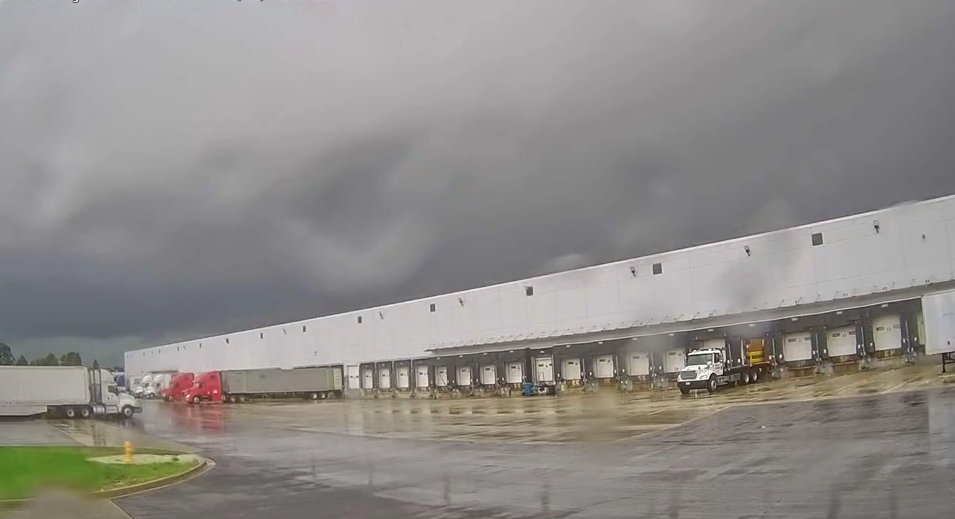
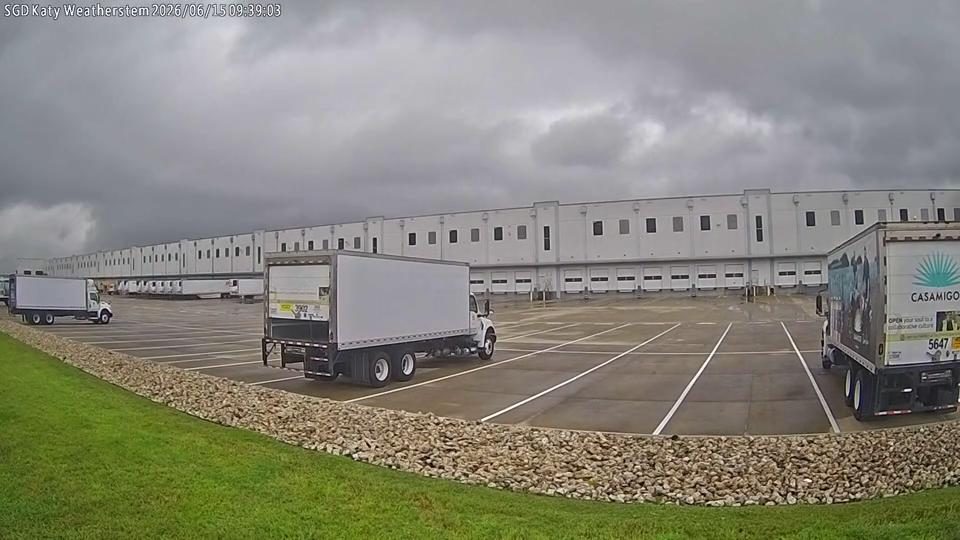
Loading docks bring their own set of challenges. Open dock doors let outdoor heat and humidity into the building. Direct sunlight and hot pavement radiate heat back at workers. Idling trucks and trailers add exhaust heat. And workers who move repeatedly between air-conditioned office space and a hot dock or trailer interior face a kind of heat exposure that's easy to underestimate because no single environment feels extreme on its own.
Why Conditions Can Vary Across a Facility
This is where hyperlocal monitoring matters. The temperature near an office area may be substantially different from conditions at an exposed loading dock or truck yard just a few hundred feet away. A single outdoor temperature reading, or a forecast for the broader metro area, can't capture that variation. Facilities that want an accurate picture of heat risk need visibility into conditions at the specific locations where workers are exposed.
What Are OSHA's Heat Safety Requirements for Warehouse Workers?
It's worth being precise here, because there's a lot of confusion about what's actually required.
There is currently no finalized federal OSHA standard that sets a specific temperature threshold for warehouses. OSHA proposed a Heat Injury and Illness Prevention rule in August 2024 covering both outdoor and indoor work settings, and that rulemaking process has continued through public hearings and comment periods. As of August 2026, the rule has not been finalized.
That doesn't mean heat hazards go unregulated. OSHA continues to address heat exposure through:
- The General Duty Clause, which requires employers to provide a workplace free of recognized hazards, including heat, and which OSHA has used to cite employers for inadequate heat safety programs
- A National Emphasis Program on outdoor and indoor heat-related hazards, updated in April 2026, directs OSHA inspection and outreach resources toward industries and workplaces where heat stress risks are most likely to occur.
- Ongoing guidance built around acclimatization, access to water, rest, and cool recovery areas, training on recognizing heat illness, emergency response procedures, and monitoring conditions when heat risk is elevated
In addition, a number of states have adopted their own heat illness prevention standards that go further than federal guidance, with specific temperature or heat index triggers for water, rest, and shade requirements. Employers with facilities in multiple states need to understand which state-specific rules apply to each location.
The practical takeaway: rather than waiting for a single federal number, warehouse operators are generally expected to identify heat hazards specific to their operation, put a plan in place to address them, and be able to show that the plan reflects actual conditions at the facility.
What Temperature Is Too Hot for Warehouse Workers?
This is one of the most common questions safety teams search for, and it doesn't have a single clean answer, because temperature alone doesn't tell the whole story.
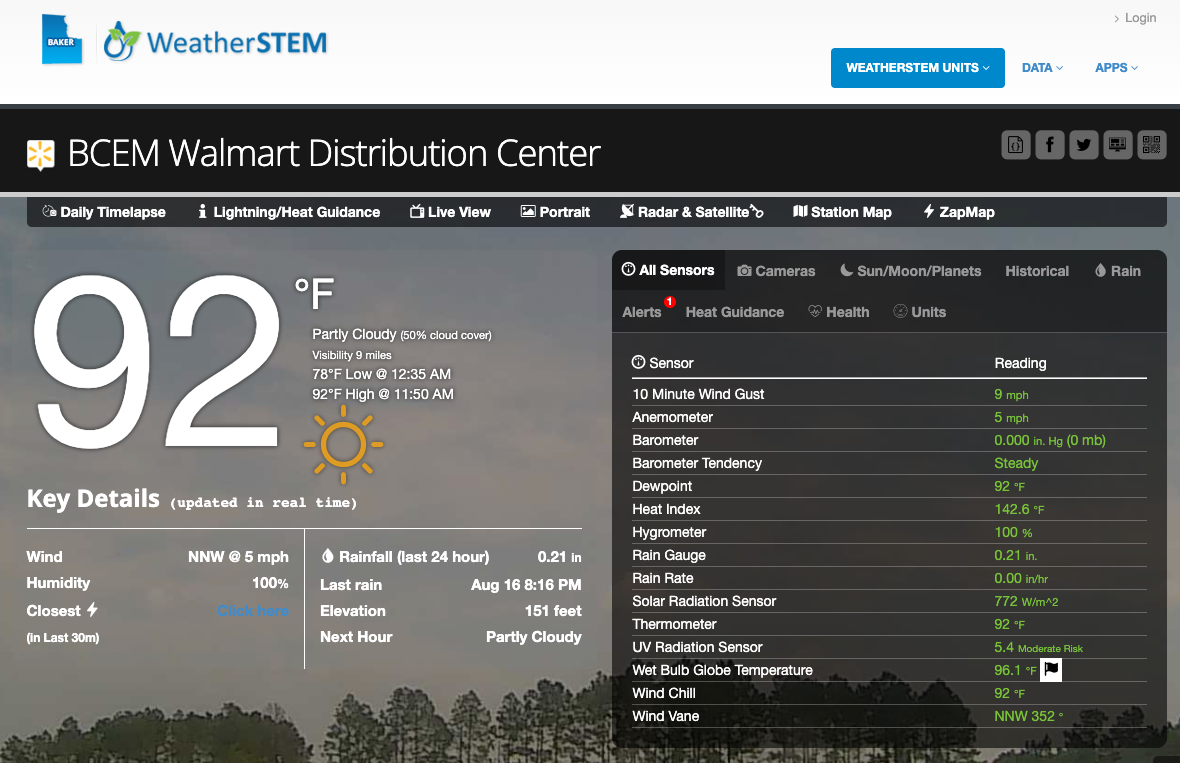
Heat index combines air temperature and humidity to estimate how hot conditions actually feel. It's a useful, widely understood measure, but it was originally developed for shaded, outdoor conditions and doesn't account for direct sun, radiant heat from equipment or pavement, or air movement.
Wet Bulb Globe Temperature (WBGT) provides a more comprehensive assessment of environmental heat stress than temperature or heat index alone. It accounts for factors including humidity, air temperature, and radiant heat, making it useful for evaluating conditions where sunlight, hot surfaces, or other heat sources contribute to work exposure.
Why One Number Doesn't Fit Every Warehouse
Even with a good measurement, the same reading doesn't mean the same risk everywhere. Worker acclimatization, workload and physical exertion, clothing and PPE, ventilation, and the specific environmental conditions of a work area all affect how much heat stress a given temperature actually produces. A newly hired worker unloading trailers in direct sun faces a different level of risk than an acclimatized employee working in a climate-controlled pick zone, even if the outdoor temperature is identical for both.
This is exactly why more warehouse operators are moving toward measurable, facility-specific thresholds rather than relying on a single generic number pulled from a weather app.
What Are the Signs of Heat Illness in Warehouse Workers?
Heat cramps may be the first sign of heat-related illness. These are painful muscle cramps and spasms that usually occur in the legs and abdomen and are often accompanied by excessive sweating. Heat cramps can be an early sign of heat-related illness and should be addressed before the condition progresses.
Heat exhaustion can present with the following symptoms:
- heavy sweating
- weakness or tiredness
- cool, pale, clammy skin
- fast, weak pulse
- muscle cramps
- dizziness, nausea, or vomiting
- headache
- fainting
Immediately move the person to a cooler environment, such as a well-air-conditioned room. Apply cool, wet cloths or even sit in a cool bath. If the symptoms persist or if the person vomits, seek immediate medical attention.
Heat stroke has the following symptoms:
- throbbing headache
- confusion or slurred speech
- nausea or dizziness
- hot, red, dry or damp skin
- rapid and strong pulse
- fainting or loss of consciousness
Heat stroke is a medical emergency. If a worker shows signs such as confusion, slurred speech, loss of consciousness or other signs of altered mental status, call 911 and begin cooling the person immediately.
How Can Warehouses Monitor Heat Conditions in Real Time?
Employers shouldn't have to rely exclusively on:
- Airport weather stations that may be miles away
- Regional forecasts that average out local variation
- Consumer weather apps
- Periodic manual measurements taken a few times a day
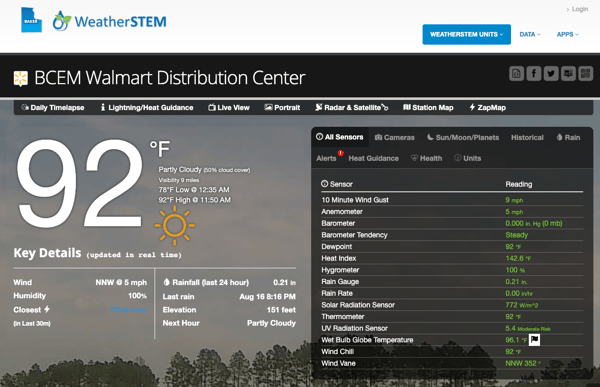
Conditions at a distribution center can shift quickly, and by the time a manual check reveals a problem, workers may have already been exposed. On-site weather monitoring closes that gap by measuring actual conditions where work is happening.
Facility-based monitoring can track:
- Air temperature
- Relative humidity
- Heat index
- WBGT, where applicable
- Wind
- Other relevant environmental conditions
With real-time, on-site data, safety and operations teams can see when conditions are approaching established thresholds and act before heat exposure becomes a serious problem, rather than reacting after a worker is already showing signs of heat illness.
How Can Distribution Centers Respond to Extreme Heat?
A useful heat response plan generally breaks down into three phases.
Before the Heat
- Review forecasts for upcoming heat events
- Identify vulnerable work areas, such as loading docks and upper mezzanines
- Confirm that water and recovery areas are stocked and accessible
- Communicate heat procedures to supervisors and employees
- Check that monitoring equipment and alert thresholds are functioning correctly
During Extreme Heat
- Monitor actual conditions at the facility, not just the regional forecast
- Increase access to water, rest and cool recovery areas as required by the facility's heat safety plan
- Adjust workloads or rotate tasks when necessary
- Pay extra attention to employees working near loading docks and outdoor areas
- Watch for signs of heat illness among coworkers, not just self-reporting
- Activate established heat procedures as soon as thresholds are reached
After the Heat
- Document conditions and the actions taken during the event
- Review what worked and what didn't
- Adjust procedures, staffing, or thresholds ahead of the next heat event
This kind of structure turns a heat safety plan from a document that sits in a binder into something operations teams can actually use in the moment.
Why Is Real-Time Heat Monitoring Better Than a Regional Forecast?
A regional forecast answers one question: what will the weather be like in the area? On-site monitoring answers a different, more useful question: what are conditions at our facility right now?
That distinction matters more than it might seem. A distribution center can have a meaningfully different temperature than the nearest weather station, different humidity depending on ventilation and dock activity, different sun exposure depending on building orientation, different airflow depending on layout, and very different conditions between its indoor and outdoor work areas.
Heat safety decisions are stronger when they're based on conditions at the actual workplace, not an estimate from miles away. That's the gap on-site environmental monitoring is built to close, giving safety and operations teams a live, location-specific picture instead of a regional approximation.
How Can You Build a Heat Safety Plan for Your Warehouse?
Bringing this together, a solid starting checklist looks like this:
- Identify areas where workers are exposed to heat.
- Determine which environmental measurements matter for your operation: temperature, heat index, WBGT, or a combination.
- Establish action thresholds tied to those measurements.
- Monitor conditions at the facility itself, including higher-risk areas like docks and yards.
- Configure alerts so the right people are notified when thresholds are reached.
- Train employees and supervisors to recognize heat illness and follow procedures.
- Define what happens when an alert is triggered: who's responsible, and what actions follow.
- Review the plan after significant heat events and adjust as needed.
Heat risk in a distribution center isn't uniform, and it isn't static. It shifts by location, by time of day, and by season. Facilities that monitor actual, on-site conditions are better positioned to catch rising heat risk early and act on it, rather than relying on a regional forecast that may not reflect what's happening at the dock door.
Weatherstem helps distribution centers monitor real-time conditions at the facility, including temperature, humidity and heat index, so safety and operations teams can see when heat risk is increasing and respond based on conditions where employees are actually working. Talk with Weatherstem about on-site weather monitoring.
What temperature is too hot for warehouse workers?
There is no single temperature that defines unsafe conditions for every warehouse. Heat risk depends on factors including temperature, humidity, radiant heat, air movement, workload, clothing, PPE and worker acclimatization. Monitoring conditions at the facility can help employers establish and respond to appropriate heat thresholds.
Does OSHA have a specific temperature limit for warehouses?
As of August 2026, OSHA does not have a finalized federal heat standard establishing a single temperature limit for warehouses. OSHA continues to address workplace heat hazards through the General Duty Clause, its National Emphasis Program on indoor and outdoor heat hazards, and existing guidance. State requirements may establish more specific heat-safety thresholds.
How can warehouses monitor heat conditions?
Warehouses can use on-site environmental monitoring to track conditions such as temperature, humidity, heat index and, where applicable, WBGT. Real-time monitoring provides facility-specific data that can help safety and operations teams identify increasing heat risk and activate established heat-safety procedures.

Weatherstem
Real-time weather monitoring built for compliance and life-safety decisions.
Professional hardware, dual lightning detection, automated alerts, and permanent data logging — installed and managed for you. Used by emergency management agencies, athletic programs, and government operations nationwide.
Book a Free Demo